How to Prevent Chickweed in Lawns 2026: Everything You Need
You walk outside in early spring and there it is: a pale green carpet of chickweed spreading across your lawn before the grass has even woken up. If you've dealt with this before, you know it's frustrating. Chickweed shows up fast, seeds aggressively, and can smother thin turf in weeks.
Learning how to prevent chickweed in lawns is really about timing and turf health, two things you can control.
Research from university turf programs shows that a single chickweed plant can produce 15,000 seeds in one season. Those seeds stay viable in the soil for decades. That's why prevention beats eradication every time.
The good news? A few smart steps at the right moment can stop chickweed before it gains a foothold. Let's walk through exactly what to do.
Quick Answer
Prevent chickweed by applying a pre-emergent herbicide in early fall. Target soil temperatures around 50, 55°F. Mow at 3 inches or higher through summer.
Aerate compacted soil in spring or fall. Feed your lawn with slow-release nitrogen. Keep the turf dense and healthy.
That's the core strategy.
What Chickweed Looks Like and Why It Matters for Prevention
If you can't identify chickweed accurately, your prevention plan might miss the mark. Two species commonly invade lawns: common chickweed and mouse-ear chickweed. Both are low-growing, mat-forming weeds that thrive in cool, moist conditions.
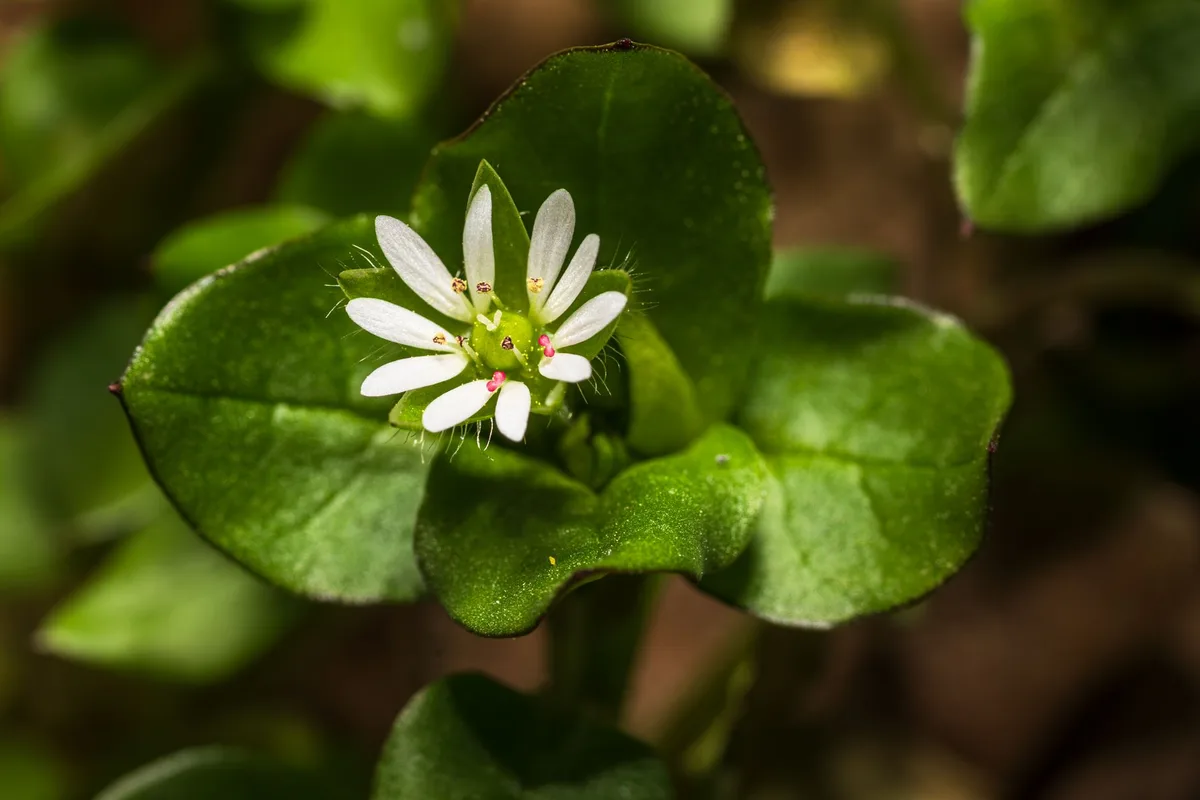
Common chickweed (Stellaria media) has small, oval leaves growing in opposite pairs. Stems are slender and root at the nodes. Tiny white flowers with five deeply notched petals appear from late winter through spring.
It's a winter annual, meaning it germinates in fall, survives winter, and dies in late spring.
Mouse-ear chickweed (Cerastium vulgatum) looks similar but has hairy, thicker leaves that feel fuzzy to the touch. It spreads by creeping stems and forms denser mats. Worse, it's a perennial, so it comes back year after year unless you kill the root system.
Why identification matters for prevention: annual chickweed only needs a pre-emergent each fall to stop new seeds. Mouse-ear requires both pre-emergent AND post-emergent control to eliminate established plants. Spraying the wrong treatment wastes time and money.
Most homeowners mistake chickweed for clover or speedwell. Check the leaves. Clover has three round leaflets.
Speedwell has small, rounded scalloped leaves. Chickweed leaves are pointed and smooth (or hairy for mouse-ear). If you're unsure, snap a photo and compare with a local extension service guide.
The Two Types of Chickweed: Annual vs. Mouse-Ear (Treatment Changes)
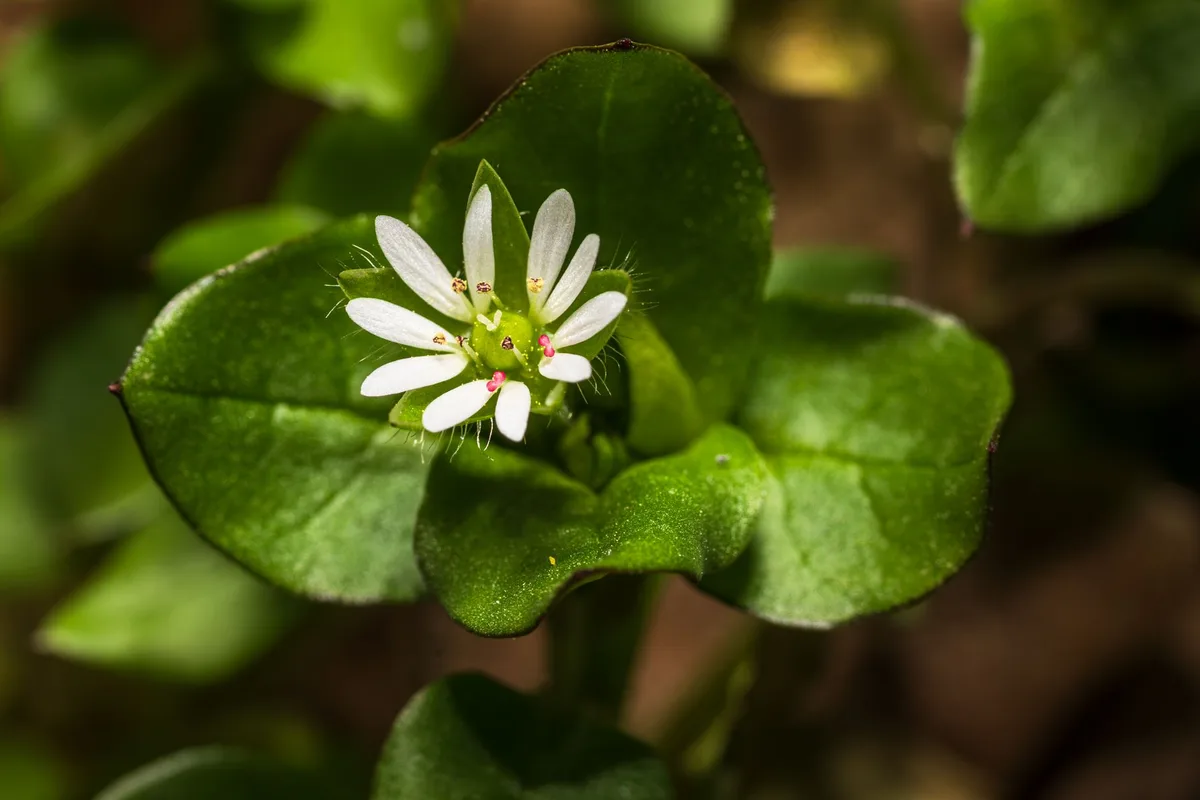
Annual Chickweed (Stellaria media)
- Lifecycle: Germinates in fall, flowers in early spring, dies when temperatures exceed 80°F.
- Prevention: A single fall pre-emergent application usually does the job.
- Post-emergent: Spot-treat with a broadleaf herbicide containing 2,4-D or dicamba while it's actively growing (cool weather, not in summer heat).
- Seed bank: Seeds remain viable for up to 40 years in soil. That's why skipping pre-emergent for one season can mean years of follow-up.
Mouse-Ear Chickweed (Cerastium vulgatum)
- Lifecycle: Perennial. Survives winter as a rosette, spreads by creeping stems, and flowers from spring to fall.
- Prevention: Pre-emergent helps reduce new seedlings, but won't kill existing plants.
- Post-emergent: Needs a stronger herbicide like triclopyr or a combination product (2,4-D + dicamba + triclopyr). Expect two applications 10, 14 days apart.
- Cultural control: Mouse-ear thrives in compacted, poorly drained soil. Core aeration and improved drainage make a big difference.
How to Tell Them Apart Quickly
| Feature | Common Chickweed | Mouse-Ear Chickweed |
|---|---|---|
| Leaf texture | Smooth, hairless | Fuzzy, hairy leaves |
| Leaf shape | Pointed oval, notched tip | Oval, slightly pointed |
| Stem | Slender, green, roots at nodes | Thicker, reddish, hairy |
| Flower | Small, white, 5 deep petals | Larger white flowers, 5 petals notched to halfway |
| Growth habit | Loose mat, shallow roots | Dense mat, deep roots |
| Lifecycle | Annual | Perennial |
If you see hairy leaves, you have mouse-ear. That changes your entire workflow.
Is Your Lawn Already a Chickweed Magnet? 4 Conditions to Check
Chickweed doesn't invade healthy, dense turf. It moves in where grass is stressed and the soil is ripe for weed colonization. Before you spend money on herbicides, check these four conditions.
1. Soil Compaction
Compacted soil restricts grass root growth and holds moisture near the surface. Chickweed loves that. Push a screwdriver into the ground.
If it's hard to push past 2 inches, you've got compaction. Core aeration fixes this. Plan aeration for early fall (cool-season lawns) or late spring (warm-season lawns).
2. Low Mowing Height
Mowing too short scalps the grass, exposing soil to sunlight and allowing chickweed seeds to germinate. University research recommends keeping grass at 3, 4 inches for tall fescue, 2, 2.5 inches for bermuda, and 2.5, 3 inches for Kentucky bluegrass. A taller canopy shades the soil and prevents chickweed from getting the light it needs to sprout.
3. Poor Drainage or Overwatering
Chickweed thrives in consistently moist soil. If your lawn has low spots where water pools after rain, or if you water every day for 10 minutes, you're creating perfect conditions. Switch to deep, infrequent watering: 1 inch of water per week in one or two sessions.
Let the soil dry out between waterings.
4. Thin Turf from Previous Weed Problems
If you've had chickweed before, you likely have patches of bare soil where you sprayed. Those bare spots are where new chickweed will germinate. Overseed those areas with a grass type suited to your climate.
For cool-season lawns, use a turf-type tall fescue or perennial ryegrass mix. For warm-season, bermuda or zoysia plugs work well. Keep the seed bed moist until germination.
If you answer "yes" to any of these four, you'll need to address that issue alongside your prevention plan. Otherwise, herbicides will only give you temporary relief.
Decision Branch 1: Which Grass Type Do You Have?
Your grass type dictates timing for pre-emergent applications. Apply too early or too late, and you waste the product. Here's how the decision branches.
Cool-Season Grasses (Fescue, Kentucky Bluegrass, Ryegrass, Bentgrass)
- Active growth: Spring and fall. Goes dormant in summer heat.
- Pre-emergent timing: Apply in early fall, typically late August to mid-September depending on your region. Soil temperature should be falling through 55°F. If you apply too early (August when soil is still 70+), the herbicide may break down before chickweed germinates.
- Post-emergent timing: Spot-treat in late fall (November) or early spring (March-April) when chickweed is actively growing and temperatures are between 45°F and 65°F.
- Key risk: Applying pre-emergent too late in spring can interfere with grass seed germination if you plan to overseed. Never use a pre-emergent within 8 weeks of seeding.
Warm-Season Grasses (Bermuda, Zoysia, St. Augustine, Centipede)
- Active growth: Late spring through summer. Dormant in winter.
- Pre-emergent timing: Apply in late summer or early fall, typically September to October, when soil temperatures drop to 65°F. Chickweed germinates in fall, but warm-season grass is slowing down. The pre-emergent protects the dormant lawn.
- Post-emergent timing: Spot-treat in late fall or winter when warm-season grass is dormant. Use a non-selective herbicide like glyphosate on dormant bermuda. Avoid spraying on actively growing St. Augustine or centipede as they are sensitive to many broadleaf herbicides.
- Key risk: Overseeding warm-season lawns with annual ryegrass for winter color? You cannot use pre-emergent if you plan to overseed. Choose either winter color or chickweed prevention, not both in the same year.
If you have a mixed lawn (common in transitional zones like the Midwest or Mid-Atlantic), treat it as cool-season for pre-emergent timing. Overseed any thin areas with a cool-season grass after the pre-emergent window has passed.
Now you know your chickweed type and your grass type. The next decision is whether to go organic or synthetic. But that's a choice based on your values and timeline, not a strict rule.
We'll cover both paths in the next section, along with the full workflows for fall and winter prevention.