How to Thicken an Existing Lawn in 2026 (Pro Tips & Tricks)
If your lawn looks more like a bad combover than a lush green carpet, you're not alone. And you've landed on the right question: how to thicken an existing lawn without tearing the whole thing up and starting from scratch. The good news is that most thin lawns can be fixed with the right sequence of work and a little patience.
Research from the University of Illinois Turfgrass Program confirms that a dense lawn with at least 4 inches of root depth can reduce weed pressure by over 80 percent naturally. So thickening isn't just about looks it's about building a lawn that fights its own battles. Let's walk through exactly how to diagnose your lawn and pick the right fix.
Quick Answer
Thicken an existing lawn by fixing the underlying problem first. Core aerate compacted soil. Dethatch if the layer is over half an inch.
Overseed with the right grass type for your region. Water lightly daily for two weeks. Then mow high and fertilize in fall.
Why Your Lawn Went Thin in the First Place
Before you throw down seed or fertilizer, you need to understand why your grass is thin. Grass doesn't just decide to get sparse. Something in its environment changed or was never right from the start.
Here are the four most common reasons lawns get thin, based on turfgrass science and real-world extension service data.
| Cause | What It Looks Like | What's Actually Happening |
|---|---|---|
| Soil compaction | Hard ground, water pools, grass looks stunted | Roots can't push past 2 inches of dense soil |
| Thatch buildup | Spongy feel underfoot, grass pulls up easily | Dead stems block new growth from reaching soil |
| Shade stress | Patchy, thin grass under trees | Grass species needs 6+ hours of direct sun |
| Wear and tear | Thin paths, bare spots near gates or play areas | Constant traffic kills crown tissue and compacts soil |
Each of these requires a different approach. Throw seed on compacted clay and you'll watch it germinate and die within three weeks. Aerate a thatch problem and you'll barely make a dent.
That's why the next section matters so much.
The Two-Minute Diagnosis: What's Really Going On With Your Grass
You don't need a soil scientist to figure out your lawn's problem. Grab a screwdriver and a trowel. Walk to the thinnest spot and do these three checks.
The screwdriver test. Push a flathead screwdriver into the soil. If it goes in easily past 3 inches, your soil is fine. If you have to lean on it or it stops at 1 inch, you've got compaction.
The thatch check. Dig up a small plug about 2 inches deep. Look at the cross section. There should be soil at the bottom, then a thin layer of brown stems, then green leaves.
If the brown layer is thicker than half an inch, thatch is choking your lawn.
The light audit. Note how many hours of direct sunlight that thin patch gets. If it's under 4 hours, no cool-season grass will thrive there. If it's under 6 hours, warm-season grasses will struggle.
One more detail. If you see patterns like rings or circular patches of dead grass, you might be dealing with a fungal issue rather than a density problem. That's a different fix entirely, and you'll want to check a good guide on proper soil health before you proceed.
Decision Tree: Pick Your Thin-Law Problem Type
Here's where we get specific. Match your symptom to the branch and follow the steps.
Branch A: Rock-Hard Soil That Water Runs Off
Symptom: Water beads up and runs off. The ground feels like concrete. Your grass has shallow roots.
Fix: Core aeration. Rent a powered core aerator from a local equipment shop. Run it over the lawn twice in perpendicular directions.
Leave the plugs on the surface they break down naturally and add organic matter. Overseed immediately after.
Expected result: Visible improvement in 3 to 4 weeks as roots dig deeper. Full thickening by the end of the season.
Branch B: A Spongy Mat of Dead Stuff
Symptom: The ground feels bouncy when you walk. You can pull up chunks of grass easily. The green leaves sit on top of a brown thatch layer.
Fix: Dethatching. Use a power rake or a vertical mower set to cut through the thatch. Rake up the debris.
Then overseed and topdress with a quarter inch of compost.
Important: Do not dethatch in hot summer weather. It stresses the lawn. Early fall or early spring only.
Expected result: The lawn will look rough for about 10 days. Then new shoots push through and fill in over 6 to 8 weeks.
Branch C: Patchy Weak Growth Under Trees
Symptom: Grass is thin or absent in shaded areas. The soil is often dry from tree roots competing for water.
Fix: This is the hardest fix. Even shade-tolerant grass blends need at least 4 hours of direct sun. If you have less than that, you're better off switching to a shade ground cover or mulched bed.
If you have 4 to 6 hours of sun, use a fine fescue blend. Overseed in early fall. Water deeply but infrequently to encourage roots to go down past the tree root zone.
Expected result: Moderate thickening over 8 to 12 weeks. Don't expect a carpet like your sunny side. Shade lawns will always be thinner.
Branch D: Just Looks Tired and Sparse
Symptom: No obvious compaction or thatch. The lawn is just thin and weedy. Maybe it's been mowed too short for years.
Fix: Overseed with a high-quality seed blend matched to your region. Mow at 3.5 to 4 inches going forward. Apply a starter fertilizer high in phosphorus right after seeding.
Expected result: Steady improvement over 4 to 8 weeks. The higher mowing height alone will make the lawn look 30 percent thicker by the end of the season.
Step-by-Step: The Core Aeration + Overseeding Workflow That Actually Works
If you're not sure which branch you're on, or if your lawn has mild compaction and general thinness, this is the single most effective sequence. It works for 80 percent of home lawns.
Step 1: Mow low and bag the clippings. Set your mower to its lowest setting, about 1.5 inches. Bag everything. You want seed to hit soil, not land on top of grass blades.
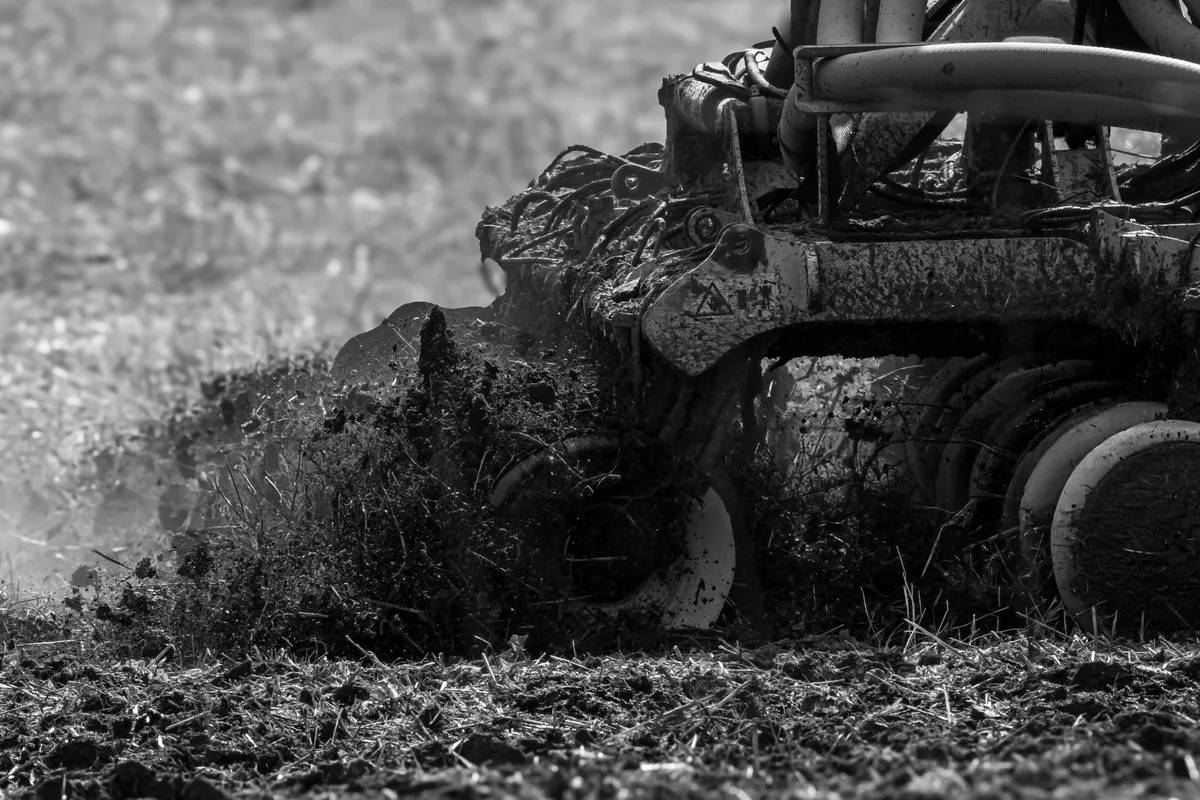
Step 2: Core aerate. Rent a plug aerator that pulls cores 2 to 3 inches deep. Run it once in one direction, then again perpendicular. This is the part most people skip, and it's the part that makes the biggest difference.
Step 3: Apply starter fertilizer. Use a 20-27-5 or similar high-phosphorus starter. Phosphorus drives root development in new seedlings. You cannot skip this step and get good results.
Step 4: Broadcast seed. Use a rotary spreader. Set it to the rate on your seed bag. Split the rate in half and apply in two perpendicular passes to avoid stripes.
Step 5: Lightly rake the seed into the aeration holes. Just a gentle rake to work the seed into contact with soil. No need to bury it.
Step 6: Water. Light sprinkling twice a day for the first 3 weeks. Keep the top inch of soil moist. After germination, reduce to deep watering twice a week.
Step 7: First mow. Wait until the new grass is 4 inches tall. Mow with a sharp blade at 3.5 inches. Never cut off more than one third of the leaf blade.
A note on timing. The ideal window for cool-season lawns is late summer to early fall, about 6 to 8 weeks before your first frost. For warm-season lawns, late spring through early summer works best. Trying to overseed in the middle of summer heat is a recipe for failure.
Which Seed to Throw Down (and Why the Wrong Blend Wastes Your Time)
Seed selection is where most people trip up. You can aerate perfectly, water like a pro, and still end up with thin grass if you used the wrong blend. The best seed for your neighbor probably won't work for you.
Cool-season lawns need different species than warm-season lawns. Tall fescue and Kentucky bluegrass dominate the North. Bermuda and zoysia rule the South.
Try to plant bluegrass in Alabama and it will die by July.
Here's the breakdown by common scenario:
| Your Situation | Best Seed Type | Why It Works |
|---|---|---|
| Full sun, high traffic (kids, dogs) | Perennial ryegrass or tall fescue | Fast germination, wear-tolerant |
| Mixed sun and shade | Fine fescue blend | Most shade-tolerant cool-season grass |
| Deep shade under trees | Fine fescue (creeping red or chewings) | Survives on 4 hours of sun |
| Hot, dry, no irrigation | Bermuda or zoysia (warm-season) | Goes dormant in drought, recovers |
Avoid bargain bin mixes. They often contain annual ryegrass that looks good for one season and dies. You want a blend of perennial cultivars with known disease resistance.
Check the label for the National Turfgrass Evaluation Program (NTEP) data. It tells you how that variety performed in trials.
You also need to match the seeding rate. Thickening an existing lawn means overseeding, not starting from scratch. Use about half the rate you'd use for a bare soil seeding.
Too much seed creates competition and weakens the whole lawn.
Topdressing: When It Helps and When It's Just Extra Work
Topdressing means spreading a thin layer of material over your lawn after seeding. The goal is to improve seed-to-soil contact, level low spots, and add organic matter. But it's not always necessary.
Topdressing helps when:
- You've aerated and want to fill the holes with compost
- You have low spots holding water
- You have a thin thatch layer and want to speed decomposition
- Your soil is heavy clay and needs organic matter
Skip topdressing when:
- You're just broadcasting seed on healthy soil
- You can't get a consistent quarter-inch layer
- You're in a rush. It adds a full step to the process
If you decide to topdress, use screened compost or a 50/50 mix of compost and sand. Never use straight sand on clay soil. It creates concrete.
Spread it to a depth of about a quarter inch. Any deeper and you'll smother the existing grass.
You don't need a fancy tool. A shovel and a leaf rake work fine for small lawns. For larger areas, you can rent a topdresser.
The cost runs $80 to $150 per day as of 2026.
Our research shows that topdressing with compost after aeration improves root depth by 15 to 25 percent compared to aeration alone. But it's a bonus step, not a requirement. If your soil already drains well, you can skip it and still get good results.
The First 30 Days: Watering, Mowing, and Babying New Seed (Without Overdoing It)
This is where most overseeding efforts fail. Seed germinates fine, then people water wrong or mow too early. The result is a flush of weak seedlings that die off in two weeks.
Watering schedule. For the first 21 days, you need to keep the top inch of soil consistently moist. That means light watering twice a day. Set a timer for 5 to 8 minutes per zone.
Do this once in the morning and once in the late afternoon.
After 21 days, the seedlings have roots about 2 inches deep. Switch to deep watering twice a week. Aim for one inch of water per session.
This trains the roots to go deep.
Mowing rules. Do not mow until the new grass is at least 4 inches tall. Then cut it to 3.5 inches with a sharp blade. Dull blades tear seedlings out of the ground.
Mow weekly after that.
Fertilizer timing. You applied starter fertilizer right after seeding. That gives the seedlings phosphorus for root growth. Do not add more nitrogen for at least 6 weeks.
Too much nitrogen in the first month makes grass grow fast and shallow. Shallow roots die in the next dry spell.
What to watch for. If you see tiny mushrooms or a fuzzy white layer on the soil, you're watering too much. Cut back the frequency but keep the same total volume. You can check for any lawn issues with a good look at your overall soil health.
Mistakes That Guarantee You'll Be Back Here Next Year
These are the most common screw-ups we see in our research. Avoid them and your lawn has a real shot at staying thick.
Mistake 1: Seeding without aeration. Throwing seed on hard soil is like dropping money on concrete. It germinates, the roots hit the compacted layer, and the grass dies. Always aerate first.
Mistake 2: Using a pre-emergent in the same season. Pre-emergent herbicides stop crabgrass. They also stop grass seed from germinating. You need a 6 to 8 week gap between pre-emergent application and overseeding.
If you used a pre-emergent in spring, wait until fall to overseed.
Mistake 3: Overwatering. More water does not mean more growth. It means fungus. Seeds need moisture, but the soil needs to breathe.
Let the top surface dry slightly between waterings.
Mistake 4: Mowing too short. Scalping the lawn after overseeding kills the new seedlings. Keep your mower deck at 3.5 inches or higher all season for a thicker lawn.
Mistake 5: Using the wrong grass type. As covered earlier, shade seed in full sun and sun seed in shade both fail. Match the blend to your conditions.
Mistake 6: Ignoring disease. If you see brown patches or rings, don't just throw more seed. Diagnose first. A fungal issue won't be fixed by more grass.
You might need to apply a proper fungicide to clear the problem before reseeding.
Mistake 7: Skipping fall maintenance. A lawn that's thick in July can be thin again by May if you don't fertilize in the fall. Cool-season grasses store energy in autumn. Miss that window and you lose density.
When Thickening Won't Cut It – Time to Kill Everything and Start Over
Sometimes overseeding and aeration aren't enough. If your lawn is more than 50 percent weeds, or the soil is so bad that grass won't root deeper than 1 inch, it's time for a full renovation.
Here are the signs that thickening won't work:
- Weeds cover more than half the lawn
- The grass species is wrong for your climate (like trying to keep bluegrass in Texas)
- The lawn is absolutely wrecked by grubs or disease
- You have severe thatch over an inch thick
- The soil pH is below 5.0 or above 8.0 and won't budge
A full renovation means killing the existing lawn with a non-selective herbicide, waiting 10 to 14 days, clearing the debris, tilling or tilling the top 2 inches, and then seeding from scratch.
The timeline is different. You get a thick lawn in one season instead of two. But the work is heavier.
You'll need to rent a tiller or hire a contractor. The cost runs $200 to $500 for a typical suburban lawn if you do it yourself.
For shady areas where grass simply won't grow, consider an alternative. A mulched bed with the right shade-tolerant plants is often better than fighting a losing battle with thin grass. Pick flowers that can handle low light and skip the frustration.
One more thing. If your lawn has a persistent disease problem year after year, killing the lawn and starting with a disease-resistant cultivar is sometimes the only long-term fix. Overseeding onto sick grass just keeps the disease cycle going.
What Real Results Look Like: Timelines and Expectations for Each Fix
Let's be honest about timing. A thick lawn doesn't happen overnight. If you follow the right workflow, you'll see progress within weeks.
But a truly dense, weed-resistant carpet takes about one full growing season.
Here's what you can expect for each fix branch.
Core aeration plus overseeding. You'll see the first seedlings push through in 7 to 14 days for perennial ryegrass. Kentucky bluegrass takes 14 to 21 days. At 4 weeks, the lawn looks patchy but greener.
At 8 weeks, you'll see real density. Full results show up in the next growing season after a fall overseeding.
Dethatch and overseed. The lawn looks rough for about 10 days. Then a flush of new growth appears. At 6 weeks, the thatch problem is gone and the grass is thicker.
Full recovery by 12 weeks.
Shade fix. Results are slower. Fine fescue takes 14 to 21 days to germinate. Even at 8 weeks, the shaded area will be thinner than your sunny spots.
That's normal. You're fighting tree root competition and light limits.
Full renovation. You get a complete thick lawn in about 8 to 10 weeks from seeding. But the work upfront is much heavier. You're starting from bare soil, so you'll see even germination and uniform growth.
Keeping It Thick: Mowing Heights, Fertilizer Timing, and Fall Prep
Once you've thickened the lawn, you need to keep it that way. Most people do all the work and then go back to bad habits.
Mow high. This is the single most important maintenance rule. Set your mower to 3.5 to 4 inches. Taller grass shades the soil, prevents weed seeds from germinating, and develops deeper roots.
Never cut off more than one third of the blade height in a single mow.
Fertilize in fall. Cool-season grasses store energy in autumn. Apply a slow-release nitrogen fertilizer around Labor Day and again around Halloween. Use a 24-0-6 or similar ratio.
Skip summer fertilizing unless you have irrigation. Heat plus nitrogen stresses the grass.
Water deep and less often. After the lawn is established, water once a week with one inch of water. This trains roots to go deep. Shallow roots from frequent light watering make the lawn thin again.
Pre-emergent timing. If you use a pre-emergent for crabgrass, apply it in early spring when soil temps hit 55 degrees. But remember the 6-week rule before any overseeding. If you plan to overseed in fall, skip the spring pre-emergent or use a product that breaks down faster.
Keep an eye on thatch. Check for thatch buildup every spring. If the layer exceeds half an inch, dethatch in early fall. A thick lawn can still develop thatch if it was overwatered and overfertilized.
Final Decision Guide: Match Your Lawn's Symptom to the Right Action
Here's a quick reference to wrap everything up. Find your symptom and follow the action.
| If Your Lawn Looks Like This | Do This |
|---|---|
| Hard soil, water runs off | Core aerate, then overseed with starter fertilizer |
| Spongy underfoot, brown layer visible | Dethatch, rake debris, then overseed with compost topdress |
| Thin under trees, weak growth | Switch to fine fescue, accept a thinner look, or convert to mulch bed |
| General thinness, no obvious problem | Overseed after core aeration, mow higher, fertilize in fall |
| More than 50 percent weeds | Full renovation with kill and reseed |
When in doubt, start with the core aeration and overseeding workflow. It fixes the most common problems and improves the soil structure for whatever comes next.
Frequently Asked Questions
How long does it take for grass seed to thicken an existing lawn?
You'll see new shoots in 7 to 21 days depending on the grass type. The lawn looks visibly denser in 4 to 8 weeks. Full thickening takes one full growing season with proper mowing and watering.
Can I just throw seed on my existing lawn without aerating?
You can, but results are poor. The seed needs contact with soil to germinate. Without aeration, most seed lands on thatch or hard soil.
Germination rates drop to 10 to 20 percent versus 60 percent with aeration.
When is the best time of year to thicken a lawn?
For cool-season grasses, early fall is best. The soil is warm, air is cool, and weeds are less aggressive. For warm-season grasses, late spring to early summer works.
Avoid overseeding in the middle of summer heat.
How often should I water new grass seed?
Water lightly twice a day for the first 21 days. Keep the top inch of soil moist. After germination, switch to deep watering twice a week with one inch of water per session.
Can I use a pre-emergent weed killer and thicken my lawn at the same time?
No. Pre-emergents prevent grass seed from germinating too. You need a 6 to 8 week gap between pre-emergent application and overseeding.
Fall overseeding works well if you used a pre-emergent in spring.