Guide to Is Ant Control Safe for 2026: Pro Tips & Tricks
You've got ants marching across your kitchen counter and a toddler who puts everything in their mouth. You need an answer fast: Is ant control safe? The short truth is yes, but only if you pick the right product and use it exactly as directed.
Safety isn't a yes or no question it depends on the chemical, the application method, and who lives in your home.
Here's a number that puts things in perspective: according to the American Association of Poison Control Centers, over 10,000 ant bait exposures were reported nationally in 2022. That sounds alarming until you realize the vast majority resulted in no symptoms or only minor irritation. The risk is real, but so are the safeguards built into modern products.
Let's walk through what actually matters so you can make a confident, informed choice.
Why Safety Matters When Choosing Ant Control
Ant control products are pesticides, plain and simple. They're designed to kill living organisms. That means they carry inherent risks especially for the smallest and most vulnerable members of your household.
The first thing to understand is that the word "safe" means different things to different people. For a parent of a crawling baby, safe means zero chance of ingestion. For a cat owner, it means no residue on floors where paws travel.
For someone with asthma, it means no airborne particles.
Manufacturer specifications and EPA registration data back this up. Every ant control product sold in the US must pass a battery of toxicity tests before it hits store shelves. The EPA assigns a signal word that tells you, at a glance, how toxic the product is.
That's your first and most important safety tool.
But here's the catch: passing those tests doesn't mean the product is risk-free in your specific situation. A product that's perfectly fine for a workshop might be a bad choice for a nursery. The difference comes down to how you use it and where you put it.
Another factor that often gets overlooked is the ant species itself. Some ants like carpenter ants present structural risks that push homeowners toward stronger treatments. Others are just a nuisance.
Your choice of control method should reflect the actual problem, not just your level of frustration.
If you're thinking about chemicals in your garden, you might also want to check what's safe for your plants. A good fertilizer for indoor plants is entirely different from what you'd use outdoors. The same logic applies to ant control.
Quick Answer: The Bottom Line on Ant Control Safety
Yes, ant control can be safe. Enclosed bait stations are the safest option for homes with children and pets. Always read the signal word on the label.
Follow every instruction to the letter. Never use outdoor products inside. When in doubt, call a professional.
Let's break that down a bit more.
Enclosed bait stations work because the active ingredient is locked inside a plastic case. Kids and pets can't reach the gel or granules directly. The ants carry the poison back to the colony, and the colony dies over the course of a few weeks.
It's targeted, low-exposure, and highly effective.
The signal word on the label tells you the toxicity category. "Caution" means low toxicity. "Warning" means moderate.
"Danger" means high. If you see "Danger" on a product and you have small children, put it back on the shelf.
The biggest mistake people make is ignoring the difference between indoor and outdoor formulations. Outdoor products often contain higher concentrations of active ingredients and aren't tested for indoor air exposure. Using them inside is a real and avoidable risk.
What's Actually in Ant Control Products
Ant control products rely on a handful of active ingredients, each with a different safety profile. Knowing what's inside the bottle is the first step to understanding the risk.
Common active ingredients include:
Fipronil. This is the active ingredient in many gel baits and granular products. It has an EPA toxicity category of II (moderate hazard) in its concentrated form. Bait stations containing fipronil are generally considered low risk because the concentration in the finished product is very low.
Boric acid. One of the oldest ant control agents still in use. It has a very low mammalian toxicity, with a rat oral LD50 around 2600 mg/kg. That means you'd need to eat a lot of it to get sick.
Boric acid is found in many DIY powders and some bait gels.
Hydramethylnon. This ingredient is common in commercial bait stations. It's slow-acting, which is actually a safety feature because it gives ants time to share the poison with the colony before dying. The rat oral LD50 is around 1100 mg/kg, putting it in the low to moderate toxicity range.
Bifenthrin and permethrin. These are synthetic pyrethroids used in perimeter sprays. They're highly toxic to insects but relatively safe for mammals in the concentrations used. However, they can cause skin irritation and are extremely toxic to cats and fish.
The signal word on the label is your quick guide. Products labeled "Caution" are Category III or IV and present the lowest risk. Products labeled "Warning" are Category II.
Products labeled "Danger" are Category I and should only be used by trained applicators in specific situations.
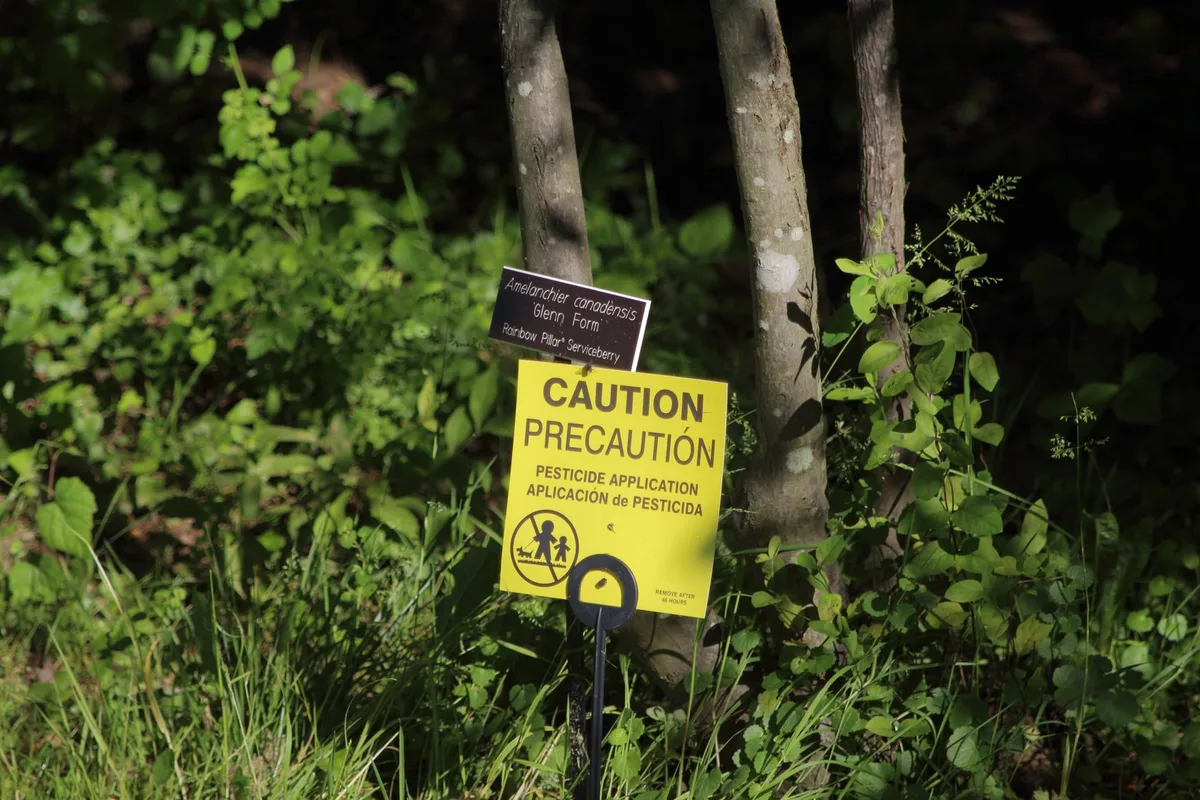
As of 2026, the EPA requires all registered pesticides to carry a clear signal word on the front label. If you don't see one, the product isn't EPA-registered and shouldn't be trusted.
How Risk Changes Based on Your Household
Your household is not your neighbor's household. The risk level of ant control changes dramatically depending on who lives under your roof.
Homes with children. Children under five are at the highest risk for accidental ingestion of ant baits. They explore with their mouths, and a bait station looks like a toy. Look for products with child-resistant packaging, which is required by CPSC standards.
Place bait stations behind appliances or under cabinets where curious hands can't reach.
Homes with pets. Cats are especially sensitive to pyrethroids like permethrin and bifenthrin. Even small amounts absorbed through the skin can cause drooling, vomiting, and tremors. Dogs are more tolerant but can still get sick from eating bait stations.
Birds are extremely sensitive to aerosolized pesticides. Fish are highly vulnerable to runoff from outdoor treatments.
Homes with pregnant or nursing family members. The EPA's registration process includes developmental toxicity studies. Most consumer ant control products are considered safe when used as directed during pregnancy. But some professionals recommend avoiding any unnecessary pesticide exposure during the first trimester as a precaution.
People with respiratory conditions. Sprays and dusts create airborne particles that can trigger asthma attacks or allergic reactions. Gel baits and enclosed stations produce no airborne residue, making them a much better choice for anyone with lung issues.
Multi-unit housing. If you live in an apartment or condo, your ant control efforts can affect your neighbors and their pets. Sprays can drift through shared walls or under doors. Bait stations stay contained.
It's also worth coordinating with your building management to avoid multiple people treating the same problem independently.
If you're dealing with ants near plants, you might want to check what's safe for your greenery. The right organic fertilizer for fruit trees is one thing, but ant control near edible plants requires extra caution.
Routes of Exposure You Need to Know About
Pesticides enter the body through three main routes: ingestion, inhalation, and skin absorption. Understanding these pathways helps you block each one.
Ingestion. This is the most concerning route for children and pets. Ant bait stations are designed to be attractive to ants, but that sweet or oily base can also appeal to dogs and toddlers. Most consumer baits contain bittering agents that make them taste awful, which limits the amount a child or pet would actually eat.
If a child eats part of a bait station, call Poison Control at 1-800-222-1222 immediately.
Inhalation. Sprays and dusts create particles that can be breathed in. This is especially risky for people with asthma or other respiratory conditions. Aerosol sprays produce the smallest particles, which stay airborne longest.
Pump sprays are slightly better. Gel baits and enclosed stations produce no inhalable particles at all.
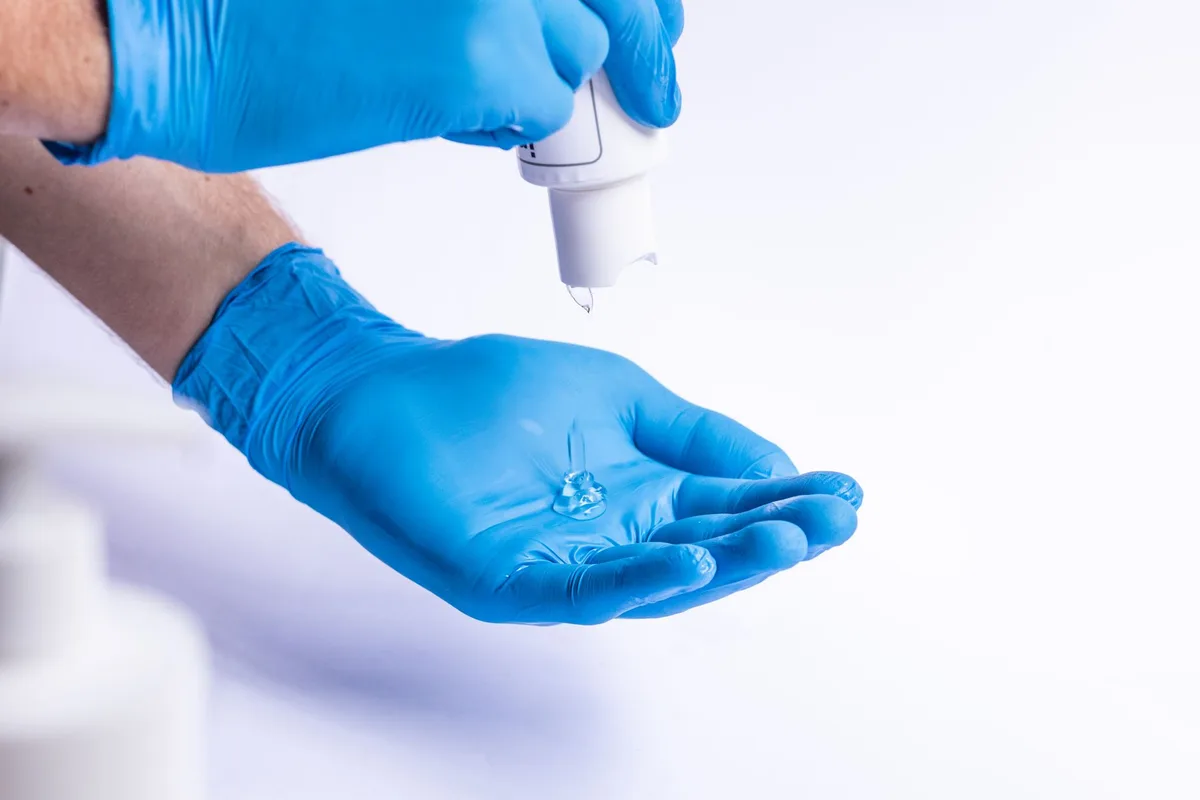
Skin absorption. Liquid concentrates used in perimeter sprays can be absorbed through the skin. This is why the label tells you to wear gloves and long sleeves during application. Residues on surfaces can also transfer to skin hours after application.
Wash your hands thoroughly after handling any pesticide product.
Secondary poisoning. This is the risk of a pet eating a poisoned ant or rodent. In practice, secondary poisoning from modern ant baits is extremely rare because the dose is too low to harm a mammal the size of a cat or dog. But it's still worth monitoring your pets after treatment.
"Products with fipronil or hydramethylnon have very low secondary poisoning risk because the active ingredient breaks down quickly in a dead insect's body," says the National Pesticide Information Center. "Bait stations further reduce this risk by keeping the poison contained."
When you apply any ant control product, treat it like a medicine. You wouldn't leave prescription pills on the counter where a child could reach them. Treat bait stations the same way.
Place them out of reach, and remove them once the ants are gone.
The Safest Ant Control Methods Ranked
Not all ant control methods carry the same risk. Here is a clear ranking from lowest to highest risk, based on EPA toxicity data and real-world exposure patterns.
1. Enclosed bait stations. These are the gold standard for household safety. The active ingredient is locked inside a plastic case with entry holes sized for ants only.
Children and pets cannot access the gel or granules directly. Research from the National Pesticide Information Center shows that properly placed bait stations result in virtually zero human or pet exposure. They work slowly but thoroughly, eliminating the colony over two to four weeks.
2. Gel baits in syringe tubes. These are a close second. You squeeze small dots of gel into cracks, behind appliances, and along ant trails.
Gel baits allow no airborne particles and minimal surface residue. The main risk is accidental contact if a child or pet licks a dot before it dries. Place dots in areas that are completely inaccessible to non-targets.
Many gels now include bittering agents to deter ingestion.
3. Diatomaceous earth (food grade). This is a fine powder made from fossilized algae. It kills ants by absorbing the waxy layer on their exoskeleton, causing them to dehydrate.
Food-grade diatomaceous earth has very low mammalian toxicity. However, inhaling the dust can irritate lungs. Apply it with a duster in cracks and voids, not in open areas.
Keep it away from fans or air vents.
4. Granular baits for outdoor use. These are scattered on the ground around the foundation. The granules are small and can be picked up by pets or children.
Use them only in areas you can keep off limits for a few days. Water the granules lightly after application to activate them and reduce dust.
5. Liquid concentrates for perimeter sprays. These are mixed with water and sprayed around the foundation. They create a chemical barrier that ants cross and die.
Liquid concentrates pose the highest risk because of skin absorption during mixing and application, plus runoff concerns. Wear gloves, long sleeves, and eye protection. Keep children and pets away for at least 24 hours.
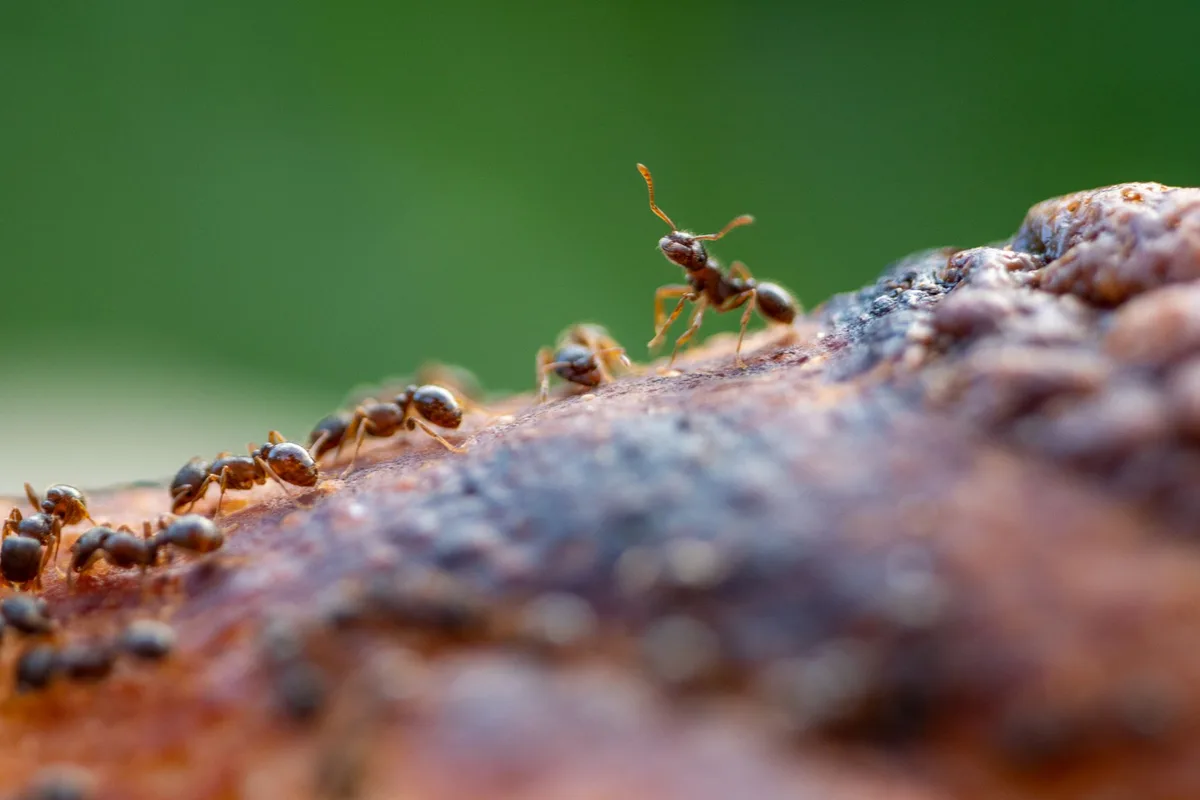
If you are dealing with a persistent carpenter ant problem, a targeted spray may be necessary. But for routine household ants, start with baits and escalate only if needed.
Common Mistakes That Make Ant Control Unsafe
The product itself is rarely the problem. It's how people use it that creates danger.
Mistake 1: Using outdoor products indoors. Outdoor sprays contain higher concentrations of active ingredients because they need to withstand rain and sun. Using them inside creates unnecessary airborne residue and prolonged surface contact. Always check the label for indoor use approval.
Mistake 2: Over-applying "just to be sure." More is not better with pesticides. Doubling the application rate increases the risk of exposure without improving ant kill. Ant baits work on a timed release mechanism.
Flooding a bait station with extra gel just makes a mess.
Mistake 3: Mixing different products. Mixing two different ant killers can create toxic chemical reactions or cancel out their effectiveness. Never combine products unless the label explicitly says it is safe.
Mistake 4: Ignoring reentry intervals. Many spray labels specify that people and pets must stay off the treated area until it is completely dry. That drying period is not a suggestion. Walking on wet spray spreads the residue and increases skin contact.
Mistake 5: Storing products improperly. Ant baits and sprays should be kept in their original containers, out of reach of children, and away from food. Transferring pesticide to an unlabeled bottle or a food container is a leading cause of accidental poisoning cases reported to Poison Control.
Mistake 6: Cleaning ant trails with bleach or ammonia. Strong cleaners can react with pesticide residues and release harmful fumes. Use soap and water instead after the product has dried.
If you have indoor plants, be careful where you place baits. Some ant baits can attract ants to the potting soil. A good grow light for seedlings won't help if ants start nesting in the pots.
How to Apply Ant Control Safely Step by Step
Follow this process to minimize risk while maximizing effectiveness.
Step 1: Identify the ant species. Different ants respond to different baits. Sugar-based baits work for odorous house ants and pavement ants. Protein or oil-based baits work for carpenter ants and pharaoh ants.
A quick photo search or your local extension service can help.
Step 2: Read the entire label. This is not optional. Look for the signal word, the active ingredient, the application rate, the reentry interval, and the first aid instructions. The label is a legal document.
Step 3: Prepare the area. Remove food, dishes, pet bowls, and toys from the treatment zone. Cover fish tanks and turn off aquarium air pumps. Move pets to another room.
Open windows if using a spray.
Step 4: Put on protective gear. For sprays, wear chemical-resistant gloves, long sleeves, long pants, closed-toe shoes, and safety glasses. For bait stations, gloves are still a good idea to avoid transferring human scent to the bait.
Step 5: Apply the product exactly as directed. For bait stations, place them along ant trails but not directly in the path where people walk. For gels, apply small dots the size of a grain of rice. For sprays, use a coarse spray pattern rather than a fine mist.
Step 6: Allow reentry time. Keep children and pets away for at least the time specified on the label. For sprays, this is usually until the surface is dry, typically two to four hours.
Step 7: Wash up. Remove gloves carefully, then wash hands and forearms with soap and water. Wash any clothing that came in contact with the product separately from other laundry.
Step 8: Monitor and remove. Check bait stations weekly. Once you see no ant activity for a week, remove the stations and dispose of them in the regular trash.
For outdoor treatment near patios, make sure the product is safe for surfaces like concrete or gravel. The right gravel for patio area won't be damaged by most pesticides, but some liquid sprays can stain light-colored stone.
When to Choose Professional Pest Control
DIY ant control is safe and effective for most situations. But there are clear signs that you need a licensed applicator.
Sign of a large or hidden colony. If you see hundreds of ants daily despite using baits for two weeks, the colony may be inaccessible. Professionals have tools to locate and treat nests inside walls or under concrete slabs.
Carpenter ant infestation. Carpenter ants damage wood. They require a different approach than nuisance ants. A professional can identify the satellite nests and treat the structural voids without drilling holes everywhere.
Fire ants in high-traffic areas. Fire ants are aggressive and their stings cause allergic reactions in some people. Broadcast granular baits are effective, but professional application ensures even coverage and proper timing.
Multiple units in a building. If you live in an apartment or condo, ants often travel between units through shared walls. A professional can coordinate a building-wide treatment that prevents re-infestation.
Health vulnerabilities in the household. If someone in your home is pregnant, has a compromised immune system, or has severe allergies, the minimal risk of DIY products may still be too high. Professionals use lower-toxicity options and have liability coverage.
Recurring infestations. If ants return every season despite your best efforts, there may be an environmental factor like moisture or food sources that needs addressing. A professional can conduct a thorough inspection and recommend long-term fixes.
The cost of professional pest control typically ranges from $200 to $500 per visit for a standard home. That includes inspection, treatment, and follow-up. Compare that to $10 to $30 for a DIY bait station kit.
The decision comes down to the complexity of the problem and your tolerance for risk.
What to Do If Something Goes Wrong
Despite your best efforts, accidents happen. Here is what to do for each type of exposure.
If someone ingests ant bait. Call Poison Control immediately at 1-800-222-1222. Do not induce vomiting unless specifically instructed. Have the product container ready to read the active ingredient.
Most bait ingestions cause only minor stomach upset, but a professional should always assess the situation.
If pesticide gets on skin. Remove contaminated clothing immediately. Wash the affected area with plenty of soap and water for 15 to 20 minutes. Do not scrub hard, as that can increase absorption.
Watch for redness, itching, or blistering. If symptoms develop, call a doctor.
If pesticide gets in eyes. Hold the eyelid open and rinse with a gentle stream of lukewarm water for at least 15 minutes. Remove contact lenses if present. Do not use eye drops or ointments.
Seek medical attention.
If pesticide is inhaled. Move the person to fresh air immediately. Loosen tight clothing. If they have trouble breathing, call 911.
For asthma-related reactions, use their rescue inhaler if available.
If a pet ingests bait. Call a veterinarian or the ASPCA Animal Poison Control Center at 888-426-4435. Note the product name and active ingredient. Do not induce vomiting unless instructed.
Most bait products are formulated with bittering agents that cause pets to spit them out before swallowing much.
Symptoms that warrant emergency medical attention. In children, look for drowsiness, drooling, vomiting, or unusual behavior. In adults, look for headache, dizziness, nausea, or difficulty breathing. Any symptom that appears within an hour of exposure should be evaluated.
Keep the product label with you when you call. The active ingredient name is what medical professionals need to determine the appropriate treatment. You can also save the EPA registration number for reference.
The Poison Control hotline is free, confidential, and available 24/7. They handle thousands of pesticide exposure calls each year and are highly experienced with ant control products.
Real Scenarios: How Safety Plays Out
A family with a toddler and a persistent ant problem. The ants are in the kitchen. The child is crawling. Bait stations placed behind the refrigerator and under the sink work well.
The toddler cannot reach them. The colony dies in three weeks. No exposure occurs.
An apartment dweller with shared walls and neighbor pets. Sprays drift into adjacent units. The neighbor's cat is sensitive to pyrethroids. Gel baits applied in cracks and behind appliances solve the problem without affecting anyone else.
Coordination with the building manager prevents duplicate treatments.
An outdoor fire ant treatment near a vegetable garden. Broadcast granules contain fipronil. The label prohibits use near edible plants. A mound drench with a pyrethrin-based product approved for vegetable gardens is a safer alternative.
The garden is safe to harvest after the label指定的 waiting period.
What About Natural and DIY Ant Control?
Natural options like essential oils, vinegar, and cinnamon are low risk but low efficacy. Peppermint oil repels ants for a few hours. Vinegar disrupts pheromone trails temporarily.
Neither eliminates a colony.
Diatomaceous earth is effective but only when dry. It loses its abrasive properties when wet. Apply it in cracks and voids, not in open areas.
Food grade is safe for mammals but avoid inhaling the dust.
Homemade concoctions with borax and sugar can work. But the concentration is hard to get right. Too little borax does nothing.
Too much repels ants before they carry it back to the colony. Commercial baits are formulated to a precise ratio that balances attractiveness and toxicity.
Frequently Asked Questions
Are ant baits safe if my dog eats one?
Most dogs spit them out because of bittering agents. If a dog swallows a bait station, call your vet or the ASPCA Poison Control hotline at 888-426-4435. The plastic casing is usually the bigger concern than the poison.
How long after spraying is it safe for my kids?
Wait until the spray is completely dry. This usually takes two to four hours. The label specifies the reentry interval.
Follow it exactly. If the label says four hours, wait four hours.
Can I use ant control in my kitchen?
Yes, but only products labeled for indoor use. Place bait stations where food prep does not happen. Keep them away from countertops and open food.
Remove them once the ants are gone.
Is it safe to sleep in a room that was just treated?
Not if you used a spray or dust. Wait until the product is dry and the room is ventilated. Gel baits and enclosed stations are safe to sleep near because they produce no airborne residue.
The Bottom Line: Making the Safest Choice for Your Situation
Start with enclosed bait stations for most indoor ant problems. They are the safest option for homes with children and pets. If baits do not work after two weeks, escalate to gel baits or professional help.
For outdoor problems, use granular baits designed for the specific ant species. Keep them away from vegetable gardens and water sources. Read the label every time.
The signal word tells you the risk level.
When in doubt, call a professional. The cost of a single visit is less than the cost of a medical emergency. Ant control is safe when you respect the product, follow the instructions, and match the method to your household.