Guide to Common Insecticide Application Mistakes in 2026
[IMAGE 1 — hero near top]

You've spent good money on insecticide, followed the directions, and still ended up with a yard full of dead flowers and live bugs. Or worse, you had to call poison control after a skin reaction. Common insecticide application mistakes are more than minor slip-ups.
They waste time, destroy plants, and can seriously harm you, your family, and the environment.
According to EPA data, roughly 40% of all pesticide misapplications stem from simple user errors, wrong rate, wrong timing, or wrong nozzle. And the number one reason? People skip the label.
As of 2026, even the best product fails when you don't follow its instructions to the letter. Let's walk through exactly where things go wrong and how to fix them.
Why Insecticide Mistakes Cost More Than You Think
Every bottle of insecticide represents a promise: use it right, and the pests vanish. Use it wrong, and you pay in multiple currencies.
Money down the drain. A half‑strength mix might not kill the target pest, so you re‑spray. That doubles your product cost and labor. Over‑mixing wastes chemical and can burn your plants, a problem called phytotoxicity that can kill ornamentals or reduce crop yields.
Health risks. The National Pesticide Information Center (NPIC) reports that most pesticide‑related calls involve applicators who didn't wear the correct PPE or ignored re‑entry intervals. Symptoms range from mild skin irritation to nausea and respiratory distress.
Environmental fallout. Spray drift onto neighboring gardens, lawns, or waterways kills beneficial insects and contaminates groundwater. In some states, a single drift complaint can trigger a fine or loss of applicator license.
Resistance. When you under‑dose or spray at the wrong growth stage, a few tough pests survive and produce offspring that are harder to kill. That’s how super‑bugs develop. The Insecticide Resistance Action Committee (IRAC) recommends rotating modes of action specifically to avoid this.
So even a small mistake can create a cascade of bigger problems. Getting it right the first time saves money, protects your health, and keeps your garden thriving.
The Core Facts: How Insecticides Actually Work (and Fail)
Insecticides kill insects by interfering with their nervous system, growth regulation, or energy production. Sounds simple, but the nuance matters.
There are two broad categories:
- Contact insecticides must hit the pest directly. Good examples are pyrethrins, spinosad, and insecticidal soaps. They have little to no residual activity after drying.
- Systemic insecticides are absorbed by the plant and move through its tissues. The pest eats the plant and dies. Neonicotinoids and some organophosphates fall here.
Contact products need thorough coverage. Miss the underside of a leaf, and the aphid hiding there survives. Systemics take time to move through the plant, spraying today doesn't mean dead bugs tomorrow.
Insecticides also have a mode of action, the specific biochemical pathway they attack. The IRAC system groups them into numbered classes. Rotating between classes (e.g., using a Group 3A product one season, then a Group 4A the next) delays resistance.
Common failure points:
| Failure Mode | Why It Happens |
|---|---|
| Poor coverage | Wrong nozzle, low pressure, fast walking speed |
| Poor timing | Spraying when pests are not actively feeding |
| Rain wash‑off | Not checking rainfast period (usually 1–6 hours) |
| pH instability | Water too alkaline or acidic degrades the active ingredient |
| Resistant pest | Using the same mode of action for years |
Knowing these basics helps you spot where your application technique might be off.
The Biggest Mistake: Ignoring the Label’s Fine Print
[IMAGE 2 — near “The Biggest Mistake…”]

Here’s the truth: the label is the law. In the United States, the EPA approves every word on that bottle. Deviating from it is not just a bad idea, it’s a violation of federal pesticide regulations.
Yet skipping the label is the single most common mess‑up we see. People assume they know the rate, or they use the same mix they used last year for a different pest. That’s a fast track to failure.
What you absolutely must read on every label:
- Active ingredient and concentration. Not all “pyrethrin” products are the same. The percentage matters.
- Target pests. A product labeled for aphids on roses may not work on caterpillars on tomatoes.
- Application rate. This is usually listed as “oz per gallon” for concentrated liquids or “lbs per 1,000 sq ft” for granules.
- Pre‑harvest interval (PHI). For food crops, this tells you how many days must pass after spraying before you can harvest.
- Re‑entry interval (REI). The number of hours you need to stay out of the treated area. Most are 4, 12, or 24 hours.
- PPE requirements. “Long‑sleeved shirt and long pants” or “chemical‑resistant gloves and goggles”, no shortcuts.
- Environmental hazards. Restrictions about applying near water, or when bees are active.
A real‑world example: A neighbor used a broad‑spectrum pyrethroid on her vegetable garden to kill aphids. She didn’t check the label’s bee warning, and applied the product when flowers were blooming. She lost half her squash crop because no pollinators visited.
If she’d used a more selective product, like best insecticide for carpenter ants (a targeted bait, not a blanket spray), she could have spared the bees.
The fix is simple: read the label before you mix. Every single time.
Risk Factor #1: Timing Errors That Waste Product and Kill Beneficials
[IMAGE 3 — near “Risk Factor #1…”]
Timing is everything. Apply insecticide at the wrong hour, wrong day, or wrong growth stage, and you either miss the pest or kill the good guys.
Time of day. Most insects are most active at dawn and dusk. That’s when they feed and move, making them easier to hit. Spraying in the middle of a hot afternoon not only wastes chemical (it evaporates before it dries on the leaf) but also risks damaging leaf tissue.
Many contact insecticides lose efficacy above 85°F. The general rule: spray between early morning and mid‑morning, or late afternoon, when temperatures are below 85°F and wind is under 10 mph.
Time of year. Sprays for overwintering pests (like scale insects) are often applied in late winter, the dormant oil spray. Spraying a growing‑season product at the wrong stage can kill tender new growth. Follow the label’s seasonal guidance.
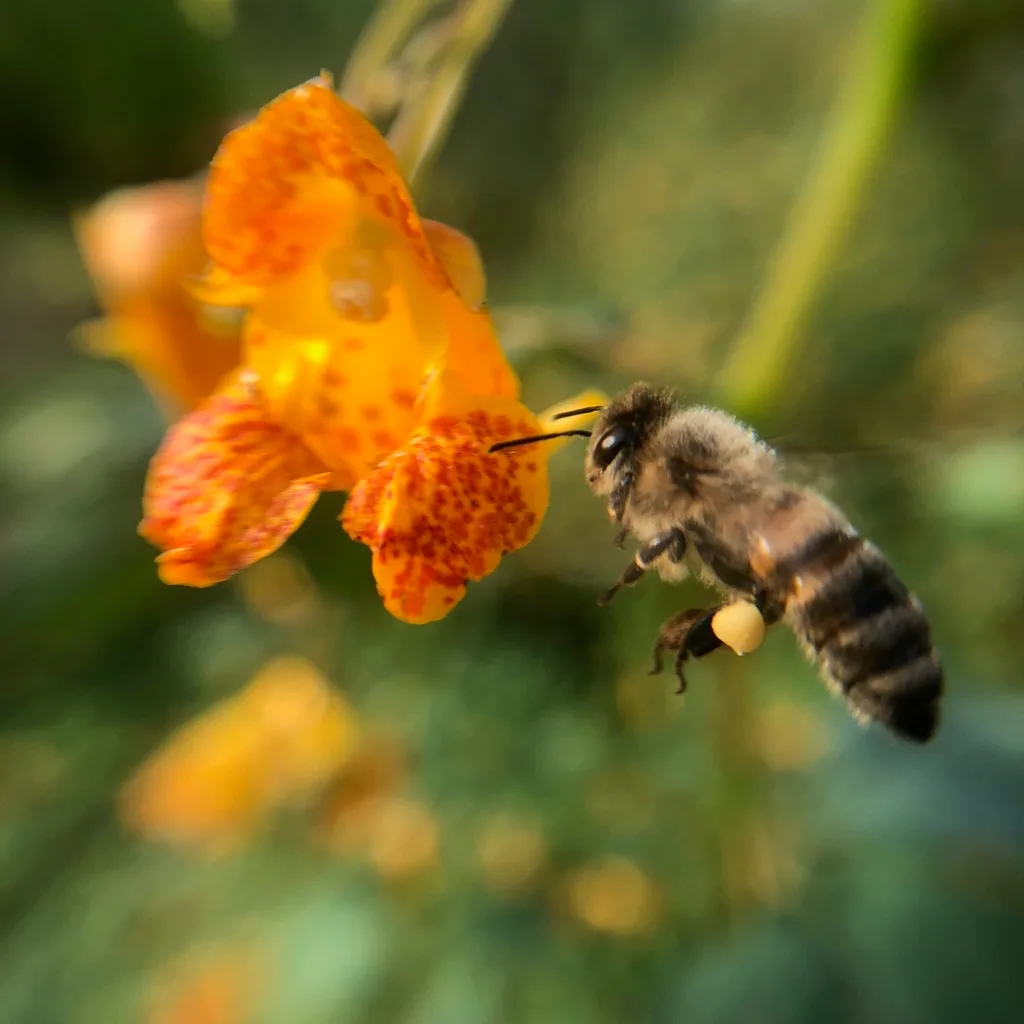
Pollinator protection. Bees, butterflies, and other beneficial insects are essential for pollination and natural pest control. Most labels list a “bee advisory box”, a warning to avoid applying when bees are foraging. That typically means early morning before bees are active, or late evening after they return to the hive.
Never spray open flowers unless the product is specifically labeled for that use.
The EPA’s Pollinator Protection website offers state‑specific guidance. Some states require a 1‑day notification before spraying near agricultural areas, check your local regulations.
If you’re looking for non‑chemical ways to manage flies around the house, consider using best fly traps for inside instead of spraying insecticides indoors.
Risk Factor #2: Mixing and Calibration Blunders
[IMAGE 4 — near “Risk Factor #2…”]

You’ve bought the right product, chosen the right day. Now you need to mix and apply it accurately. This is where most home users stumble.
Mixing order matters. When you combine multiple products (tank mixing), you must add them in the correct sequence to prevent clumping, settling, or chemical reactions. The standard order is:
- Water conditioners (if needed for hard water)
- Wettable powders (WP/WDG)
- Suspension concentrates (SC)
- Emulsifiable concentrates (EC)
- Surfactants / adjuvants
- Remaining water to final volume
Measuring mistakes. “I’ll just eyeball it” is a recipe for failure. Use the measuring cup that came with the product, or a dedicated graduated cylinder. Convert carefully: 1 tablespoon per gallon equals roughly 1 teaspoon per quart, but always check the label.
Calibration, the step almost nobody does. You can mix the perfect concentration, but if your sprayer isn’t calibrated, you’ll either over‑ or under‑apply. Here’s a quick process for a backpack sprayer:
- Fill the tank with plain water.
- Spray a test area (say, 1,000 square feet) at your normal walking speed and pressure.
- Collect the output in a measuring bucket or use a flow‑rate calculator.
- Adjust your walking speed or nozzle selection until you deliver the labeled volume.
Typical output targets for a backpack sprayer: 1, 2 gallons per 1,000 square feet for ornamentals, or 15, 20 gallons per acre for row crops. Check your pesticide label for carrier volume recommendations.
Water quality. Hard water (high calcium/magnesium) can deactivate some insecticides, especially organophosphates and carbamates. If your tap water is hard, use a water conditioner labeled for pesticide mixing, or soften the water before adding product. pH should be between 5.5 and 7.0 for most products; test strips are cheap and reliable.
For your lawn, if you need a broad‑spectrum disease control, read about best fungicide for lawns, but remember that fungicide spraying requires the same calibration and mixing care.
We’re only halfway through the major mistakes. Next up: nozzle selection, sprayer setup, safety practices, and resistance management, all equally critical for a successful spray.
Risk Factor #3: Nozzle and Sprayer Setup Mistakes
You can nail the mixing and calibration. But if your nozzle is wrong or your sprayer is leaking, the whole effort falls apart.
Nozzle selection is not a detail. It is a variable. Nozzles control droplet size, spray pattern, and flow rate. Use a coarse nozzle for herbicides and a fine nozzle for insecticides?
Actually, fine droplets drift more and evaporate faster. For most insecticide work, you want a medium droplet (200, 300 microns). Flat‑fan nozzles work well for broad‑leaf crops.
Cone nozzles (hollow or solid) give better coverage on dense foliage.
Your sprayer pressure also matters. Too high, and you create a mist that drifts. Too low, and you get uneven coverage.
Most backpack sprayers operate best between 20 and 40 PSI. Check your nozzle’s recommended pressure range.
Leaking connections waste chemical and create hazards. A pinhole leak at a hose fitting can spray concentrated product on your skin without you noticing. Before each use, pressurize the tank with water and inspect all joints. Tighten loose fittings, replace worn O‑rings.
Walking speed inconsistency. Even with perfect calibration, if you speed up for the last row, you under‑apply. Keep a steady pace. Mark your stride if needed.
Some professionals use a metronome app to regulate speed.
A nozzle wear check. Brass nozzles wear out after 50, 100 hours of use. Ceramic or stainless steel last longer. If your spray pattern looks uneven or you’re using more product than expected, check the nozzle output with a measuring cup.
A worn nozzle can deliver 20% more than labeled.
If you’re maintaining a sprayer for your garden, the same care applies to any tool. Regular cleaning extends the life of your equipment, much like keeping your best rakes for pine needles in good shape prevents rust and breakage.
Safe Practices: Protecting Yourself, Pollinators, and Water
Safety isn’t a separate step. It’s built into every action from mixing to cleanup.
PPE is not optional. The label says “long‑sleeved shirt, long pants, shoes plus socks, and chemical‑resistant gloves.” That means nitrile or rubber, not cotton or leather. Cotton absorbs and holds chemical against your skin. Goggles protect your eyes from splash.
A respirator is required if the label says “Vapor” or “Mist”, check the box.
Mix and load in a well‑ventilated area. Never mix inside a garage or shed. Do it outdoors, away from children, pets, and food. Keep the wind at your back so drift doesn’t blow into your face.
Protect pollinators. We covered timing earlier. But also: avoid spraying plants in bloom. If you must treat a flowering crop, choose a product with low bee toxicity (like spinosad) and apply at dusk when bees have returned to the hive.
Maintain a buffer of at least 100 feet from known apiaries.
Water protection. Never mix or spray within 50 feet of a well, stream, or pond. Leave a buffer strip of untreated vegetation along water bodies. This keeps runoff from contaminating groundwater.
Rinse containers away from drains.
Cleanup matters. Triple‑rinse empty containers and add the rinse water to the spray tank. Dispose of containers according to local regulations, many areas have recycling programs for pesticide jugs. Wash your sprayer thoroughly after each use, especially if you switch between insecticides and herbicides.
A trace of 2,4‑D can kill your tomatoes next week.
For a broader view of keeping your garden healthy without chemicals, explore best plants for hummingbirds, they act as natural pollinators and pest deterrents when placed near vegetable beds.
Common Patterns That Lead to Resistance (and How to Avoid Them)
Resistance is evolutionary biology in fast‑forward. A few pests survive your spray because they carry a genetic trait that makes them less susceptible. They reproduce, and soon the whole population is harder to kill.
The number‑one driver: using the same active ingredient year after year. If you’re always reaching for the same bottle, you’re selecting for resistant individuals. IRAC groups insecticides by mode of action, each group has a number (e.g., Group 3A for pyrethroids, Group 4A for neonicotinoids). Rotate among groups with different numbers.
Don’t just change brand names. Check the active ingredient.
Under‑dosing. You think “a little less is safer.” But sublethal doses let survivors pass on resistance genes. Always mix to the labeled rate. Don’t guess.
Skipping non‑chemical controls. Integrated Pest Management (IPM) isn’t just for professionals. Scout your garden regularly. Pick off large insects.
Use traps. Introduce beneficial insects like ladybugs or lacewings. When you lower the overall pest pressure, you need fewer chemical applications, which slows resistance.
Practical rotation schedule. If you spray twice in a season, use two different IRAC groups. For example, start with a Group 3A pyrethroid for early‑season leafhoppers, then switch to a Group 5 spinosyn for late‑season caterpillars. Check the label for the IRAC group number.
Resistance management is long‑term thinking. It saves you from needing stronger, more expensive products later. For example, if you’re growing fruit trees, you want to keep products like best organic fertilizer for fruit trees in your rotation alongside smart spray scheduling.
When to Call a Professional or Consult Your Extension Office
Not every pest problem requires a pro. But some situations are beyond what a home‑user should handle.
Call a pro when:
- The infestation is large or spreading fast across a whole property.
- The pest is a regulated species (e.g., spotted lanternfly, emerald ash borer) requiring specific treatments.
- You’ve tried two different insecticide groups with no results, resistance may be present.
- You need to spray a tree taller than 15 feet. Aerial canopy coverage with a homeowner sprayer is nearly impossible and dangerous.
- You’re unsure about label interpretation or local restrictions.
Your local extension office is a free resource. Every U.S. county has a Cooperative Extension office staffed by trained horticulturists and agronomists. They can identify pests, recommend treatment thresholds, and guide you on product selection. In many states, they offer free soil testing and water testing for pesticide interactions.
When to consult an extension agent instead of a commercial applicator: If you want education, not just treatment. Extension agents don’t sell products. They’ll teach you how to scout, time sprays, and rotate chemistries.
That knowledge saves money over the long run.
Commercial applicators hold state‑issued licenses and carry insurance. They know drift laws and local regulations. For a large lawn or orchard, a professional can be more cost‑effective than buying hardware and chemicals yourself.
If you’re trying to manage pests indoors, a targeted approach works better than fogging. Look at best smell proof bags for weed for odor containment, but for actual insect control inside, stick to baits and traps rather than sprays.
A Quick Checklist Before Every Application
This takes two minutes. It saves hours of rework.
Before mixing:
- Read the label (full thing, not just the quick reference).
- Check the weather: wind under 10 mph, no rain forecast for 6 hours, temperature below 85°F.
- Confirm the target pest is listed on the label.
- Calculate the area you’re treating (square footage or acreage).
- Verify the correct nozzle and spray pattern for your crop.
During mixing:
- Wear the required PPE.
- Use the correct measuring device (don’t guess with a spoon from the kitchen drawer).
- Follow mixing order: water conditioners, wettable powders, suspension concentrates, emulsifiable concentrates, adjuvants.
- Add water first, then product, then remaining water.
During application:
- Calibrate sprayer with water before adding product.
- Maintain steady walking speed.
- Overlap spray pattern by 10, 20% for even coverage.
- Stop spraying if wind picks up or temperature spikes.
- Keep a buffer from water sources and flowering plants.
After spraying:
- Note the date, time, product used, rate, and weather in a log.
- Record the re‑entry interval and pre‑harvest interval on a sign or calendar.
- Clean sprayer thoroughly with water and a tank cleaner.
- Triple‑rinse containers and dispose according to local rules.
- Wash PPE separately from other laundry.
Print this checklist and tape it to the lid of your sprayer. It costs nothing. It prevents every mistake we’ve covered.
Real Scenarios: What Failure Looks Like in the Field
Scenario one: the tomato blight that wasn’t. A homeowner sprayed a pyrethroid every two weeks all summer. By August, hornworms were worse than ever. The problem?
She never rotated modes of action. The survivors bred resistance into the population. Switch to Bt (Bacillus thuringiensis) for caterpillars, and rotate groups each season.
Scenario two: the dead rose bush. A gardener mixed a concentrate at double strength, thinking “more is better.” Within days, leaves curled and browned. That’s phytotoxicity from overdose. The fix is always the label rate.
More product doesn’t mean more kill. It means more damage.
Scenario three: the drift complaint. A neighbor sprayed his lawn on a breezy afternoon. The fine mist drifted onto a vegetable garden 50 feet away. The vegetables were unsafe to eat for weeks.
Buffer zones exist for a reason. Check wind direction. Use drift‑reducing nozzles when spraying near sensitive areas.
For more on keeping plants healthy without these risks, look into best fertilizer for bougainvillea in pots or best flowers for flower beds that thrive with minimal chemical input.
Frequently Asked Questions (Answered Without Fluff)
Can I mix insecticide and fertilizer in the same tank?
Yes, but only if both labels allow it. Some fertilizers change the pH of the water and break down the insecticide. Always do a jar test first: mix small amounts in a glass jar and look for clumping, separation, or heat.
If it looks fine, spray a small test area.
How long should I wait after spraying before it rains?
Check the label for the rainfast period. Most contact insecticides need 2 to 6 hours of dry weather. Systemics often need 4 to 6 hours.
If rain is forecast within that window, delay the application.
What’s the best time of day to spray?
Early morning (dawn to 9 a.m.) or late afternoon (after 4 p.m.) when temperatures are below 85°F and wind is calm. This maximizes coverage and minimizes evaporation and drift. It also avoids peak bee activity.
Can I save leftover insecticide for next season?
Most liquid concentrates degrade within a year once opened. Store them in a cool, dry place away from freezing temperatures. Shake well before reuse, if it looks clumpy, smells off, or has settled solids, discard it properly.
How do I dispose of old insecticide containers?
Triple‑rinse the container and add rinse water to your spray tank. Puncture the container to make it unusable. Check with your local waste authority, many counties have pesticide container recycling programs or household hazardous waste collection days.
Final Word: Your Go-To Decision Guide for a Safe, Effective Spray
You now have the full picture. The mistakes we covered are common, but they are also avoidable.
Here is your quick decision guide:
- If you haven’t read the label: Stop. Read it now. That single step prevents 40% of errors.
- If the wind is above 10 mph or rain is coming: Wait. You’ll waste product and risk drift.
- If you’re using the same product from last year: Check the IRAC group. If it’s the same group, switch. Rotate chemistries to delay resistance.
- If you’re unsure about your sprayer output: Calibrate with water first. It takes ten minutes and saves entire seasons.
- If children, pets, or bees are nearby: Postpone. Safety comes before convenience.
- If you’ve tried two different groups with no results: Call your county extension office. You may need a professional assessment.
Insecticide application is a skill, not a guessing game. Every bottle has the instructions printed on it. The mistakes happen when we skip those instructions, or assume we already know them.
Start with the label. Calibrate your gear. Time it right.
Protect yourself and the environment. Do that, and you’ll get the results you paid for.