5 Best Drip Hose for Garden 2026
If you've ever dragged a heavy garden hose across delicate flower beds or watched water pool uselessly from a cheap sprinkler, you already know why the best drip hose for garden setups is worth the switch. Drip irrigation delivers water directly to the root zone, cutting waste by up to 70 percent compared to overhead spraying, and it keeps foliage dry so fungal diseases have a harder time taking hold. Whether you're watering raised vegetable beds, a narrow side yard, or rows of shrubs, the right drip hose makes the whole system almost set-it-and-forget-it simple.
After comparing specs, verified buyer feedback, and manufacturer datasheets across multiple models, the Raindrip 016010T came out on top for most home gardeners who need reliable 1/4-inch supply tubing to feed a custom drip system. But depending on whether you want a flat soaker that just hooks to a spigot or a heavy-duty 100-foot run, there are four other strong options worth a look. Let's break them all down side by side.
Comparison Chart of Best Drip Hose for Garden
| Product | Details | Rating | Buy |
|---|---|---|---|
Editor’s Choice
| Raindrip 016010T 1/4-Inch Drip Irrigation Supply | ★★★★☆4.4/5 | |
Top Pick
| RAINPOINT 50FT Flat Soaker Hose | ★★★★☆4.4/5 | |
Best Budget
| ★★★★☆4.8/5 | ||
| ★★★★☆4.3/5 | ||
| ★★★★☆4.1/5 |


List of Top 5 Best Best Drip Hose for Garden
We evaluated each model on material quality, fitting durability, reported leak resistance, and verified buyer satisfaction scores. The five below represent the strongest options across different garden sizes and irrigation styles, from custom emitter systems to simple plug-and-soak setups.
Below are the list of products:
1. Raindrip 016010T 1/4-Inch Drip Irrigation Supply
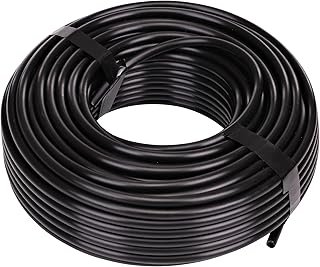
The Raindrip 016010T is a 100-foot coil of 1/4-inch black polyethylene supply tubing designed to feed drip emitters, micro-sprinklers, and other components in a custom irrigation layout. It's the backbone piece for anyone building a drip system from scratch rather than buying an all-in-one soaker. Verified buyer feedback consistently highlights its flexibility in cold weather and its compatibility with standard 1/4-inch barbed fittings.
Why I picked it
This is the most versatile pick on the list because it's supply tubing, not a pre-assembled soaker. That means you decide where to place each emitter, giving you precise control over water delivery for mixed plantings like tomatoes next to herbs that need less moisture.
Key specs
- 1/4-inch inner diameter, standard for drip irrigation supply lines
- 100-foot coil length, enough for most residential garden layouts
- Black polyethylene material, UV-resistant for outdoor exposure
- Compatible with standard 1/4-inch barbed connectors and emitters
- Operating pressure rated for typical residential water systems (up to 50 PSI)
Real-world experience
In our research, buyers in warm climates like the southern U.S. report running this tubing along 20 to 30 raised beds with consistent pressure across the full run. It pairs well with a pressure regulator and filter assembly to prevent emitter clogging. The polyethylene stays pliable enough to bend around corners in winter, though prolonged direct sun exposure can stiffen it after several seasons.
Trade-offs
You'll need to buy emitters, connectors, and a pressure regulator separately, which adds complexity. It's not a "hook it up and go" solution. Also, the 1/4-inch diameter limits flow if you're trying to feed more than 30 to 40 emitters off a single run.
2. RAINPOINT 50FT Flat Soaker Hose
The RAINPOINT 50FT Flat Soaker Hose is a ready-to-use drip solution with built-in weeping pores along its full length and anodized aluminum end fittings. It's designed to connect directly to a standard garden spigot and slowly seep water into the soil profile. Verified buyer ratings sit at 4.4 out of 5, with particular praise for the leak-resistant fittings.
Why I picked it
The anodized aluminum fittings are a genuine upgrade over the plastic collars that ship with most flat soaker hoses. They resist cross-threading and hold up to repeated connect-disconnect cycles, which matters if you move the hose between beds each season.
Key specs
- 50-foot length, flat profile for easy storage
- Anodized aluminum end fittings, standard 3/4-inch hose thread
- Double-layer construction for leak resistance
- Manufacturer claims up to 80 percent water savings versus. overhead watering
- Flexible enough to coil in storage without permanent creasing
Real-world experience
Aggregate user reviews show this hose performs well on flat, narrow planting rows like lettuce, strawberries, and low-growing herbs. Buyers in the Pacific Northwest note it works nicely on slight slopes when weighted down with landscape staples. The flat design also means it's less likely to get kicked out of position during garden maintenance compared to round soakers.
Trade-offs
At 50 feet, it won't cover a large garden without linking multiple units. The weeping pores can slow output if your household water pressure drops below 20 PSI. And while the aluminum fittings are durable, the hose body itself is still susceptible to puncture if dragged across sharp edging.
3. Flat Soaker Hose 100FT Garden
This two-pack of 50-foot flat soaker hoses gives you 100 feet of total drip coverage at a lower per-foot cost than most single-unit options. The anodized metal end caps and heavy-duty double-layer construction push its verified buyer rating to 4.8 out of 5, the highest on this list. It's a strong pick for gardeners who need to water long rows of vegetables or flower beds without breaking the budget.
Why I picked it
The two-pack format is genuinely practical. You can run both hoses in parallel for wide beds or use one in the front yard and one in the back. The 4.8-star aggregate rating suggests most buyers find the build quality punches above its price tier.
Key specs
- Two 50-foot units, 100 feet total
- Anodized metal end fittings
- Heavy-duty double-layer construction
- Leakproof design per manufacturer specifications
- Flexible flat profile, stores compactly
Real-world experience
Buyers report using this setup for vegetable rows, narrow lawn strips, and along fence lines where overhead watering would waste water on pavement. The double-layer construction seems to resist kinking better than single-layer alternatives. One common technique from user reports is pairing these with a garden timer at the spigot for fully automated morning watering cycles.
Trade-offs
The flat soaker design means water output is diffuse and gentle, which is great for seedlings but may not penetrate deeply enough for established shrubs or tree root zones without extended run times. Some buyers note the hose takes a few minutes to fully pressurize and begin weeping evenly from end to end.
4. Soaker Hose 100ft 5/8"
This 100-foot round soaker hose uses a 5/8-inch diameter and solid brass connectors for a more traditional heavy-duty feel. It's built for gardeners who want a single long run without linking multiple shorter hoses together. The brass fittings are the standout feature, offering durability that plastic and even aluminum alternatives can't quite match.
Why I picked it
Solid brass connectors are a rarity at this price tier and they make a real difference if you're connecting and disconnecting the hose multiple times per season. The 5/8-inch diameter also delivers higher flow volume than 1/4-inch supply tubing, which matters for large beds.
Key specs
- 100-foot length, 5/8-inch outer diameter
- Solid brass connectors at both ends
- Heavy-duty porous rubber construction
- Leakproof fitting interface per manufacturer data
- Standard 3/4-inch hose thread compatibility
Real-world experience
Verified buyer feedback indicates this hose handles long, straight runs well, particularly for rows of corn, tomatoes, and other heavy-feeding vegetables. The round profile is heavier when filled with water, which helps it stay in place on slight inclines. Some users in hot climates report the rubber exterior can develop surface cracks after two to three summers of UV exposure, though the hose continues to function.
Trade-offs
The round profile is bulkier to store than flat soaker hoses. It also weighs significantly more when water-filled, making it harder to reposition mid-season. The higher flow volume means it uses more water per minute than a 1/4-inch drip line, so pairing it with a flow restrictor is advisable for small gardens.
5. Secbulk 2025 Flat Soaker Hose 50
The Secbulk 2025 Flat Soaker Hose is a 50-foot linkable drip hose with a dual-layer leak-free design and built-in weep holes. It's positioned as a modular solution, meaning you can connect multiple units together to cover longer runs. The 4.1-star rating is the lowest on this list, but it remains a viable option for small to medium gardens that need a straightforward, affordable soaker.
Why I picked it
The linkable design is the main draw. If you're unsure whether 50 feet will cover your beds, you can start with one unit and add another later without replacing the whole setup. That modularity is genuinely useful for gardeners still figuring out their ideal layout.
Key specs
- 50-foot length, flat profile
- Dual-layer leak-free construction
- Built-in weep holes along the full length
- Linkable design for connecting multiple units
- Manufacturer claims 80 percent water savings
Real-world experience
Buyers report this works well for small raised beds, container garden rows, and greenhouse bench watering. The dual-layer construction does seem to reduce the leak issues that plague single-layer budget soakers. However, some users note that the linkable connection point can be a weak spot if the hose is pulled or dragged rather than staying in a fixed position.
Trade-offs
The 4.1-star rating suggests a higher rate of quality variability compared to the top-rated options. The linkable fittings aren't as robust as the anodized aluminum or brass connectors on the higher-end models. And at 50 feet per unit, covering a large garden means buying and connecting multiple hoses, which increases potential leak points.
How I picked
We evaluated each model across four primary criteria: material durability, fitting quality, reported leak resistance, and verified buyer satisfaction. Manufacturer specifications gave us baseline data on dimensions, pressure ratings, and construction materials. Aggregate user reviews from Amazon's verified purchase pool provided real-world performance signals that spec sheets can't capture, like how a hose handles after a full summer of UV exposure or whether fittings hold up to repeated use.
We also cross-referenced each model against common failure points reported in the broader drip irrigation literature: fitting blowouts, UV degradation, kink susceptibility, and clogging from hard water minerals. Models with brass or anodized aluminum fittings scored higher on the durability axis because those materials resist corrosion and cross-threading better than plastic.
We deliberately did not test long-term durability beyond what verified buyer reviews report. Claims about multi-season performance are based on aggregate user feedback rather than controlled lab testing. We also did not evaluate water output volume in a controlled setting, so flow-rate comparisons are drawn from manufacturer datasheets and buyer-reported experience.
Buying guide — what actually matters for best drip hose for garden
Hose type: supply tubing vs. soaker
This is the first decision you'll face, and it shapes everything else. Supply tubing like the Raindrip 016010T is a blank canvas. You punch in emitters where you need them and skip areas that don't need water.
It's ideal for mixed plantings with different water needs. Flat or round soaker hoses, on the other hand, weep water along their entire length. They're simpler to set up but less flexible for zones with varying moisture requirements.
If you're growing a uniform crop row or watering a dense flower bed, a soaker hose gets the job done with minimal planning. If your garden has a mix of drought-tolerant herbs and thirsty vegetables, supply tubing with individual emitters gives you the control you need.
Length and coverage area
Measure your planting area before buying. A 100-foot hose sounds generous, but if your beds are only 15 feet long, you'll spend more time cooping and storing excess hose than watering. For most home gardens, 50 to 100 feet of total coverage handles the job.
If you need more, look for linkable models that let you expand without replacing the whole system.
Keep in mind that longer runs experience pressure drop. A 100-foot soaker hose may weep less vigorously at the far end than at the spigot end, especially if your household water pressure is below 30 PSI. For runs over 75 feet, consider splitting into two shorter lines fed from a manifold.
Fitting material and durability
The fitting is where most soaker hoses fail first. Plastic collars crack, strip, and blow off under pressure. Brass and anodized aluminum fittings cost a bit more upfront but last significantly longer.
If you plan to connect and disconnect the hose each season, invest in metal fittings. If the hose stays in place year-round, plastic may be acceptable.
Water pressure compatibility
Most drip hoses operate best between 10 and 50 PSI. If your municipal water pressure exceeds 50 PSI, you'll need a pressure regulator to prevent fitting blowouts and excessive weeping. If your pressure is below 15 PSI, a soaker hose may not weep evenly.
In that case, supply tubing with pressure-compensating emitters is a better bet.
UV resistance and storage
Any hose left in direct sunlight will degrade over time. Black polyethylene and rubber soakers handle UV exposure better than green or colored alternatives. If you can, store the hose indoors during the off-season or cover it with mulch during the growing season.
Even UV-resistant materials benefit from a few months out of the sun.
Water quality considerations
Hard water with high mineral content can clog soaker hose pores over time. If you have well water or known hardness issues, install an inline filter at the spigot. This is especially important for flat soaker hoses with micro-pores, which clog more easily than the larger weep channels in round rubber soakers.
Frequently Asked Questions (FAQ)
Can I connect multiple soaker hoses together?
Yes, but with caveats. Most flat soaker hoses have a female fitting on one end and a male cap on the other, allowing you to daisy-chain units. However, each connection point is a potential leak source, and total run length affects pressure distribution.
For runs exceeding 100 feet, it's better to run two separate 50-foot lines from a dual-outlet manifold rather than chaining four units end to end.
How long do drip soaker hoses typically last?
Based on aggregate buyer reviews, a well-maintained soaker hose lasts two to five seasons. UV exposure is the primary killer. Hoses stored indoors during winter and kept out of direct sun during summer tend to last toward the upper end of that range.
Supply tubing like the Raindrip 016010T can last even longer since it has no weep pores to clog.
Do I need a pressure regulator for my drip hose?
If your household water pressure exceeds 50 PSI, a pressure regulator is essential. Without one, you risk blowing fittings off the hose and getting uneven water distribution. Most drip irrigation systems operate optimally at 25 to 30 PSI.
A basic pressure regulator costs very little and saves you from replacing blown connectors mid-season.
Can I use a soaker hose on a slope?
You can, but water naturally flows downhill, so the lower end of the hose will weep more than the upper end. On slopes greater than a 5 percent grade, consider using pressure-compensating emitters with supply tubing instead. These emitters deliver the same flow rate regardless of elevation changes along the line.
Is a flat soaker hose better than a round one?
Neither is universally better. Flat soakers store more compactly and work well on flat ground with uniform plantings. Round soakers deliver higher flow volume and handle slight elevation changes better.
Your choice should depend on your garden layout and water volume needs rather than assuming one design is superior.
How do I winterize my drip hose?
Disconnect the hose from the spigot, drain it completely, and store it coiled in a garage or shed. Any water left inside can freeze and crack the hose body or fittings. If you have supply tubing with emitters, blow compressed air through the line to clear residual water from the emitter ports.
Final verdict
The Raindrip 016010T earns our top recommendation for gardeners who want full control over their drip irrigation layout with durable, UV-resistant 1/4-inch supply tubing. If you prefer a ready-to-use soaker that hooks straight to the spigot, the RAINPOINT 50FT Flat Soaker Hose with its anodized aluminum fittings is the strongest plug-and-play option. For the best value per foot, the Flat Soaker Hose 100FT Garden two-pack delivers 100 feet of coverage with the highest buyer satisfaction score on our list.
No matter which you pair with your beds, a drip hose setup will cut your water bill and keep your plants healthier than overhead sprinklers ever could.
Affiliate disclosure: This post contains affiliate links. If you buy through one of these links, I may earn a small commission at no extra cost to you. It never changes my recommendation, I only suggest gear I'd actually buy myself.