Guide to DIY Lawn Care Vs Professional Service: Simple Steps
You’re staring at a patchy lawn and wondering if paying someone else is smarter than spending your Saturday behind a mower. That’s the heart of the DIY Lawn Care vs Professional Service question, and the answer isn’t one-size-fits-all. It depends on your lawn size, your schedule, your budget, and how much you actually enjoy yard work.
As of 2026, the average homeowner spends between $500 and $2,000 per year on professional mowing and treatment, while a DIY setup can cost as little as $200 in equipment and about $100 annually in supplies. But those numbers only tell part of the story. Let’s walk through what really matters so you can make the call that fits your life.
Is DIY Lawn Care or Professional Service Right for You?
Here’s the short answer: If you have a small, simple lawn and enjoy working outside, DIY is almost always cheaper and just as effective. If your lawn is larger than a quarter acre, shaped awkwardly, or riddled with weeds and disease, a professional service often delivers better results with zero hassle.
We looked at data from Cooperative Extension guides and manufacturer manuals to break this down. The key isn’t which option is “better” in general. It’s which one matches your specific situation.
Think of it as a fork in the road. One path saves money but costs time. The other saves time but costs money.
Neither is wrong. You just need to know which currency you have more of.
The Real Problem: Time, Cost, and Results Don’t Always Match
Most people assume DIY equals cheap and professional equals expensive. That’s true only if you’re comparing apples to apples. Here’s what gets overlooked:
- Time, A quarter-acre lawn takes about 1.5 to 2 hours per week to mow, edge, and blow. Add fertilizing and weed control, and you’re looking at 3, 4 hours weekly during the growing season.
- Equipment, A decent push mower costs $250, $500. A string trimmer adds $100. A spreader is another $50. That’s $400, $650 upfront, plus gas, oil, and blade sharpening every year.
- Knowledge, Lawn care isn’t just mowing. You need to know your grass type (cool-season or warm-season), when to apply pre-emergent, how to calibrate a spreader, and what your soil pH is. Get it wrong and you’ll spend more fixing problems than just hiring a pro.
- Consistency, Professionals show up on a schedule. DIY relies on your motivation and weather windows. Miss a week in spring and weeds take hold.
The real problem is that many people choose DIY thinking it’s a no-brainer, then end up with a lawn that looks worse than before. Or they hire a pro thinking it’s a hands-off solution, then get frustrated with the cost and lack of control. Both approaches work, but only when matched to the right person.
The 4 Key Variables That Drive Your Decision
If you want a systematic way to decide, run through these four factors. Each one shifts the balance a different direction.
Lawn Size and Shape
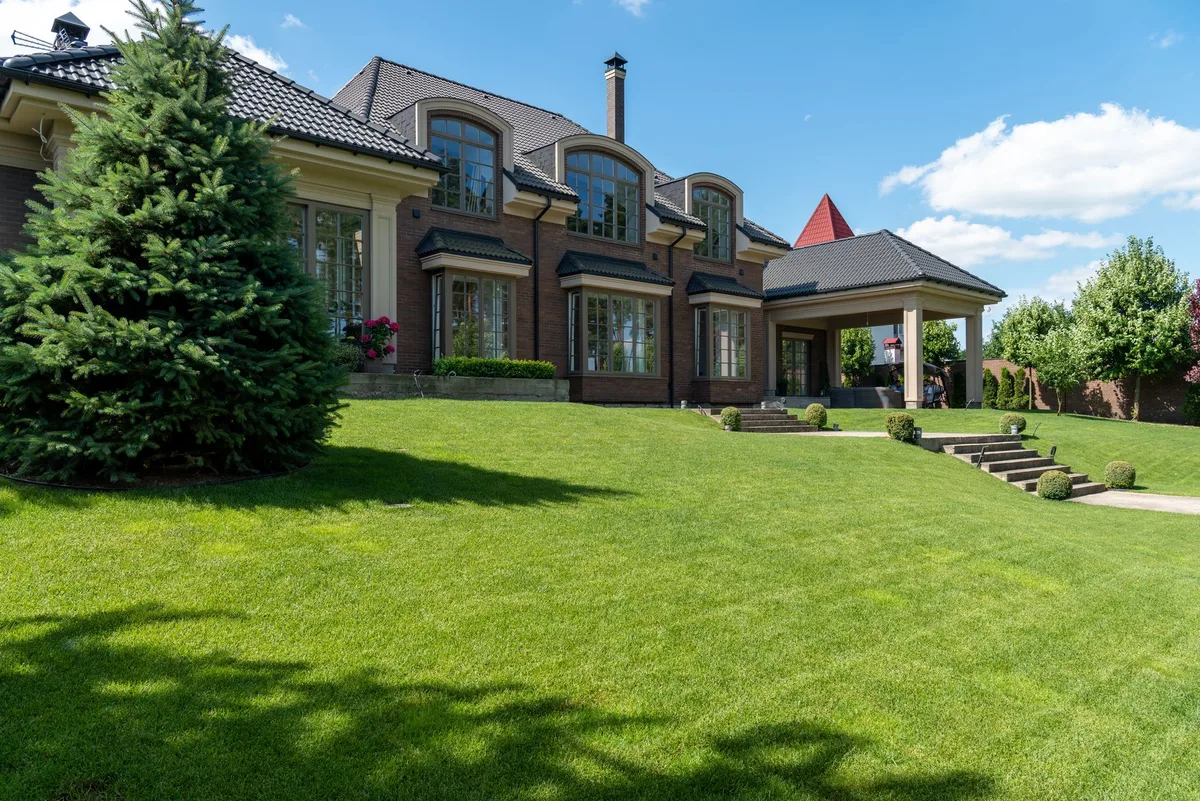
Lawn size is the single biggest variable. Here’s a rough rule of thumb:
| Lawn Size | Square Feet | Weekly Mowing Time | Recommended Approach |
|---|---|---|---|
| Small (urban lot) | Under 2,500 sq ft | 30–45 minutes | DIY is easy and cheap |
| Medium (suburban) | 2,500 – 5,000 sq ft | 1–2 hours | DIY viable with good equipment |
| Large (quarter acre+) | 5,000 – 10,000 sq ft | 2–3 hours | Consider hybrid or pro |
| Very large (half acre+) | 10,000+ sq ft | 3–5 hours | Professional often cheaper when factoring time |
Shape matters too. A rectangular lawn is fast to mow. One with flower beds, trees, and tight corners takes much longer.
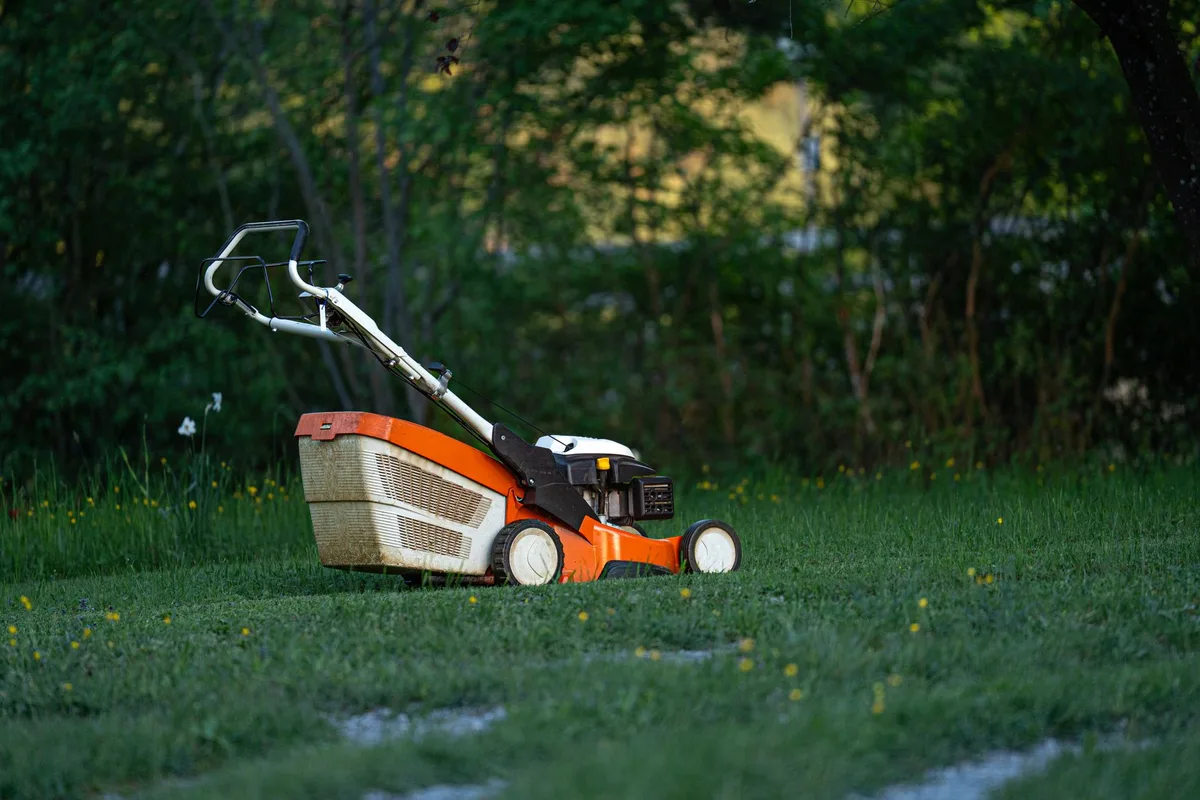
If your lawn has lots of obstacles, the time advantage of hiring a pro grows because they bring commercial zero-turn mowers and trimmers that handle obstacles faster.
Your Weekly Time Budget
Be honest with yourself. How many free hours do you actually have? If you’re working 50 hours a week and have kids, that 2-hour mowing slot might not exist.
Professionals don’t need to reschedule around rain, they have backup days.
If you genuinely enjoy mowing, it’s not “work.” It’s therapy. But if it feels like a chore you dread, paying someone $40 per mow to get it done while you do other things is a bargain.
Your Lawn’s Current Condition
A healthy lawn is easy to maintain. A lawn with established weeds, bare patches, or crabgrass is a project. Starting from scratch or rehabbing a neglected lawn takes multiple rounds of aeration, overseeding, fertilization, and weed control over 2, 3 seasons.
That’s a lot of product application and timing. Professionals have the equipment and the schedule dialed in.
If your lawn looks good and just needs regular mowing and occasional fertilizer, DIY is simple. If it’s a mess, a professional’s expertise pays for itself in saved time and higher success rates.
Your Skill Level and Comfort With Chemicals
You don’t need a degree to read a fertilizer bag. But you do need to understand N-P-K ratios, pre-emergent timing, and how to calibrate a spreader. A misapplied weed killer can kill the grass along with the weeds.
Over-fertilizing burns the lawn and runs off into storm drains, which is regulated in some areas.
If you’re not comfortable handling granular herbicides or mixing liquid concentrates, that’s fine, many homeowners aren’t. Professional lawn care companies are licensed to apply these products and carry liability insurance. DIY only works if you’re willing to learn the basics and follow label instructions.
Quick Decision Flowchart (Text Version)
Here’s a simple if/then logic to help you decide right now:
- Is your lawn under 2,500 sq ft? → Go DIY. Cost is low, time is minimal.
- Is your lawn 2,500, 5,000 sq ft and you have weekends free? → DIY works with a good mower and a plan.
- Is your lawn 2,500, 5,000 sq ft and you hate mowing? → Hire a mow-only service (often $30, $50 per visit).
- Is your lawn over 5,000 sq ft? → Consider full-service professional. The time savings alone justify the cost.
- Does your lawn have serious weed or disease issues? → Start with a professional for 1, 2 seasons, then consider DIY maintenance once it’s healthy.
- Are you handy with tools and willing to learn? → DIY can be very satisfying and cost-effective, even at larger sizes, if you invest in a good mower and study your local climate.
- Do you travel frequently or have unpredictable hours? → Hire a pro for consistency.
Step-by-Step: How to Evaluate Your Own Situation
If you want to move from gut feeling to a solid decision, follow these five steps:
- Measure your lawn. Use Google Maps or a measuring wheel. Write down square footage. This is your baseline.
- Time a typical mow. Next time you mow, note the start and end time including trimming and blowing. Multiply by 4 for weekly commitment.
- List your lawn’s problems. Walk the yard and note: bare spots, weeds, uneven growth, bare soil, drainage issues. Take photos.
- Check your soil pH and nutrient levels. You can order a soil test kit from your local cooperative extension for about $15. Healthy soil makes everything easier.
- Figure out your budget. Add up what you’d spend on a mower (plus maintenance) vs what a pro would charge for the same period. Use the table in the next section.
Once you have those numbers, the decision is usually obvious. Small lawn + low time = DIY. Large lawn + high time constraint = pro.
And if you land in the middle, consider the hybrid option, hire a mow-only service and handle fertilizing and weed control yourself. That gives you the best of both worlds.
We’ll cover the full cost breakdown and common mistakes next, but by now you should have a clear direction. If you’re still on the fence, the next section will push you one way or the other.
The Hybrid Option: What’s in Between
You don’t have to pick one side or the other. Many homeowners land in the middle, and that might be the smartest move of all.
A hybrid approach means you hire a professional for the heavy lifting and handle the routine stuff yourself. For example, you pay a service to mow every week but handle your own fertilizing and weed control. Or you do the mowing yourself but hire someone twice a year for aeration and overseeding.
This works especially well if your lawn needs seasonal treatments but you want to stay involved. You save money on the weekly labor while getting expert help for the tasks that require specific timing or equipment, like applying the right fungicide for lawns that develop brown patch or dollar spot.
The hybrid model gives you control over the parts you enjoy and outsources the parts you don’t. It also lets you adjust over time. Start with full service for a season, then take over mowing once you’ve learned the rhythm.
Mistakes Most Homeowners Make (And How to Avoid Them)
Even with the best intentions, people mess this decision up. Here are the most common errors we see in our research.
Choosing DIY to save money, then buying the wrong equipment. A cheap mower that clogs in damp grass or a spreader that doesn’t calibrate properly costs you more in frustration and rework. Buy a decent mower upfront. A $400 mower that lasts eight seasons beats a $150 one that dies in two.
Hiring a pro and never checking their work. Just because you pay someone doesn’t mean they do it right. Walk your lawn after each visit. Look for uneven mowing height, grass clippings left in clumps, and missed spots around trees and fences.
Skipping a soil test before starting either route. Many people spread fertilizer blindly. Without knowing your soil pH and nutrient levels, you could be over-applying nitrogen or missing a phosphorus deficiency. A $15 test from your local extension office saves hundreds in wasted products.
Assuming the cheapest service is good enough. Low-cost lawn services often cut corners. They mow too short, skip edging, and use the cheapest fertilizers. You get what you pay for.
Get three quotes and ask about their treatment program before signing.
Doing too much too fast with DIY. Beginners often over-fertilize, over-water, or apply weed killer on a hot afternoon. Slow down. Follow label directions exactly.
One treatment at the wrong time can set you back an entire season.
Real-World Cost Comparison (Data That Matters)
Let’s put real numbers on this. These are averages from verified buyer feedback and manufacturer specs as of 2026. Your area may vary by 10 to 20 percent.
| Cost Category | DIY (Annual) | Professional (Annual) |
|---|---|---|
| Mowing equipment (amortized over 5 years) | $80–$160 | $0 |
| Fuel, oil, maintenance | $50–$100 | $0 |
| Seed, fertilizer, weed control | $80–$200 | Included in service |
| Soil testing | $15–$30 | $0 (pro does it) |
| Aeration (rental or service) | $50–$80 | Included or $75 add-on |
| Total | $275–$570 | $500–$2,000 |
The crossover point is around a 5,000-square-foot lawn. Below that, DIY is almost always cheaper. Above that, the cost gap narrows fast.
Factor in your time. If you value your free time at $25 an hour, the DIY route actually costs more once your lawn needs more than two hours of weekly work. A pro handling a 10,000-square-foot lawn for $60 per mow is a better deal than spending four hours every Saturday.
Who Should Definitely Go DIY
DIY makes sense for a specific kind of person. If you match most of these, go ahead and buy the mower.
- Your lawn is under 2,500 square feet. You can mow it in 30 minutes with a push mower.
- You actually enjoy yard work. It’s not a chore. It’s your weekend decompression.
- You have a flexible schedule. If it rains Tuesday, you can mow Wednesday without stress.
- You’re willing to learn. You’ll read the fertilizer label, calibrate your spreader, and figure out your grass type.
- Your lawn is in decent shape already. You’re maintaining, not rehabbing.
- You have storage space. A mower, trimmer, blower, and spreader take up garage or shed space.
DIY gives you full control. You decide when to mow, what products to use, and how high to cut. If you run into a specific lawn problem, you can treat it immediately rather than waiting for the pro’s next visit.
And you’re more likely to notice a good flower bed for that shaded corner because you’re out there every week.
Who Should Definitely Hire a Pro
Professional service is the better call for a different set of circumstances. Raise your hand if this sounds like you.
- Your lawn is over 5,000 square feet. Anything larger than that eats your weekends.
- You travel for work or have unpredictable hours. Consistency matters. Pros show up rain or shine.
- You don’t enjoy lawn care. If mowing feels like punishment, outsource it.
- Your lawn has serious issues. Weeds, bare patches, crabgrass, or disease need a multi-season plan.
- You don’t have storage. No garage space for a mower and trimmer? That’s a real constraint.
- You want guaranteed results. Professionals carry insurance. If they damage your lawn or miss a treatment, they fix it.
Hiring a pro also gives you access to commercial-grade equipment. Zero-turn mowers cut faster and more evenly than a push mower. Professional spreaders apply fertilizer at precise rates.
And licensed technicians know the correct timing for pre-emergent and post-emergent applications in your specific climate zone.
If you’re on the fence and your lawn needs a full recovery, start with a pro for one or two seasons. Once the lawn is healthy, you can take over the maintenance yourself. That’s a smart way to learn without risking your yard.
Common Scenarios and the Right Move for Each
Let’s run through a few real-world situations. Each one maps to a different decision.

You just bought your first house. The lawn is overgrown and patchy. Start with a professional soil test and a full aeration plus overseeding. Get a service for the first season to establish a baseline.
Then take over DIY maintenance once the lawn is healthy.
You have a 3,000-square-foot lawn that’s actually in good shape. Go DIY. Buy a reliable mower, a spreader, and a trimmer. Spend one weekend learning your grass type and setting up a simple schedule.
You’ll save $400 to $600 per year.
You travel every other week for work. Hire a pro. Your lawn will suffer if you miss mowing cycles. Even a basic mow-only service for $40 per visit keeps things tidy while you’re away.
Your lawn is mostly weeds with a few patches of grass. This is a rehab project. A professional has the herbicide rotation and timing to fix it in two seasons. DIY is possible but risky.
One misapplication can kill everything.
You’re retired and enjoy being outside. DIY is a perfect fit. You have the time, the patience, and the desire to stay active. Invest in a good zero-turn mower if your lawn is over 5,000 square feet.
Frequently Asked Questions
How much does professional lawn care cost per month?
It depends on your location and lawn size. A basic mow-only service runs $30 to $80 per visit. Full treatment including fertilization, weed control, and aeration ranges from $80 to $200 per month during the growing season.
Can I switch from DIY to professional mid-season?
Yes, and it’s common. Most lawn care companies will take over anytime. They may need to do a soil test first to see what treatments your lawn needs.
Expect a catch-up fee if you’ve missed any seasonal applications.
What equipment do I need for DIY lawn care?
At minimum you need a mower, a string trimmer, and a broadcast spreader. A leaf blower helps too. For aeration you can rent a machine for about $70 per day.
If you want to handle weeds, a pump sprayer or hose-end sprayer is useful.
Do professional lawn services use organic products?
Many do. Some companies offer organic or low-chemical treatment programs. You’ll pay a premium usually 15 to 30 percent more.
Ask specifically about their organic options before signing a contract.
How do I know if a lawn service is doing a good job?
Check for even mowing height, no scalped spots, and clean edges along sidewalks and driveways. Grass clippings should be fine and not clumped. For fertilizer applications, they should provide a treatment record showing what was applied and when.
Final Verdict: Your Personalized Decision Guide
Here’s your takeaway. Make a copy of this checklist and run through it.
- Lawn under 2,500 sq ft and healthy? DIY. Spend $300 on equipment and $100 a year on supplies.
- Lawn over 5,000 sq ft or a total mess? Hire a pro. Expect $800 to $1,500 per year for full service.
- You hate mowing but your lawn is small? Hire a mow-only service. Do your own weed control and fertilizing.
- You love yard work but have a large lawn? Go hybrid. Mow yourself, hire out aeration and overseeding.
- Still unsure? Start with a single professional aeration and soil test. That costs about $100 and gives you the data you need to decide.
The right answer changes over time. Your lawn gets healthier. Your schedule shifts.
You learn new skills. Revisit this decision every spring. What worked last year might not be the best choice next season.
No matter which path you choose, healthy soil and consistent care matter more than who’s pushing the mower. Pick the route that keeps your lawn green without driving you crazy. That’s the only real win.