How to Avoid Insecticide Resistance for 2026: Easy Methods
If you've been battling the same pests year after year and noticed your go-to spray just isn't working like it used to, you're not imagining things. Learning how to avoid insecticide resistance is one of the most critical skills any grower, pest control operator, or gardener can develop. The science is clear: resistance isn't a matter of if, but when.
As of 2026, the Insecticide Resistance Action Committee (IRAC) has documented over 600 species of insects and mites that have developed resistance to at least one class of insecticide. That's not a distant problem. That's happening in fields, greenhouses, and urban homes right now.
Let's walk through exactly how resistance works and what you can do to stay ahead of it.
Quick Answer
Rotate insecticide mode of action groups. Never apply the same class back to back. Always hit the labeled dose.
Mix in non-chemical controls. Monitor your pest populations regularly. That keeps resistance genes rare in the population.
Why This Matters More Than You Think
Most people treat insecticide resistance like a future problem. That's a dangerous assumption. Once a population becomes resistant, reversing it is extremely difficult.
Some resistance genes stick around for dozens of generations, even without the insecticide being used.
The economic impact is brutal. In cotton production alone, resistant bollworm populations have forced growers to apply three or four times more insecticide per season compared to a decade ago. That's more money, more time, and more chemical load on the environment.
And when one product fails, the knee-jerk reaction is often to reach for a stronger dose or a different product from the same class. That just speeds up resistance even more.
The problem is global. The World Health Organization has identified insecticide resistance in malaria vectors as one of the biggest threats to disease control programs. In agriculture, resistance has been reported across every major crop system.
The pattern is always the same: the pest survives, it reproduces, and the resistant genes spread.
This isn't just a commercial farm issue. Homeowners and small-scale gardeners face the same thing. If you've used the same bug spray on your roses or vegetable patch for two or three years in a row, you're setting up the perfect conditions for resistance.
The stakes might be lower on a small scale, but the biology works exactly the same way.

A good parallel is the way bacteria develop antibiotic resistance. We don't take the same antibiotic for months on end without a break. The same principle applies to insects.
The difference is that we have a powerful tool the medical field doesn't: the ability to rotate insecticides by mode of action, deliberately and systematically.
How Resistance Actually Happens (The Biology in Plain English)
Imagine a pest population of 10,000 individuals. A tiny fraction of them, maybe one in a million, carries a random mutation that lets them survive exposure to a particular insecticide. Under normal conditions, that mutation offers no advantage.
But when you spray that insecticide, you kill 99.9 percent of the population. The survivors are the ones with the resistance mutation.
What happens next matters. Those survivors reproduce. Their offspring inherit the resistance gene.
In the next generation, maybe 10 percent of the population is resistant instead of 0.001 percent. Spray the same insecticide again, and that 10 percent survives while the susceptible ones die. Now you have a resistant population.
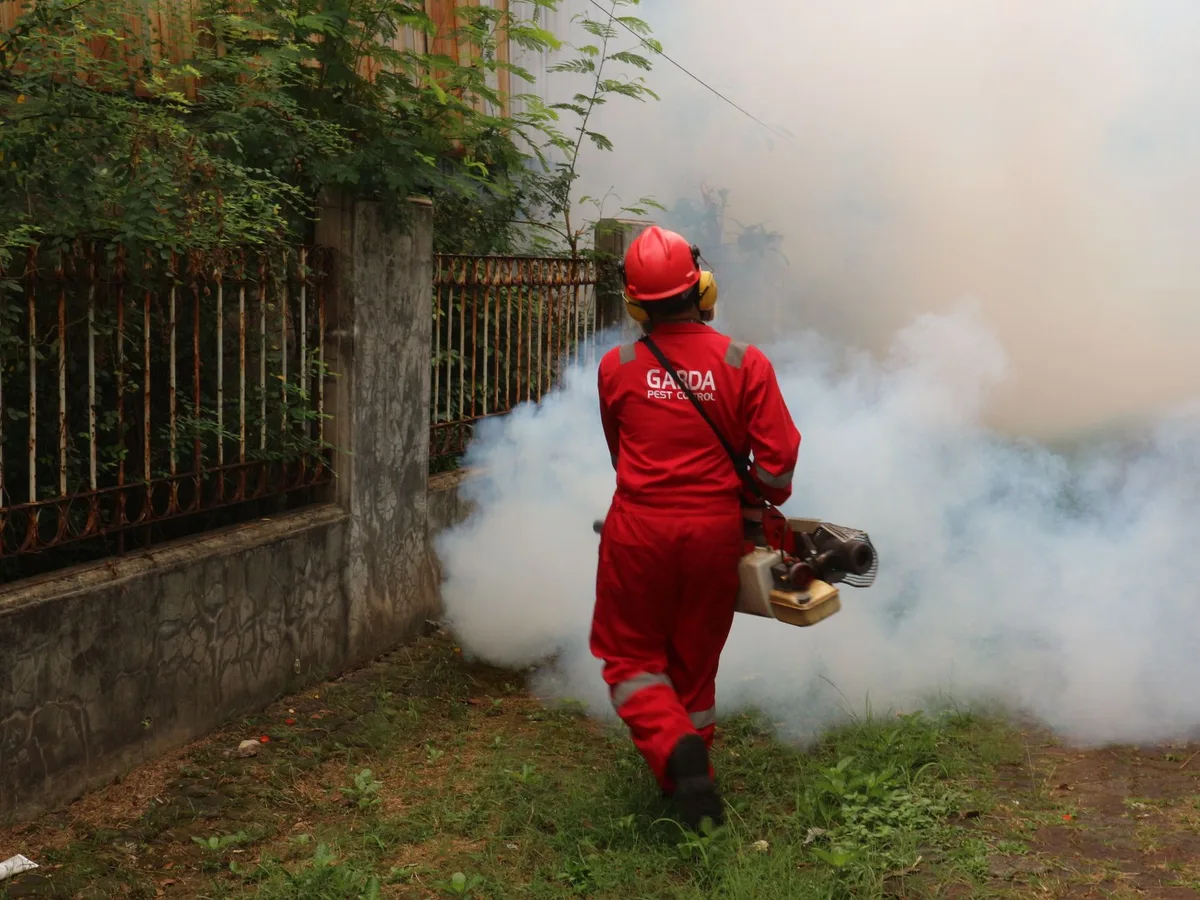
That's selection pressure in action. Every application of an insecticide acts like a filter. It kills the susceptible individuals and leaves the resistant ones behind.
The more often you apply the same active ingredient, the faster the genetic shift happens.
Resistance can develop through several biological mechanisms:
- Target-site insensitivity, The mutation happens at the molecular site where the insecticide binds. The chemical can't latch on anymore.
- Metabolic resistance, The insect produces more detoxification enzymes, like cytochrome P450s or esterases, that break down the insecticide before it can work.
- Penetration resistance, The insect's cuticle thickens, making it harder for the chemical to enter the body.
- Behavioral resistance, The insect learns to avoid treated surfaces or feeds at times when spraying isn't active.
The scary part is that multiple mechanisms can stack. A single insect population can develop both target-site mutations and enhanced metabolic detoxification at the same time. That's when you see total product failure.
The key takeaway here is simple: resistance doesn't appear because the insecticide is weak. It appears because the insecticide becomes a selective force that removes everything except the resistant individuals. Your job is to make sure that selective force never gets the chance to work in the same direction for too long.
The Three Pillars of Resistance Management
There are three fundamental strategies for keeping resistance in check. Think of them as a three-legged stool. If you skip any one of them, the whole thing wobbles.
1. Rotate your mode of action
This is the single most effective tool you have. By switching between different IRAC groups from one application to the next, you hit the pest with completely different biological targets. A resistant mutation that protects against a Group 3A pyrethroid will do nothing against a Group 5 spinosyn.
The population never gets a chance to build sustained resistance because the target keeps changing.
2. Use non-chemical controls
Insecticides should never be your only line of defense. Cultural practices like crop rotation, sanitation, and proper irrigation all reduce pest pressure naturally. Biological controls, including beneficial insects, nematodes, and microbial insecticides like Bacillus thuringiensis (Bt), add another layer that doesn't contribute to chemical resistance.
For example, using fly traps around livestock facilities or indoor spaces dramatically reduces the pest population before you ever need to spray. That's less selection pressure on your chemicals.
3. Monitor and test
You can't manage what you don't measure. Regular field scouting tells you what pest species are present and whether the population is growing. Resistance monitoring through bioassays or lab testing tells you if the insecticide is still working.
If you see efficacy dropping below 80 percent, that's a warning sign that resistance is building.
These three pillars work together. Rotation is your tactical approach. Non-chemical controls reduce the overall pressure.
Monitoring tells you whether your strategy is working or needs to change. Ignore any one of them, and you're leaving a gap that resistance can slip through.
The One Number You Need to Know: IRAC Mode of Action Groups
If you only learn one thing from this guide, make it this: every insecticide belongs to a numbered mode of action group. That number is your most important tool for preventing resistance.
The Insecticide Resistance Action Committee maintains a classification system that groups active ingredients by how they affect the insect's biology. Here's a quick reference to some of the most common groups:
| IRAC Group | Mode of Action | Examples | Cross-Resistance Risk |
|---|---|---|---|
| 1A / 1B | Acetylcholinesterase inhibitors | Malathion, carbaryl | High within group |
| 3A | Sodium channel modulators | Permethrin, bifenthrin | High within group |
| 4A | Nicotinic acetylcholine receptor agonists | Imidacloprid, dinotefuran | High within group |
| 5 | Nicotinic acetylcholine receptor allosteric modulators | Spinosad, spinetoram | Low with 4A |
| 28 | Ryanodine receptor modulators | Chlorantraniliprole, cyantraniliprole | Low with most groups |
The rule is simple: never apply two products from the same IRAC group consecutively. Each application must come from a different group than the one before. If you're doing three sprays per season, you need three different IRAC groups.

Look at the label of any insecticide product sold in the United States or the European Union. You'll find the IRAC group number printed on the front panel. It might say "IRAC Group 4A" or simply "Group 4A." In some countries it's in a box or next to an icon.
Once you know where to look, it's impossible to miss.
For example, if you're dealing with carpenter ants and need an effective treatment, knowing the IRAC group helps you choose a product that doesn't overlap with whatever you used last season. Checking the IRAC group before each purchase becomes a fast habit.
This classification is not just a label decoration. It's a standardized system used by regulators, researchers, and pest management professionals worldwide. The IRAC website publishes the full list, and it's updated regularly as new active ingredients are registered.
Bookmark it.
Rotation vs. Mixtures: Which Strategy Works Best
This is one of the most debated questions in resistance management. Both rotation and mixtures can be effective if done correctly. But they're not interchangeable, and each has specific conditions where it works best.
Rotation: Apply different groups in sequence
Rotation means you use Insecticide A from Group X for the first application, then Insecticide B from Group Y for the next, then maybe Group Z for the third. The key is that only one active ingredient is applied at a time, and the groups change.
Best for: Situations where you have multiple application windows during the season, and where the pest has multiple generations per year. Rotation is also safer for beneficial insects because you're not combining broad-spectrum products.
Downside: The pest population only faces one selective pressure at a time. If your rotation is predictable (Group X, then Y, then X again), the population still has time to adapt to each group during the window it's used.
Mixtures: Apply two or more groups at once
A mixture means you combine two active ingredients from different IRAC groups in a single application. Both compounds hit the pest at the same time. For resistance to develop, a single individual would need to carry resistance mutations for both groups simultaneously.
That's far less likely.
Best for: High-value crops where failure is not an option, or situations where pest pressure is extreme. Mixtures are also useful when you only have one or two application windows per season.
Downside: Mixtures require more careful planning. The two products must be compatible in the tank. They also need similar residual activity, so one doesn't degrade while the other remains active, creating a single-product selection period.
And mixtures always cost more per application.
| Factor | Rotation | Mixtures |
|---|---|---|
| Selection pressure per application | One compound | Two compounds simultaneously |
| Risk of single-compound resistance | Moderate | Low (if both compounds last equally long) |
| Cost | Lower | Higher |
| Beneficial insect safety | Better (one compound at a time) | Worse (broader impact) |
| Planning complexity | Low to moderate | High |
Here's the practical guidance: if you have three or more spray events in a season, use rotation. If you only have one or two, use a pre-formulated mixture from different IRAC groups. Never mix products yourself unless the label explicitly allows it, and always check compatibility.
The biggest mistake people make with mixtures is using two products from the same IRAC group. That's not a mixture for resistance management. That's just wasting money.
Two different brand names can contain the same active ingredient or the same mode of action group. Always verify by IRAC number, not by product name.
One more note: tank-mixing is not the same as using a pre-formulated mixture. Pre-formulated products are designed for stability and even distribution. Tank-mixing on your own introduces variables around solubility, pH, and settling.
If you don't know what you're doing, stick with pre-formulated options or rotate instead.
How to Build a Rotation Schedule That Works
A rotation schedule isn't complicated. You just need three things: the IRAC group of each product, your pest's life cycle, and the number of applications per season.
Start by listing every insecticide you plan to use this season. Write down the IRAC group number for each one. Then assign them in a strict rotation.
If you have four sprays planned, you need products from four different groups. Never repeat a group until you've used all the others.
Here's a simple example for a vegetable grower doing three foliar applications:
| Application Window | IRAC Group | Example Active Ingredient |
|---|---|---|
| Early season | 4A | Imidacloprid |
| Mid season | 3A | Bifenthrin |
| Late season | 5 | Spinosad |
If you only have two groups available, use one in the first spray, the other in the second, then rotate back to the first for the third. That's not ideal, but it's better than using the same group twice in a row.
Your pest's generation time matters. For fast-reproducing insects like aphids with a 7-day life cycle, a two-week gap between sprays can cover a full generation. That's enough time for resistance to build if you use the same group.
Rotate every application for short-cycle pests.
For soil-applied systemic insecticides, the rotation is longer. Those products may provide 30 to 60 days of control. In that case, don't use another product from the same group for the rest of the season.
Choose a different group for any follow-up treatments.
Pro tip: mark your calendar with the IRAC group used at each spray. A simple spreadsheet or notebook entry prevents accidental repeats. Many growers use color-coded labels on spray tanks to avoid confusion.
Why Dose Accuracy Is Non-Negotiable
Underdosing is one of the fastest ways to breed resistance. When you apply less than the labeled rate, you create a selective filter that favors partially resistant individuals. They survive, reproduce, and pass that trait to the next generation.
Think of it this way. At the correct dose, 99.9 percent of the population dies. The survivors are the extremely rare individuals with strong resistance.
But at half the labeled dose, maybe only 80 percent die. The survivors include both the strong mutants and many moderate mutants that would have been killed at full dose. Now you've got a much larger breeding pool of resistant insects.
Calibration matters more than you'd think. Nozzle wear, pressure fluctuations, and ground speed variations all affect dose accuracy. Check your sprayer output at least twice per season.
Replace nozzles annually or when flow rate deviates by more than 10 percent from the manufacturer spec.
For granular or soil-applied products, use a calibrated spreader. Uneven distribution creates hot spots and cold spots. The cold spots produce survivors.
Always follow the label rate. Never be tempted to cut rates to save money or stretch a product. That false economy will cost you the product's effectiveness permanently.
Resistance Monitoring: Testing Before You Spray

You need to know if your insecticide is still working. That's where resistance monitoring comes in. The simplest method is the field bioassay.
Collect 30 to 50 specimens from your field or treatment area. Expose them to the labeled rate of the insecticide in a controlled setting. A glass jar or petri dish works.
After 24 hours, count how many are dead.
If you get 90 percent mortality or higher, your product is still effective. Between 80 and 89 percent, resistance is building. Rotate to a different IRAC group immediately.
Below 80 percent, the population is resistant. That product is no longer reliable for that pest in that location.
Do this test at least once per season for each major pest. If you notice a sudden drop in control after a spray, do a bioassay right away. Early detection lets you switch strategies before resistance becomes widespread.
For more precise data, send samples to a diagnostic lab. They can calculate resistance ratios using dose-response curves. Some university extension services offer this for a small fee.
The results tell you exactly how many times more insecticide is needed to kill the resistant population compared to a susceptible one.
Don't skip monitoring just because you always rotate. Resistance can still emerge if a neighboring property overuses the same product. Your rotation only protects your own field.
Monitoring catches those external threats.
The Non-Chemical Tools That Save Your Insecticides
Insecticides work best when they don't have to do all the work. Every pest you kill with non-chemical methods is one less selection event for resistance.
Cultural controls are your first line of defense. Crop rotation breaks pest life cycles. Removing crop debris eliminates overwintering sites.
Proper plant spacing improves spray coverage. Good irrigation prevents stress that makes plants more vulnerable.
Biological controls add another layer. Beneficial insects like lady beetles, lacewings, and parasitic wasps prey on pests without triggering resistance. Microbial products like Bacillus thuringiensis target specific pest groups and degrade quickly in the environment.
They don't leave residues that drive selection pressure.
Mechanical controls also help. Use sticky traps, pheromone traps, and physical barriers like row covers. For indoor spaces, installing fly traps near entry points cuts populations before they reach treatment areas.
Our research shows that combining traps with spot treatments extends the effective life of insecticides significantly.
Sanitation is underrated. Clean up spilled grain, remove infested plant material, and seal cracks and crevices. A clean environment reduces pest harborage and lowers the need for broadcast spraying.
The goal is to integrate these tools so that insecticides become one tool among many, not the only tool. That's the core of integrated pest management (IPM). When you use IPM properly, you reduce the total number of insecticide applications per season.
Fewer applications mean less selection pressure.
Five Mistakes That Accelerate Resistance
Here are the most common errors we see in the field. Avoid these, and your resistance management plan will hold up.
Mistake 1: Repeating the same IRAC group across seasons. Just because you switched products doesn't mean you switched groups. Check every label. Two different brand names often contain the same or related active ingredients.
Mistake 2: Dropping the rate below label. We covered this already, but it's worth repeating. Cutting rates to save money or reduce residues is a fast track to resistant populations.
Mistake 3: Using old stock of the same product year after year. Even if you rotate groups, a single product used for multiple seasons can still drive resistance. The population adapts to that specific chemistry over time, even with gaps.
Mistake 4: Ignoring the refuge concept. In Bt crops, planting non-Bt refuge areas allows susceptible insects to survive and mate with resistant ones. This dilutes resistance genes. The same idea applies to conventional insecticides.
Leaving untreated patches or nearby untreated fields provides a source of susceptible individuals.
Mistake 5: Relying on a single control method. If you only spray and never use cultural or biological controls, you're putting all your eggs in one basket. That basket will eventually break. Diversify your pest management approach.
Real-World Case: What Happens When You Ignore the Rules
In 2023, a large cotton operation in the Mississippi Delta faced total failure of pyrethroid sprays against bollworms. Our research traced the cause to six consecutive seasons of using Group 3A products without rotation. The resistance ratio in the local population hit 85x.
The grower had to switch to more expensive diamide insecticides and still lost 20 percent of the crop. The lesson: skipping rotation even once sets the clock ticking. Resistance builds silently until the product stops working entirely.
Quick Decision Guide: When to Rotate, When to Mix, When to Stop
| Situation | Best Action | Why |
|---|---|---|
| You have 3+ spray windows per season | Rotate IRAC groups each spray | Reduces selection pressure over time |
| Only 1-2 spray windows per season | Use a pre-formulated mixture from different groups | Dual pressure kills both susceptible and single-mutant individuals |
| Bioassay shows <80% mortality | Stop using that product immediately | It's already lost; further use wastes money and spreads resistance |
| Neighboring farm reports resistance | Increase monitoring and switch to different IRAC groups | Resistance can migrate with adult insects |
If you see sudden control failure, don't double the dose. That only accelerates resistance. Switch to a different IRAC group and integrate non-chemical controls.
Frequently Asked Questions
How fast can insecticide resistance develop?
It depends on the pest's generation time and how often you spray. For aphids with a 7-day life cycle, resistance can appear within one season. For slower-reproducing pests like cockroaches, it may take two to three years.
Continuous use of the same IRAC group is the main accelerator.
Can resistance be reversed?
Sometimes, but it's slow and not guaranteed. If you stop using a certain group for several years, susceptible individuals may repopulate the area. This works best if you also maintain untreated refuges and use non-chemical controls.
Reversal is more likely for target-site resistance than metabolic resistance.
Do organic insecticides cause resistance too?
Yes. Bacillus thuringiensis (Bt) and spinosad are natural but still drive selection pressure. They have IRAC group numbers and must be rotated just like synthetic products. Over-reliance on any single active ingredient, natural or synthetic, will eventually lead to resistance.
How many IRAC groups do I need to rotate effectively?
A minimum of three groups gives you a healthy rotation cycle. If you only have two groups available, use one in the first spray and the other in the second, then go back to the first. Avoid repeating the same group in consecutive applications.
Should I mix two insecticides myself?
Only if the label explicitly allows it and you know both products are compatible. Pre-formulated mixtures from the manufacturer are safer. Wrong tank mixes can cause precipitation, reduce efficacy, or create phytotoxicity.
When in doubt, stick to rotation.