Guide to Japanese Beetles Vs Alternatives: Simple Steps
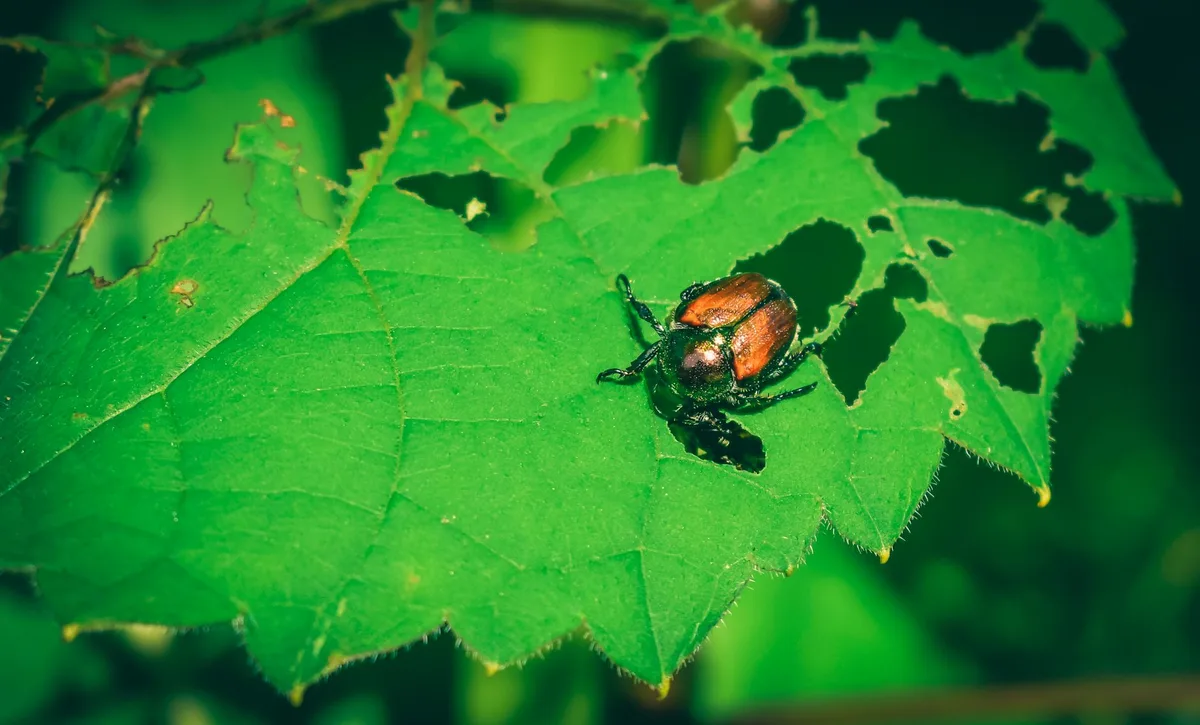
If you’ve got metallic green beetles stripping your roses down to skeletons every June, you’re weighing Japanese beetles vs alternatives, and the right choice depends on whether you’re fighting adults now or preventing grubs next season. Hand-picking works for small gardens, milky spore takes years but lasts decades, and those bright yellow traps often make the problem worse by pulling beetles in from every yard on the block.
Japanese beetles (Popillia japonica) feed for 30 to 45 days each summer, but their grubs live underground for 10 months chewing grass roots. That two-stage life cycle means you need to decide whether you’re targeting the beetles you see today or the lawn grubs that will hatch next spring.

Quick Answer
Hand-picking kills beetles immediately at zero cost for small infestations. Milky spore targets grubs, takes two to three years to establish, and lasts 15 to 20 years. Beneficial nematodes work faster than milky spore but need reapplication every year.
Neem oil and pyrethrin sprays knock down adults within 24 to 72 hours but wash off in rain. Japanese beetle traps attract more beetles than they catch, often worsening damage across your property.
Why Japanese Beetle Control Methods Matter (and Why Traps Usually Backfire)
You’ll see two broad control strategies. The first targets adult beetles feeding on leaves and flowers right now. The second kills grubs in the soil before they emerge as adults next June.
Adult control gives you immediate relief but won’t stop new beetles flying in from neighboring yards. Grub control reduces the population long-term but does nothing for the beetles already skeletonizing your roses this season. Most effective programs layer both approaches.
Japanese beetle traps use a floral lure and a pheromone that mimics the aggregation signal females release when they find a good feeding site. Research from multiple state extension services shows these traps can attract beetles from more than a mile away. If you catch 100 beetles, you may have pulled 500 into your yard, and the 400 that missed the bag are now eating everything in sight.
We’ve seen aggregate reports where homeowners placed traps near their garden and watched damage triple within a week. The traps work, they just work by concentrating beetles exactly where you don’t want them.
What You’re Actually Fighting: Japanese Beetle Behavior and Life Cycle
Adult Japanese beetles emerge from the soil in early to mid-June across most of the eastern United States. Peak feeding runs from mid-June through early August, though southern gardens sometimes see a partial second generation in late summer.
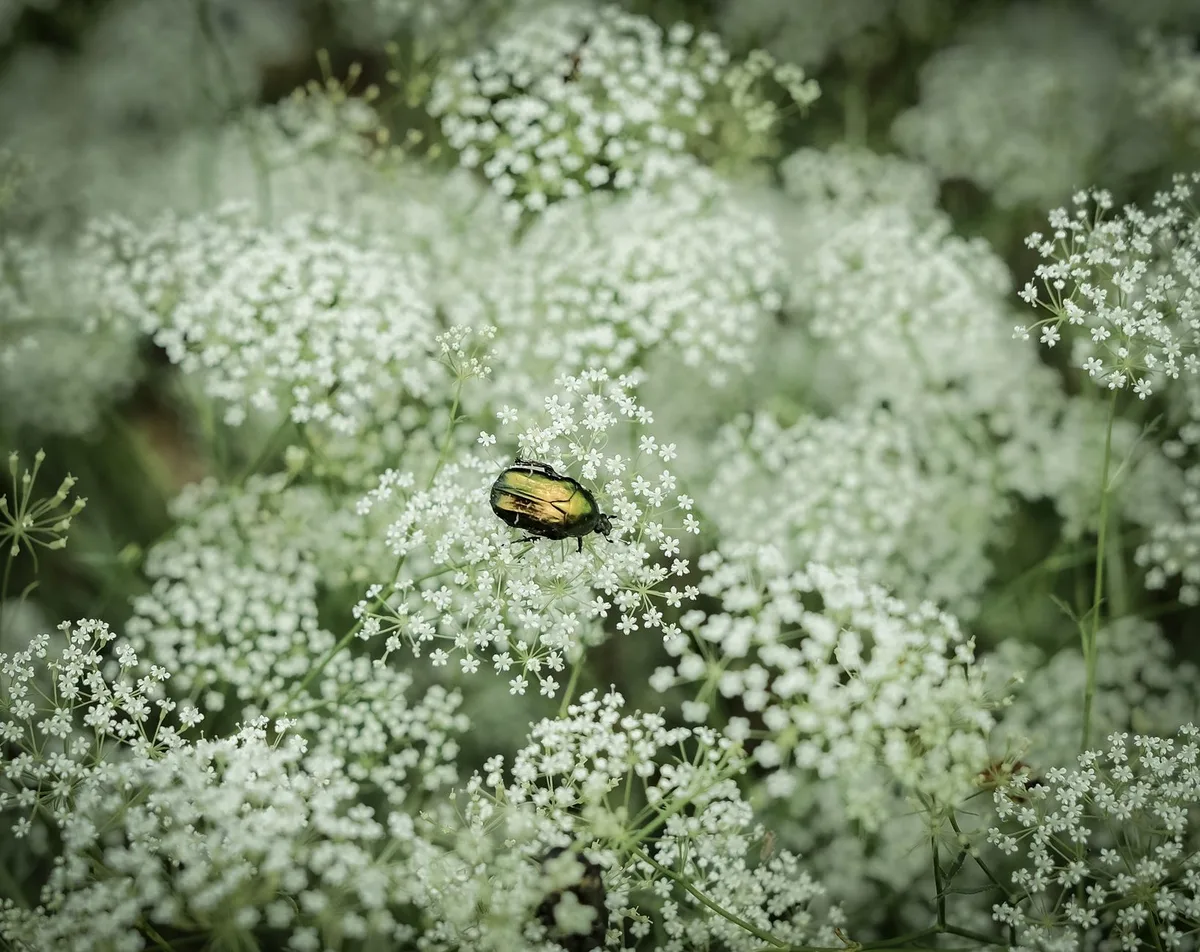
Beetles are sluggish and easy to collect early in the morning when temperatures sit below 70°F. As the day warms up, they become more active and harder to catch without triggering the release of alarm pheromones that attract even more beetles.
Females lay eggs in turf and garden soil from late June through August. Those eggs hatch into white C-shaped grubs that feed on grass roots through fall. Grubs burrow below the frost line in winter, then resume feeding in spring before pupating in May.
Each female lays 40 to 60 eggs over her 30 to 45 day lifespan.
Adult beetles feed in groups because they’re drawn to the plant volatiles released by damaged leaves and the aggregation pheromones emitted by other beetles. That’s why you’ll see 50 beetles clustered on one rose bush while the identical bush ten feet away stays untouched.
Their preferred hosts include roses, grapes, linden, birch, fruit trees (especially cherry, plum, and peach), and many ornamental shrubs. They’ll also feed on vegetable crops, though they tend to ignore begonias, boxwood, forsythia, and most conifers. If you’re replanting areas that see heavy damage every year, choosing beetle-resistant plants can reduce the need for repeated chemical treatments.
Hand-Picking: The Cheapest Method That Actually Works
Manual removal is the oldest control method and still one of the most effective for small gardens and light infestations. You need a container of soapy water (a few drops of dish soap in a quart jar works), a steady hand, and patience.
Walk your garden early in the morning when beetles are cold and slow. Hold the jar under each cluster of beetles and tap or shake the branch. Beetles drop when disturbed, and they’ll fall straight into the soapy water, where the surfactant breaks the water’s surface tension and drowns them within seconds.
Best Time and Technique for Manual Removal
Start your patrol at dawn or before 9 a.m. when air temperatures stay below 70°F. Beetles remain lethargic in cool conditions and won’t fly away as you approach.
Focus on sunny, exposed plants first. Japanese beetles prefer warm, well-lit feeding sites and tend to cluster on the south and west sides of shrubs and trees. Check roses, grape vines, and fruit trees daily during peak season.
Wear gloves if the idea of touching beetles bothers you, but bare hands work fine. Beetles don’t bite or sting. Drop them in the soapy water and move to the next plant.
Dispose of drowned beetles in the trash or compost pile. Some gardeners crush them and leave the bodies near plants as a mild deterrent, though there’s limited evidence that dead beetles repel live ones.
When Hand-Picking Becomes Impractical
Manual removal works well when you’re dealing with a few dozen beetles per day on a small number of plants. Once you’re spending 30 minutes every morning collecting hundreds of beetles, you need a different strategy.
Large properties, extensive rose gardens, and orchards quickly overwhelm hand-picking. If beetles reappear in similar numbers every day for two weeks, you’re not making progress because new adults keep flying in from untreated neighbors or emerging from your own lawn.
At that point, you’ll want to add a knockdown spray for immediate relief and consider long-term grub control to reduce the population emerging next season.
Milky Spore: The Long Game for Grub Control
Milky spore is a naturally occurring bacterium (Paenibacillus popilliae) that infects and kills Japanese beetle grubs in the soil. It doesn’t harm earthworms, beneficial insects, pets, or people, and once established it can persist for 15 to 20 years without reapplication.
The trade-off is time. Milky spore takes two to three growing seasons to spread through your lawn and reach full effectiveness. You won’t see meaningful results the first summer.
How Milky Spore Works (and Why It Takes 2-3 Years)
You apply milky spore powder to your lawn in a grid pattern, typically placing a teaspoon-sized dollop every four feet. Rain or irrigation washes the spores into the soil.
When a Japanese beetle grub ingests the spores while feeding on grass roots, the bacteria multiply inside the grub’s body, eventually killing it and releasing billions of new spores back into the soil. Each dead grub amplifies the local spore population.
The process takes multiple grub generations to build a dense spore bank across your entire lawn. Year one establishes the initial infection sites. Year two spreads the spores as more grubs die and release spores.
By year three, you should see a noticeable drop in adult beetle emergence.
Milky spore works best in areas with consistent Japanese beetle populations and moderate soil temperatures. It’s most effective in USDA hardiness zones 5 through 9.
Cost and Application Requirements
A typical residential application covers 5,000 to 10,000 square feet and costs $40 to $60 for the initial treatment. You’ll apply the powder once, water it in lightly, and let the bacteria do the rest.
Some extension services recommend a second application six months after the first to increase spore density, but many homeowners see good results with a single treatment. The powder has an indefinite shelf life if stored in a cool, dry place.
You don’t need special equipment. A lawn spreader works, but most people apply milky spore by hand using a measuring spoon and marking a four-foot grid with stakes or spray paint.
Climate and Soil Limitations
Milky spore requires soil temperatures above 60°F for the bacteria to remain active and infect grubs. In colder climates with short growing seasons, the spores may not multiply fast enough to control the population.
Hot, dry southern soils can also limit effectiveness. The bacteria thrive in moist, temperate conditions with a steady supply of host grubs. If your region experiences long droughts or extreme heat, beneficial nematodes may deliver faster and more reliable grub control.
Milky spore targets only Japanese beetle grubs. It won’t control other white grubs like June beetles, masked chafers, or European chafers. If you’re dealing with mixed grub species, nematodes or a broad-spectrum grub insecticide may be a better fit.
Beneficial Nematodes: Faster Grub Control with a Catch
Beneficial nematodes (Heterorhabditis bacteriophora) are microscopic roundworms that hunt and kill soil-dwelling grubs, including Japanese beetle larvae. They work faster than milky spore but need reapplication every year because they don’t establish a permanent population in most lawns.
You mix the nematodes with water and apply them to your lawn with a sprayer or watering can. The nematodes burrow into the soil, seek out grubs, and release bacteria that kill the host within 24 to 48 hours. Each nematode can reproduce inside the dead grub, producing a new generation that hunts for more hosts.
Application Timing and Soil Temperature Requirements
Apply nematodes in late summer or early fall when Japanese beetle grubs are small and actively feeding near the soil surface. August through mid-September is ideal across most of the eastern U.S.
Soil temperature needs to stay above 60°F for nematodes to remain active. Below that threshold, they go dormant and may not survive until spring. Check your local soil temperature using a probe thermometer or a soil monitoring tool before applying.
Water your lawn lightly before application to moisten the soil, apply the nematode solution, then water again immediately afterward to wash the nematodes down into the root zone. Keep the soil moist for at least two weeks to help the nematodes establish.
Nematodes are living organisms with a short shelf life. Most products arrive refrigerated and must be used within a few days of delivery. Follow the manufacturer’s storage and application instructions exactly.
Effectiveness Compared to Milky Spore
Nematodes kill grubs within days, so you’ll see a reduction in adult emergence the following summer. Milky spore takes multiple seasons but provides long-term control without retreatment.
Nematodes also target a wider range of grubs, including June beetles, chafers, and other soil pests. Milky spore is Japanese-beetle-specific.
Cost-wise, nematodes run $30 to $50 per application for a typical residential lawn, and you’ll reapply every year. Milky spore costs $40 to $60 once and lasts for decades. Over ten years, nematodes cost $300 to $500 versus a one-time $50 investment in milky spore.
Choose nematodes if you need fast results, deal with multiple grub species, or live in a climate where milky spore doesn’t thrive. Choose milky spore if you’re willing to wait and want a long-term, low-maintenance solution.
Neem Oil vs. Pyrethrin Sprays: Organic Knockdown Options
Neem oil and pyrethrin both kill adult Japanese beetles on contact, but they work through different mechanisms and offer different trade-offs in speed, residual protection, and pollinator safety.
Neem oil is a botanical extract from the neem tree (Azadirachta indica). It disrupts insect feeding, reproduction, and molting. Beetles stop feeding within hours of contact, but death can take 24 to 72 hours.
Neem also leaves a residue that deters new beetles from landing on treated plants for several days.
Pyrethrin is extracted from chrysanthemum flowers and attacks the nervous system of insects on contact. Beetles die within minutes to a few hours. Pyrethrin breaks down quickly in sunlight, so it provides little residual protection beyond the day of application.
How Each Works and How Fast They Kill
Neem oil coats the insect’s body and is absorbed through the exoskeleton. Once inside, it interferes with hormone signals that control feeding and reproduction. Beetles become lethargic, stop eating, and eventually die.
The slow action means you’ll still see live beetles on plants for a day or two after spraying.
Pyrethrin paralyzes insects almost immediately by overstimulating nerve cells. You’ll see beetles drop from leaves within minutes. Some recover if the dose is sublethal, but most die within an hour.
Both products require direct contact with the beetle to work. You need thorough coverage of leaf surfaces, stems, and clusters of feeding beetles. Spray both the tops and undersides of leaves.
Rain Resistance and Reapplication Schedules
Neem oil is an emulsion that sticks to leaf surfaces better than water-based sprays, but heavy rain within 24 hours of application will wash off most of the coating. Light rain or irrigation after the oil has dried usually doesn’t affect performance.
Pyrethrin has almost no rain resistance. If it rains an hour after you spray, you’ve lost most of the active ingredient. Plan applications for dry weather and avoid watering treated plants for at least six hours.
Reapply neem oil every seven to ten days during peak beetle season. Reapply pyrethrin every three to five days or immediately after rain. Both schedules assume moderate to heavy infestations where new beetles arrive daily.
Pollinator Safety Concerns
Neem oil is moderately toxic to bees and other pollinators when wet. Once it dries, the risk drops significantly. Spray in the evening after bees have returned to their hives, and avoid treating plants in bloom.
Pyrethrin is highly toxic to bees and beneficial insects. It kills on contact regardless of species. Never spray pyrethrin on flowering plants or during the day when pollinators are active.
Evening applications reduce the risk but don’t eliminate it.
Both products are OMRI-listed for organic gardening, but “organic” doesn’t mean harmless to all insects. If you’re trying to protect native pollinators or maintain beneficial predator populations, neem oil is the safer choice despite its slower action.
Physical Barriers: Row Covers and Netting
Fine mesh netting or lightweight floating row covers provide 100% protection from adult beetles if you install them before peak emergence and maintain a complete seal around the edges.
You’ll see this approach used most often on high-value crops like grape vines, berry bushes, and small fruit trees. It’s less practical for large shade trees or sprawling rose gardens, but it works well for compact plantings.
Use a mesh size of 0.5 mm or smaller to exclude beetles. Larger openings let them crawl through. Drape the fabric over the plants and secure the edges with soil, landscape staples, or weights.
Check for gaps daily, especially after wind or rain.
Row covers block beetles but also block pollinators. If you’re covering fruiting plants, you’ll need to remove the covers during bloom or hand-pollinate. For ornamental plants that don’t require pollination, you can leave the covers in place all season.
The main drawback is aesthetics. Covered plants look like they’re wrapped in laundry. If visual appeal matters, this method won’t work for front-yard plantings or showcase gardens.
Spinosad and BTG: Newer Biological Insecticides
Spinosad is a naturally occurring soil bacterium (Saccharopolyspora spinosa) that produces compounds toxic to many chewing insects, including Japanese beetles. It’s available as a liquid spray and is OMRI-listed for organic use.
Beetles ingest spinosad when they chew treated leaves. The compound overstimulates the nervous system, causing paralysis and death within 24 to 48 hours. Spinosad has some residual activity, protecting plants for five to seven days after application.
Bacillus thuringiensis galleriae (BTG) is a newer biological insecticide that targets beetle larvae and adults. It’s more specific than broad-spectrum Bt products and shows promise for Japanese beetle control, though it’s not yet widely available in retail formulations as of 2025.
Spinosad is moderately toxic to bees when wet but safe once dry. Apply in the evening and avoid blooming plants. It’s less toxic to beneficial insects than pyrethrin or synthetic insecticides, making it a good middle-ground option for gardeners who want faster results than neem oil without the collateral damage of carbaryl.
Synthetic Options: Carbaryl and Systemic Insecticides
Carbaryl (sold as Sevin) and systemic neonicotinoids like imidacloprid offer the fastest and longest-lasting control of adult beetles, but they come with significant drawbacks for pollinators, beneficial insects, and in some cases legal restrictions.
When Carbaryl (Sevin) Makes Sense
Carbaryl is a broad-spectrum contact insecticide that kills Japanese beetles within hours. It also kills bees, lady beetles, lacewings, parasitic wasps, and most other insects it touches.
Use carbaryl only when you’re facing severe defoliation that threatens plant survival and other methods have failed. It’s a last-resort tool, not a first-line defense.
Apply carbaryl as a dust or spray in the evening after pollinators have stopped foraging. Treat only the infested plants, not the entire garden. Expect to reapply every seven to ten days during peak beetle season.
Carbaryl has a short residual period compared to systemic insecticides. That’s both a weakness (more frequent applications) and a strength (less long-term impact on beneficial insect populations).
Imidacloprid and Neonicotinoid Restrictions
Imidacloprid is a systemic neonicotinoid that you apply to the soil around the base of trees and shrubs. The plant absorbs the insecticide through its roots and distributes it to leaves, flowers, and nectar.
Beetles that feed on treated plants ingest the insecticide and die within 24 to 72 hours. Protection lasts for weeks or even months with a single application.
The problem is nectar and pollen contamination. Bees and other pollinators feeding on treated plants are exposed to lethal or sublethal doses of the insecticide. Long-term exposure disrupts hive health, navigation, and reproduction.
Bee Toxicity and Legal Limitations
Many states and municipalities have restricted or banned neonicotinoid use on flowering plants due to pollinator decline concerns. Check your local regulations before purchasing imidacloprid or other neonicotinoid products.
Even where legal, avoid applying systemic insecticides to plants that bloom or attract pollinators. Focus on non-flowering ornamentals or apply them in late fall after bloom has finished and before beetles emerge the following spring.
If you choose a systemic insecticide, follow the label instructions exactly. Overdosing increases the concentration in flowers and nectar, raising the risk to bees.
Why Japanese Beetle Traps Attract More Beetles Than They Catch
Japanese beetle traps combine a floral lure (often geraniol or a similar plant volatile) with a synthetic version of the female aggregation pheromone. The combination is extraordinarily attractive to both male and female beetles.
Field studies from university extension services consistently show that traps catch a fraction of the beetles they attract. The rest land on nearby plants and begin feeding.
If you place a trap in or near your garden, you’re effectively advertising a feeding site to every beetle within detection range. That range can exceed one mile under favorable wind conditions.
Traps work best when placed at the edge of your property, at least 50 feet away from the plants you’re trying to protect. The goal is to intercept beetles flying in from neighboring areas before they reach your garden. Even then, aggregate user reports suggest mixed results.
Some gardeners see reduced damage. Others see no improvement or worse infestations.
The safest recommendation is to skip traps entirely unless you have a very large property where you can place them far from valuable plantings. Focus your effort on knockdown sprays, physical barriers, or long-term grub control instead.
Side-by-Side Comparison: Speed, Cost, and Effectiveness
| Method | Speed to Results | Cost (per season) | Residual Protection | Pollinator Risk |
|---|---|---|---|---|
| Hand-picking | Immediate | $0 | None | None |
| Milky spore | 2-3 years | $50 (one-time) | 15-20 years | None |
| Nematodes | Next season | $40 | Reapply yearly | None |
| Neem oil | 24-72 hours | $20-30 | 7-10 days | Moderate |
| Pyrethrin | Minutes to hours | $25-40 | 3-5 days | High |
| Row covers | Immediate | $30-60 | All season | None |
| Carbaryl | Hours | $20-30 | 7-10 days | Very high |
Best Control Method for Each Situation
Small Garden with Light Infestation
Hand-pick beetles every morning and use row covers on the most valuable plants. Add neem oil if beetles return faster than you can collect them. This combination keeps costs near zero and avoids any pollinator harm.
Large Property with Heavy Annual Damage
Apply milky spore or nematodes in late summer to target next year’s grubs. Use pyrethrin or spinosad sprays this season for immediate knockdown. The two-stage approach reduces the population long-term while protecting plants now.
Organic-Only Gardens
Combine hand-picking, neem oil, and beneficial nematodes. All three are OMRI-listed and safe for organic flower beds and vegetable plots.
Rose and Fruit Tree Protection
Install fine mesh netting over smaller specimens. For larger trees, apply spinosad or neem oil every seven days during peak beetle season. Consider a soil drench with nematodes in August to reduce grub populations.
Mistakes That Make Infestations Worse
Placing traps in or near your garden pulls beetles from neighboring properties directly onto your plants. Move traps at least 50 feet away or skip them entirely.
Spraying during the day kills bees along with beetles. Apply all contact insecticides in the evening after pollinators have stopped foraging.
Ignoring grub control means you’ll face the same adult beetle population every June. Add milky spore or nematodes to break the cycle.
Timing Windows: When to Apply Each Treatment
Apply milky spore or nematodes in late August through September when grubs are small and feeding near the soil surface. Soil temperature must stay above 60°F for both products to work.
Start hand-picking or spraying as soon as you see the first beetles, typically early to mid-June. Don’t wait for heavy damage. Early control prevents aggregation pheromones from drawing in more beetles.
Reapply contact sprays every three to ten days depending on the product and rain. Check plants daily during peak season to catch new arrivals before they strip entire branches.
Companion Planting and Beetle-Resistant Alternatives
Japanese beetles avoid certain plants, including begonias, boxwood, forsythia, and most conifers. Replacing highly attractive species like roses or grapes with resistant ornamentals reduces the need for repeated treatments.
Interplanting resistant species among preferred hosts won’t stop beetles, but it can reduce overall damage by spreading the feeding load. Pair roses with shade-tolerant flowers that beetles ignore to maintain visual appeal even if beetles strip the roses.
Garlic, chives, and rue emit strong odors that some gardeners report as mild deterrents. Research on companion planting for Japanese beetles shows inconsistent results. Don’t rely on it as a primary control method.
What to Do When Your Neighbors Don’t Treat Their Yards
You can’t control beetles emerging from untreated lawns next door. Focus on barriers, knockdown sprays, and protecting your most valuable plants rather than trying to eliminate every beetle.
Talk to neighbors about coordinated grub control. If multiple properties treat their lawns with milky spore or nematodes, the entire neighborhood sees lower beetle populations within two to three years.
Accept that some damage is inevitable in high-pressure areas. Healthy plants tolerate 30% defoliation without long-term harm. Prioritize protection for specimens that can’t recover, like young fruit trees or newly planted shrubs.
Frequently Asked Questions
Do Japanese beetle traps actually work?
Traps catch beetles but attract far more than they kill. Research shows they pull beetles from over a mile away, often increasing damage near the trap. Place traps at least 50 feet from plants you’re protecting, or skip them entirely.
How long does milky spore take to work?
Milky spore requires two to three growing seasons to build a dense spore population across your lawn. You’ll see a noticeable drop in adult emergence by year three. Once established, it lasts 15 to 20 years without reapplication.
What kills Japanese beetles instantly?
Pyrethrin sprays paralyze and kill beetles within minutes to hours. Carbaryl also provides fast knockdown. Both kill bees and beneficial insects on contact, so apply only in the evening after pollinators stop foraging.
Can I use neem oil on edible plants?
Yes. Neem oil is OMRI-listed for organic gardening and safe for vegetables and fruit trees. Wash produce thoroughly before eating.
Follow label instructions for pre-harvest intervals, typically one to three days.
Will hand-picking reduce next year’s beetles?
No. Hand-picking kills adults before they lay eggs, so it can reduce next year’s grub population if you remove beetles consistently throughout the season. You need to catch beetles before they mate and lay eggs in your lawn.
Are beneficial nematodes safe for earthworms?
Yes. Heterorhabditis bacteriophora nematodes target only insect larvae, not earthworms or other soil organisms. They’re safe for pets, children, and beneficial insects living above ground.