When to Call an Arborist for Tree Pests: Step-by-Step Guide
You spot a weird patch of sawdust at the base of your oak. Or maybe the leaves started browning in June, and your neighbor says it’s nothing. That’s the moment you need to know when to call an arborist for tree pests, and the answer isn’t always obvious.
Most people either panic at the first caterpillar or ignore a borer until half the canopy is dead. Neither move saves the tree.
Our research shows that timing is everything in pest management. Per ISA (International Society of Arboriculture) certification standards, an arborist’s early intervention can save 80 to 90 percent of infested trees when caught before canopy loss hits 30 percent. The trick is knowing which pests are worth a phone call and which ones you can handle yourself.
Let’s walk through that decision.
Quick Answer
Call an arborist when a fatal pest is confirmed. Call when canopy loss exceeds 30 percent. Call when the same tree species stands nearby.
Do not wait for more damage. Early action saves the tree. If none of those conditions apply, you can often monitor and treat minor pests yourself.
Know Your Enemy: How to Tell a Killer Pest from a Nuisance
Not every bug on your tree is a crisis. Aphids, spider mites, and many caterpillars are cosmetic pests. They look ugly, they may stress the tree slightly, but they rarely kill a healthy mature tree.
You can usually knock them off with a garden hose or an insecticidal soap spray. These are the “wait and watch” category.
Killer pests are different. They attack the vascular system or bore into the wood itself. Emerald ash borer, Asian longhorned beetle, oak wilt (a fungal disease spread by beetles), and pine bark beetles all belong on the “call immediately” list.
These pests don’t just nibble leaves. They cut off the tree’s ability to move water and nutrients. A tree infested with emerald ash borer is typically dead within two to four years.
With oak wilt, a mature red oak can die in one to two months.
So how do you tell them apart? Look at the damage pattern.
Cosmetic pests leave chewed leaves, webbing, or sticky honeydew on the bark. The tree looks rough, but the trunk and main branches stay solid. Killer pests leave more specific signs: D-shaped exit holes about the size of a pencil eraser (emerald ash borer), sawdust-like frass packed in bark cracks (borers of all kinds), oozing sap that stains the trunk, or sudden wilting of entire branches during the growing season.
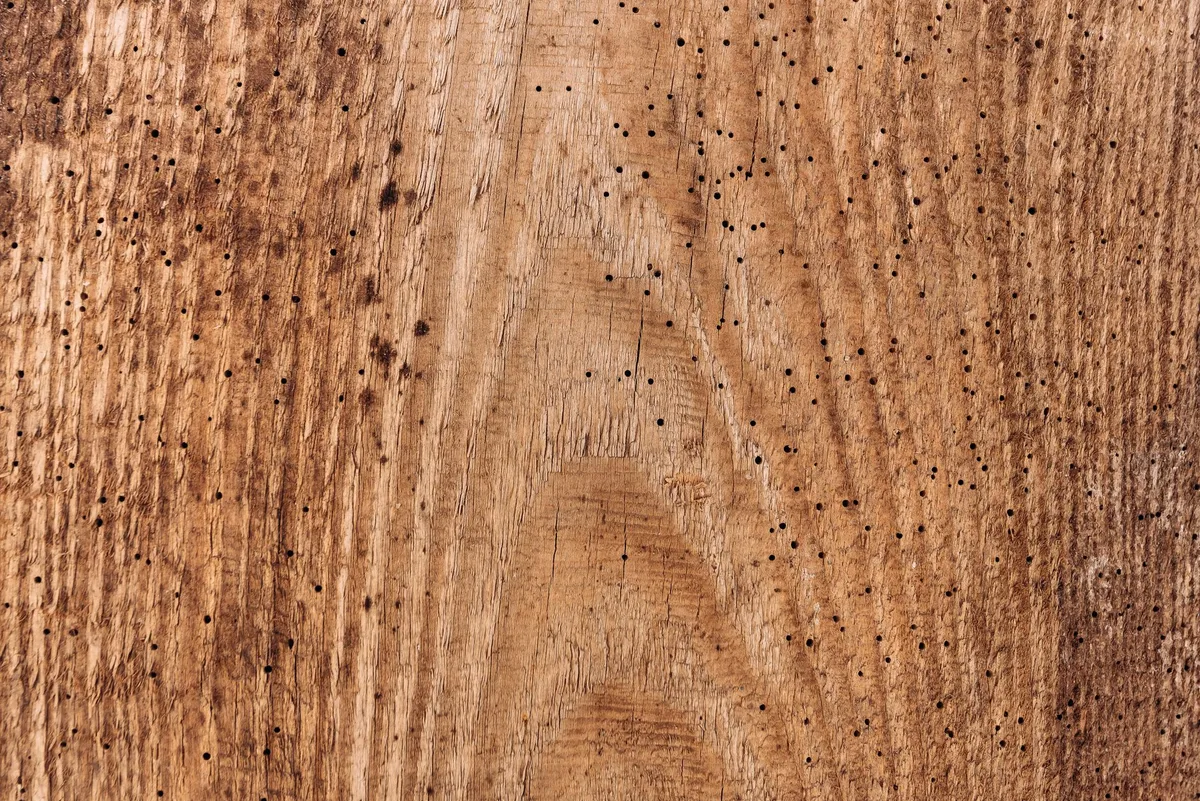
If you see those serious signs, do not wait. If you’re unsure, take clear photos of the damage and send them to a certified arborist. Most will give you a quick opinion over the phone.
One more rule of thumb: stressed trees attract pests. A tree that’s already struggling with drought, poor soil, or root damage is a magnet for borers. If your area has faced a dry summer or if you’ve recently done construction near the root zone, keep an extra close eye on the trees.
The same applies if you’re in a region with known invasive species. An arborist can help you choose the right plants for your landscape, especially in tough climates, and choosing well-adapted species from the start reduces pest pressure down the road.
The Decision Tree: Step-by-Step Process
Here’s the actual workflow our editorial team recommends, based on ISA guidelines and conversations with certified arborists. Use these steps when you spot something wrong.
Step 1: Identify the pest or damage pattern
Walk around the tree. Look at the crown first: are there dead branches, thinning leaves, or bare patches? Then check the trunk: any holes, sawdust, sap, or cracks?
Finally, examine the root flare. Many destructive pests enter at or just below the soil line. If you find D-shaped exit holes, frass packed into bark crevices, or fungal conks (shelf-like growths near the base), those are red flags.
Step 2: Assess the severity
Estimate how much of the canopy is affected. Less than 10 percent dieback? That’s early stage.
Ten to 30 percent? Moderate. Over 30 percent?
The tree may be too far gone to save, but an arborist can still assess whether treatment makes sense or if removal is the safer option. Count the exit holes too. More than a dozen on a single trunk section suggests a heavy infestation.
Step 3: Evaluate risk to nearby trees
Are there other trees of the same species within 50 feet? Many pests spread through root grafting (oak wilt) or adult beetles flying to the next host. If yes, you need to act fast, not just to save this tree but to protect the rest of your landscape.
An arborist can inject a preventative treatment into healthy neighboring trees.
Step 4: Apply the three-condition test
Call an arborist if any of these are true:
- The pest is a known killer (emerald ash borer, oak wilt, Asian longhorned beetle, pine bark beetle)
- Canopy loss is 30 percent or more
- Same-species trees are nearby
If none of those conditions apply, you can monitor for another two weeks. Take photos, note any changes, and check again. If the tree gets worse, call.
If it stays stable, it may have been a minor stress event.
Step 5: Choose your response
If you pass the three-condition test, pick up the phone. Don’t try to treat a serious infestation with a hose-end sprayer. Most systemic pests live inside the wood where surface sprays never reach.
You’ll waste money and lose precious time. Your tree’s health and the safety of surrounding plants depend on professional tools.
What the Arborist Will Do — And What You Can’t DIY
A certified arborist has access to tools and chemicals that aren’t available to the general public. That’s not gatekeeping; it’s regulation. Many systemic insecticides used for tree injections are restricted-use pesticides under EPA rules.
Only licensed applicators can buy and apply them.
Here’s what a professional consultation typically includes:
Diagnosis. The arborist will confirm the pest, sometimes sending a sample to a lab or a university extension service. They’ll also check for secondary problems like fungal infections or root decay. What looks like a pest issue on the surface may actually be a disease or a combined problem.
Treatment options. The main methods are:
- Trunk injection: The most targeted approach for borers and vascular diseases. The chemical goes directly into the vascular tissue. It’s expensive ($200 to $700 per tree per season) but highly effective.
- Soil drench: A liquid insecticide poured around the root zone. Slower acting and can risk groundwater contamination if not applied correctly.
- Bark spray: Used for some surface pests but useless against borers.
- Biological control: Parasitic wasps or beneficial nematodes for certain caterpillars and borers. Slower but eco-friendly.
Pruning and sanitation. The arborist will remove dead or infested branches using proper cuts that don’t damage the tree further. They’ll also advise on how to dispose of infected wood so it doesn’t spread pests.
Preventative treatment for neighboring trees. If you have healthy ash trees next to an infested one, the arborist can treat them before the pest arrives. That’s often cheaper than treating an active infection.
What can you do yourself? You can monitor trees, water them during drought, apply a layer of mulch (not against the trunk), and prune dead branches that are within reach and not near power lines. You can also use insecticidal soap or horticultural oil for soft-bodied pests like aphids and scale crawlers.
But for the serious stuff, leave it to the pro.
Common Mistakes That Cost You the Tree
We’ve seen homeowners make the same errors over and over. Here are the big ones and how to avoid them.
Mistake 1: Using surface spray on borers. You spray the bark. The borer is inside the wood. The chemical never touches it.
You’ve wasted the cost of the spray, and the tree keeps declining while you think you’re treating it. If the pest lives under the bark, you need a systemic treatment applied by a pro.
Mistake 2: Pruning at the wrong time. Most trees should be pruned during dormancy. Pruning during the growing season can attract pests that are attracted to fresh wounds. Oak wilt is a classic example, pruning an oak in spring or summer leaves open wounds that attract sap-feeding beetles carrying the fungus.
Wait until late fall or winter for major cuts, or have the arborist seal fresh wounds if emergency pruning is needed.
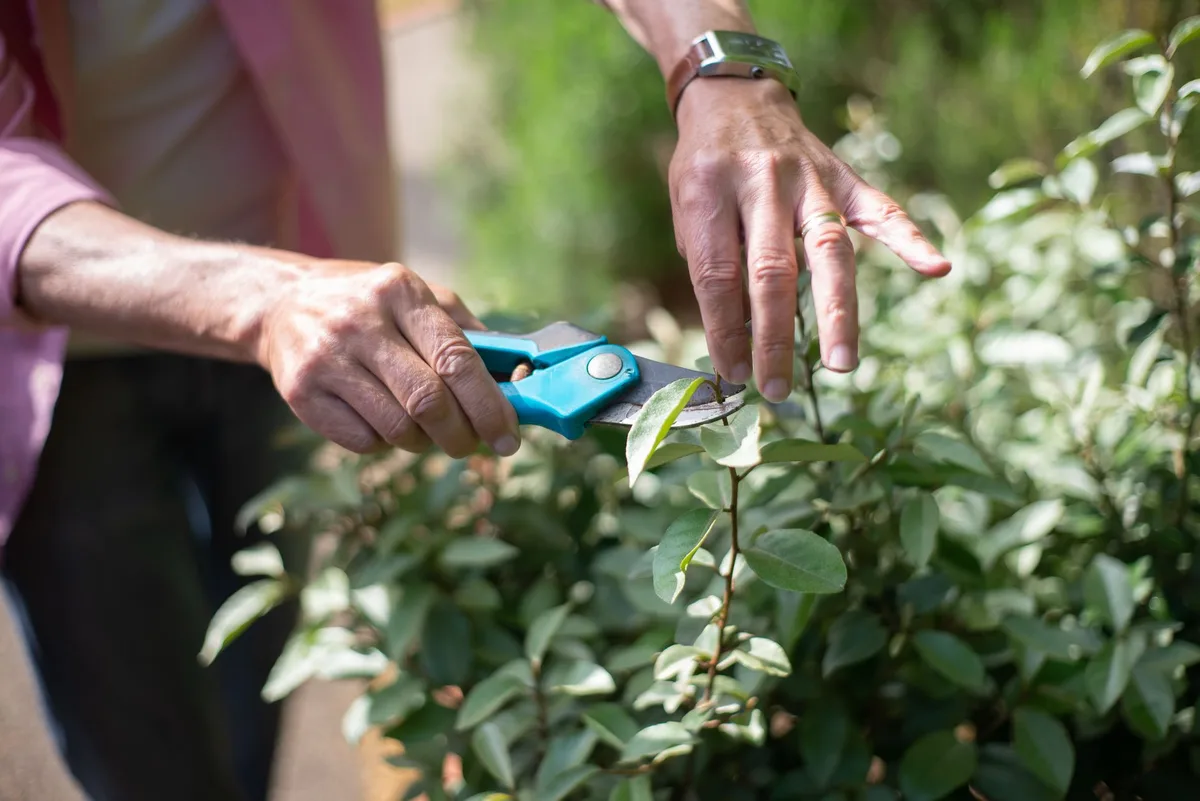
Mistake 3: Cutting branches flush with the trunk. That’s called a flush cut, and it removes the branch collar, the tree’s natural barrier against decay and pests. A proper cut is just outside the collar, leaving a small ring of tissue. This mistake is so common that arborists have a name for it: “topping” or “lion-tailing” when applied to the crown.
Flush cuts create entry points for decay fungi and boring insects.
Mistake 4: Ignoring the root flare. Many trees are planted too deep or have mulch piled against the trunk (volcano mulching). This keeps the bark at the base constantly moist, inviting borers and fungal rot. The root flare should be visible at the soil surface.
If you see bark discoloration, oozing, or soft spots at the base, that’s a serious problem.
Mistake 5: Waiting until it’s too late. The single biggest error is hesitation. People see a few dead branches and think “I’ll get to it next month.” By next month, the pest has multiplied, spread to nearby trees, and the original tree may be beyond saving. When in doubt, call for a consult.
Most arborists offer a free or low-cost walk-around. That small investment can save a tree worth thousands of dollars in shade, property value, and removal cost.
Mistake 6: Hiring the wrong person. Not every tree service employs certified arborists. A general landscaping crew may have experience with mowing and planting but zero training in pest biology. Check for ISA certification.
Ask if they carry liability insurance. A bad “pruning” job can leave your tree permanently damaged and more vulnerable to pests. Good soil care and proper selection of plants for your space also help reduce pest pressure over time.
If you’re already dealing with pest problems and looking for the right treatment approach for your lawn and garden, it’s worth understanding how to choose the right fungicide for your turf and trees so you can keep the rest of your landscape healthy while you address the infested tree.