How to Fix Japanese Beetles (2026) — What Actually Works
If you’ve got metallic green beetles devouring your roses or mysterious brown patches spreading across your lawn, you’re dealing with Japanese beetles (Popillia japonica), one of the most destructive garden pests in North America. How to fix Japanese beetles depends entirely on which life stage you’re targeting and what plants you’re protecting. The beetles spend ten months underground as white grubs before emerging as adults for a short, devastating feeding season.
Adult beetles skeletonize leaves on over 300 host plant species, while the grubs chew through grass roots beneath the soil surface. According to USDA data, Japanese beetles now infest all states east of the Mississippi except Florida, plus established populations in several western states as of 2026. The key to effective control is matching your method to the beetle’s lifecycle stage and your specific situation.
Quick Answer
Fixing Japanese beetles requires targeting the right lifecycle stage at the right time. For active adult feeding, use hand-picking in early morning, neem oil sprays, or row covers on edibles. For grubs damaging your lawn, apply beneficial nematodes or chemical grub control in late August through September when soil temperature is 50-70°F.
Spring treatments in April through mid-May work but are less effective. Timing matters more than the product you choose.
What Japanese Beetles Actually Are (And Why They’re So Destructive)
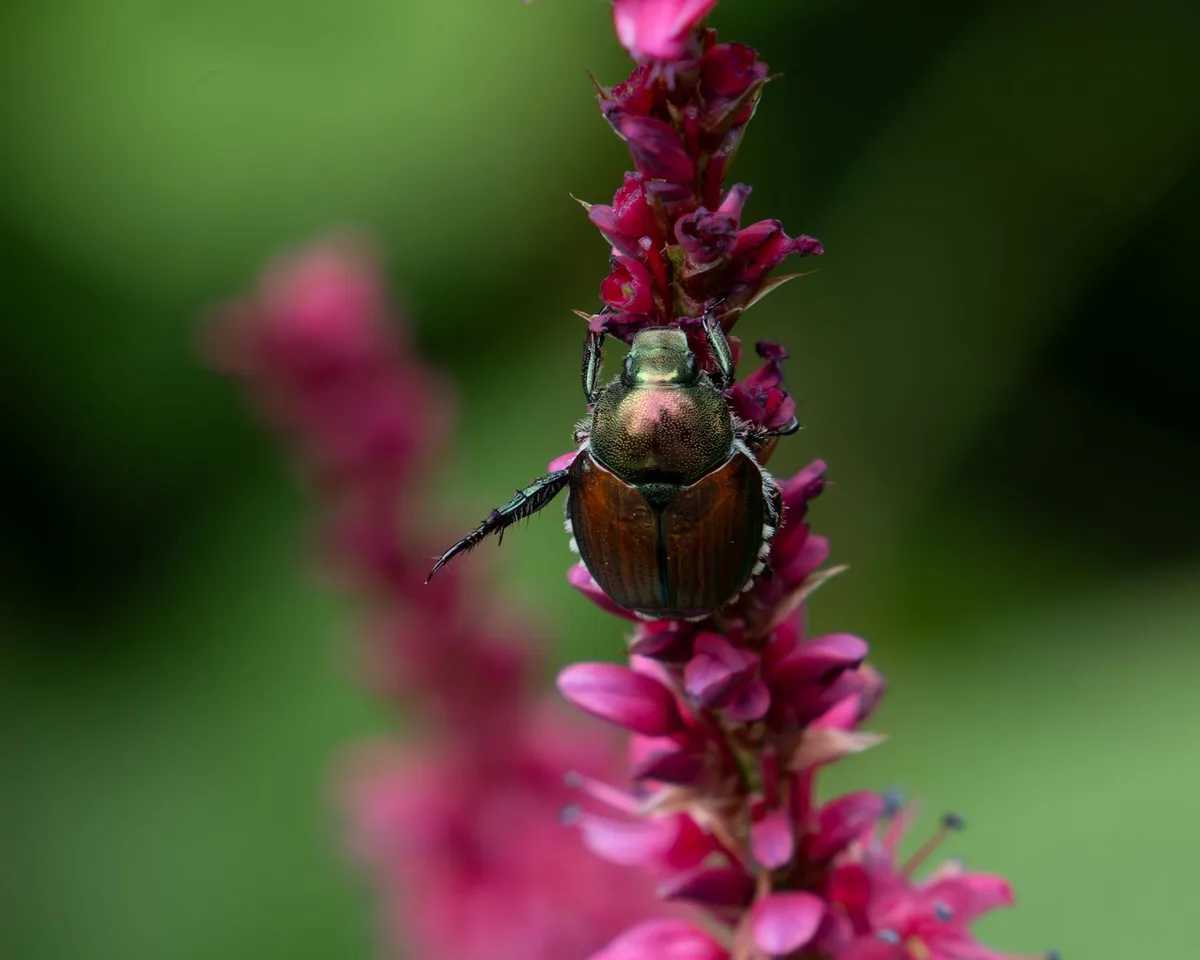
Japanese beetles are invasive scarab beetles first detected in New Jersey in 1916. They’ve since spread across most of the eastern United States and continue moving westward. The adult beetle measures about half an inch long with a distinctive metallic green head and thorax, copper-brown wing covers, and six small white hair tufts along each side of the abdomen.
What makes them uniquely destructive is their aggregate feeding behavior. When one beetle finds a good food source, it releases pheromones that attract dozens or hundreds more. You’ll often see plants with no damage one day and completely skeletonized leaves the next.
The beetles feed on leaf tissue between the veins, creating a lacy, shredded appearance.
The lifecycle runs exactly one year. Adult beetles emerge from soil in late June through early July, feed and mate for four to six weeks, then lay eggs in turf areas. Eggs hatch in 10-14 days.
The resulting white grubs feed on grass roots from August through October, then burrow deeper (4-8 inches) to overwinter. They resume feeding briefly in spring before pupating and emerging as adults to repeat the cycle.
The grub stage causes just as much damage as the adults, but it’s harder to see. White grubs are C-shaped larvae that feed on grass roots in the top three inches of soil. A density of ten or more grubs per square foot will cause visible brown patches in your lawn.
Birds and other predators often tear up turf to get at the grubs, adding to the damage.
Japanese beetles prefer certain plants over others. Top targets include roses, lindens, crabapples, grapes, raspberries, and various ornamental shrubs. They’ll often ignore many native species while destroying cultivated plants.
Understanding this preference helps you prioritize which plants need protection.
How to Tell If You’re Dealing With Japanese Beetles or Something Else
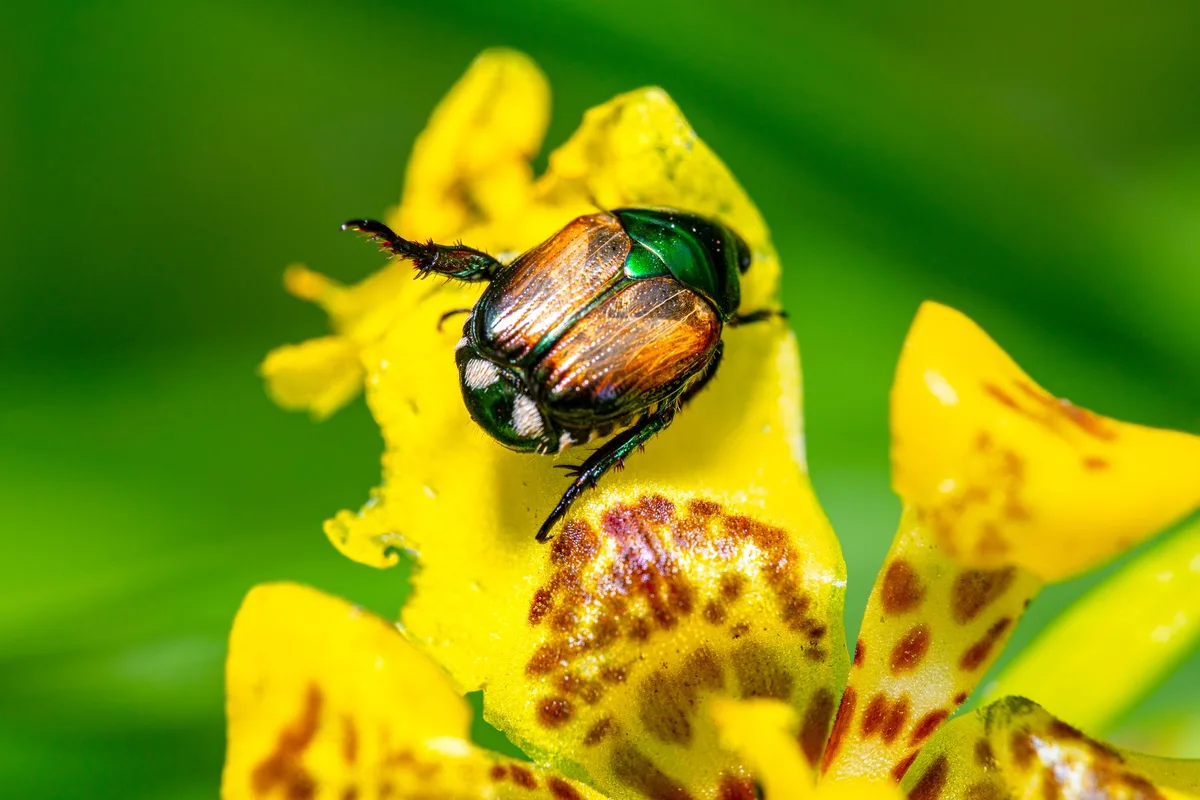
Accurate identification matters because treatments for Japanese beetles don’t work on other pests. The adult beetle has three key identifying features. First, the metallic green head and copper-brown wings create an unmistakable two-tone appearance.
Second, look for six small white hair tufts along each side of the abdomen, just below the wing covers. Third, the overall size is about 3/8 to 1/2 inch long.
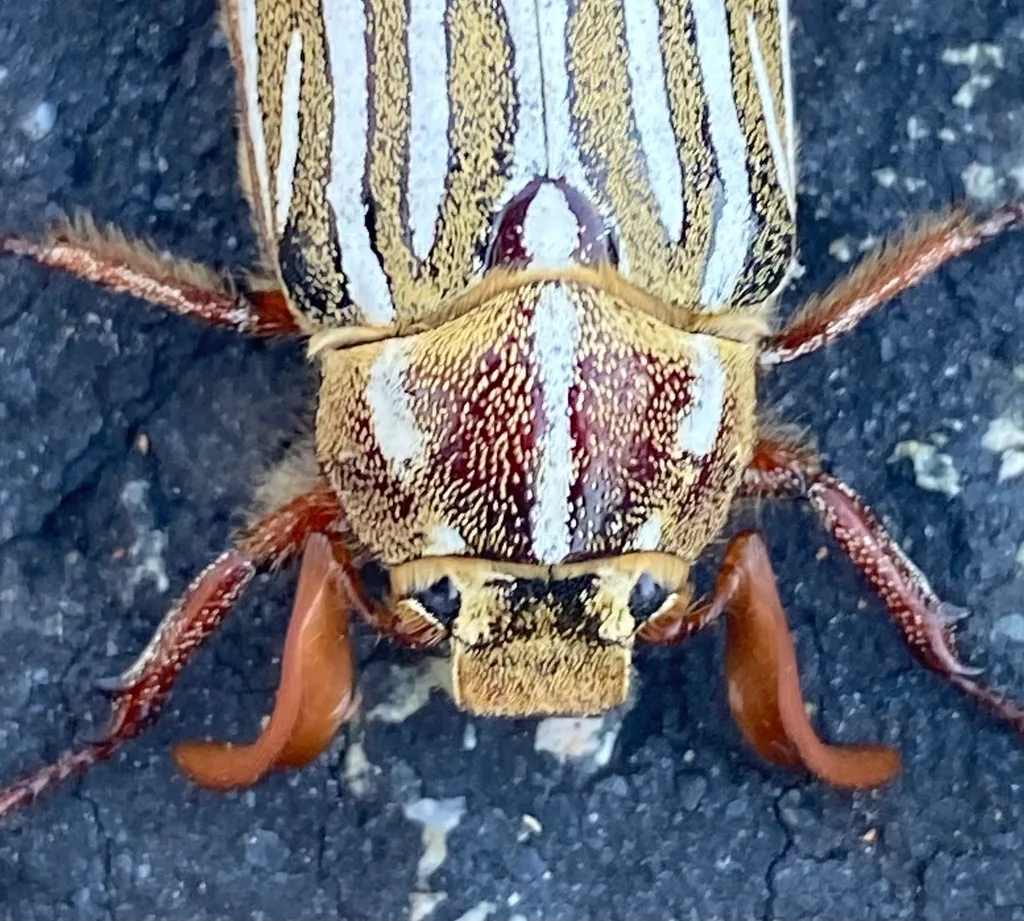
Similar beetles can fool you. June bugs (also called May beetles) are larger, brownish, and lack the white hair tufts. Rose chafers are tan or light brown, smaller, and have long spindly legs.
Green June beetles are much larger with dull green coloring and no copper tones. If you’re unsure, your state’s cooperative extension service can confirm identification from a photo.
The damage pattern is just as diagnostic as the beetle itself. Japanese beetles create a distinctive skeletonized leaf appearance. They eat the soft tissue between leaf veins, leaving only the vein structure behind.
Heavy feeding makes leaves look like brown lace. Other leaf-feeding beetles tend to chew holes or eat from leaf edges inward.
For grub identification, dig up a small section of damaged turf and examine the top three inches of soil. Japanese beetle grubs are white or cream-colored, C-shaped, about 3/4 to one inch long when mature, with a brown head capsule and six legs near the head. The key identifier is the raster pattern on the rear end.
Japanese beetle grubs have two rows of spines arranged in a V-shape when viewed under magnification.
Look for grubs in late summer (August-September) when they’re actively feeding near the surface. You can also check in spring (April-May) during their second feeding period. Dig several test spots across damaged areas.
Count the grubs in a one-square-foot section. Ten or more grubs per square foot means treatment is justified.
White grubs from other beetle species look similar but have different raster patterns. European chafer grubs have a Y-shaped pattern. Masked chafers have irregular spine patterns.
If grub identification matters for your treatment choice, contact your local extension office. For most homeowners, any heavy white grub infestation in turf justifies the same control methods.
The One Thing You Must Know Before Choosing a Treatment
The single most important factor in Japanese beetle control is timing. Every control method works during a specific window in the beetle’s lifecycle. Miss that window and you’ve wasted time and money.
The beetle’s one-year lifecycle creates distinct opportunity windows where specific treatments deliver maximum results.
For example, grub control products applied in late August through September target young grubs when they’re small, actively feeding, and near the soil surface. These same products fail when applied in winter (grubs are deep and dormant) or late spring (grubs are nearly mature and about to pupate). Your timing determines success, not the brand you buy.
The same principle applies to adult beetle control. Hand-picking works great early in the season when beetle numbers are low. Wait until peak emergence and you’ll spend hours every day just keeping up.
Spray treatments need reapplication every 7-14 days during the entire flight season. One application won’t protect plants for the whole summer.
Adult Beetles vs Grubs: Which Stage Are You Fighting?
You need to identify which life stage is causing your current problem. This determines your treatment strategy. Adult beetles create visible leaf damage from late June through August.
Grubs create brown lawn patches from August through October and again briefly in April through May.
If you see beetles on plants right now, you’re dealing with adults. If you have unexplained brown patches in your lawn during late summer or spring, dig up a section and look for grubs. You might be fighting both stages simultaneously in mid to late summer.
Adult control stops immediate damage but doesn’t prevent next year’s population. Grub control reduces next year’s adult emergence but doesn’t help plants being eaten today. A complete strategy addresses both stages at the appropriate times.
Most homeowners focus on whichever stage they can see. That’s backwards. Grub control delivers better long-term results because you’re preventing the next generation.
Adult control is reactive, addressing damage after it starts. Budget and effort toward fall grub control first, then handle adult beetles as needed.
Why Timing Matters More Than the Product You Use
Japanese beetle grubs are most vulnerable when they’re young (first and second instar stages) and actively feeding near the soil surface. This window runs from mid-August through September in most regions. Soil temperature between 50-70°F indicates the ideal treatment window.
Above 70°F, grubs haven’t hatched yet. Below 50°F, they’re moving deeper and becoming less active.
During this narrow window, beneficial nematodes establish and find grubs easily. Chemical grub controls penetrate to the feeding zone and are ingested during active feeding. The same treatments applied in winter or late spring encounter mature third-instar grubs that are larger, tougher, and less susceptible.
Nematodes struggle in cold soil. Chemical controls can’t penetrate to dormant grubs at 6-8 inches deep.
For adult control, timing means treating at first emergence before egg-laying begins. The earliest arriving beetles are scouts. They find good food plants and release aggregation pheromones that bring in the main population.
If you eliminate these scouts through hand-picking or early sprays, you reduce the pheromone signal and the total infestation.
Peak adult emergence varies by region and weather. Southern areas see emergence in early June. Northern regions peak in mid to late July.
Watch for the first beetles on preferred host plants like roses or grapes. When you spot the first three to five beetles, start your control program immediately. Waiting until you see “a lot” of beetles means you’ve already lost the timing advantage.
Reapplication timing matters just as much as initial timing. Most contact insecticides break down or wash off within 7-14 days. Rain accelerates breakdown.
If you spray once and stop, new beetles arriving two weeks later encounter unprotected plants. Mark your calendar for reapplication dates or accept that you’ll need to spray multiple times through the six-week flight season.
Decision Guide: Which Control Method Matches Your Situation
Not every control method fits every situation. Your property size, the plants you’re protecting, whether you’re growing edibles, and your tolerance for chemicals all determine the best approach. Here’s how to match methods to situations.
Small Garden or a Few Affected Plants
If you’re protecting fewer than a dozen plants, hand-picking delivers excellent results with zero cost and no environmental impact. Check plants every morning during the flight season. Drop beetles into soapy water, where they drown quickly.
This method works because you can monitor every plant daily.
For small areas, physical barriers like row covers provide 100% protection. Floating row covers let in light and water but exclude beetles completely. They work well for vegetable gardens and berry patches.
You’ll need to remove covers to allow pollination if you’re growing fruiting crops.
Neem oil sprays work well for small gardens where you can thoroughly coat every leaf surface. Neem disrupts feeding and reproduction. It requires reapplication every seven days throughout the beetle season.
The effort is manageable when you’re only treating a few roses or a small vegetable patch.
Large Lawn With Grub Damage
For lawns showing brown patches or high grub counts, fall grub control is your primary strategy. Beneficial nematodes work well for organic approaches. Apply 23-50 million nematodes per acre (about one million per 1,000 square feet).
Water the lawn thoroughly before and after application. Nematodes need moist soil to move and find grubs.
Chemical grub controls containing imidacloprid or trichlorfon provide faster, more reliable results for heavy infestations. Follow label rates precisely. These products need irrigation to move into the root zone where grubs feed.
Apply in late August through September for best results.
For ongoing control, consider milky spore disease. This biological control takes two to three years to establish but provides suppression for a decade or more. Apply one teaspoon of spore powder on a four-foot grid pattern across your lawn.
Reapply annually for three years. Milky spore works best in the eastern United States where soil stays warm enough for spore multiplication.
Large-scale hand-picking isn’t practical for lawns. Focus on the grub stage instead. Treating grubs in fall prevents the next summer’s adult emergence.
This breaks the cycle before adults damage ornamental plants.
Edible Crops (Vegetables, Berries, Fruit Trees)
Never use synthetic insecticides on edibles without checking the pre-harvest interval. This is the number of days required between application and harvest. Some products allow harvest the same day.
Others require 7-21 day waits. The label lists this information clearly.
Row covers work perfectly for vegetables and berries if you don’t need pollinator access. Install covers before beetles arrive. Remove them after the flight season ends in August.
For crops requiring pollination, remove covers during peak bloom, then replace them.
Neem oil is safe for edibles with a zero-day pre-harvest interval. It works through feeding disruption rather than toxicity. Spray every seven days during active beetle feeding.
Apply early morning or evening to avoid harming pollinators.
Spinosad is an organic insecticide derived from soil bacteria. It provides faster knockdown than neem with acceptable safety for edibles. Check the label for specific crops and pre-harvest intervals.
Most allow harvest within three days of application.
For fruit trees, a single application of organic fertilizer in spring supports overall tree health, making trees more resilient to moderate feeding damage. Healthy trees tolerate some leaf loss without significant impact on fruit production.
Ornamentals and Roses With Active Adult Feeding
Ornamental plants tolerate stronger control options because you’re not eating them. Start with hand-picking if beetle numbers are low. Escalate to sprays if hand-picking can’t keep up.
Neem oil is a good first-line spray. It’s gentle on beneficial insects when applied carefully and doesn’t leave harsh residues. Spray every seven days.
Make sure to coat both upper and lower leaf surfaces.
Pyrethrin provides fast knockdown for heavy infestations. It’s derived from chrysanthemum flowers, breaks down quickly in sunlight, and is acceptable in organic gardening. Reapply every 7-10 days.
Spray in evening after pollinators return to their nests.
For severe infestations on high-value ornamentals, carbaryl (Sevin) or synthetic pyrethroids deliver the strongest control. These products kill beetles on contact and provide residual protection for 7-14 days. The tradeoff is harm to beneficial insects including bees, so spray in evening and avoid blooming plants.
Systemic insecticides like imidacloprid can be applied as soil drenches. The plant absorbs the chemical and becomes toxic to feeding beetles. This method reduces spray drift and protects beneficials that don’t feed on the plant.
Application in spring protects plants through the entire summer beetle season.
Ongoing Prevention for Next Season
Long-term control requires reducing the breeding population. Focus on fall grub control every year. Even if you don’t see lawn damage, treating grubs in August-September reduces next summer’s adult emergence.
Encourage natural predators. Ground beetles, parasitic wasps, robins, and starlings all eat Japanese beetle grubs or adults. Avoid broad-spectrum insecticides that kill these beneficials.
Maintain some natural areas with leaf litter where ground beetles overwinter.
Maintain lawn health through proper mowing, watering, and fertilization. Thick, healthy grass outcompetes weeds and recovers faster from grub damage. Grubs prefer thin, stressed turf.
Core aeration in fall improves root development and helps beneficial nematodes move through soil.
Avoid planting highly attractive species in prominent locations. Lindens, crabapples, and roses are beetle magnets. If you plant them, plan for annual protection efforts.
Less attractive plants require less intensive management.
Coordinate with neighbors when possible. Japanese beetles fly readily between properties. If your neighbor’s yard produces thousands of beetles, some will inevitably reach your plants.
Community-wide grub control programs reduce overall beetle populations more effectively than individual efforts.
Hand-Picking and Physical Removal: When It Works and When It Doesn’t
Hand-picking is the most effective control method for small gardens with moderate beetle populations. It costs nothing, uses no chemicals, and provides immediate results. You can remove 50-100 beetles per day from a dozen plants during peak season.
The method stops working when beetle numbers exceed what you can physically collect or when plants are too numerous to monitor daily.
Beetles are sluggish in early morning when temperatures are below 70°F. They cling weakly to leaves and drop easily into containers. This is your collection window.
By midday when temperatures rise, beetles become active and fly away when approached. Evening collection works but beetles are more alert than morning.
The Morning Collection Method
Check plants every morning between 6 AM and 9 AM before temperatures climb. Carry a wide-mouth container filled with two inches of soapy water. Dish soap works fine.
Hold the container under a beetle cluster and tap the leaf or branch sharply. Beetles drop into the water and drown within minutes.
Work systematically through all susceptible plants. Don’t skip days. Beetles arrive constantly throughout the flight season.
Missing even two days allows populations to rebuild and resume heavy feeding. Consistency matters more than thoroughness on any single day.
Empty the container daily. Dead beetles floating in water smell terrible after 24 hours. Dump the soapy water on bare soil away from plants, or dispose of it down a drain.
Rinse the container to prevent odor buildup.
Soapy Water Drowning Method
The soap breaks water’s surface tension so beetles can’t float or crawl out. Without soap, beetles trapped in plain water often survive and fly away. Use about one tablespoon of liquid dish soap per quart of water.
More soap doesn’t improve results.
Some gardeners use straight isopropyl alcohol instead of soapy water for faster kills. This works but costs more and evaporates quickly in hot weather. The alcohol concentration should be 70% or higher.
Lower concentrations let beetles survive.
Hand-picking fails on large properties, tall trees, or when beetle populations exceed several hundred. You simply can’t keep up. It also fails if you travel frequently during beetle season or can’t commit to daily morning rounds.
In those situations, switch to sprays or grub control strategies.
Row Covers and Barriers: 100% Protection for the Right Situations
Row covers physically exclude beetles from plants. They’re made from lightweight spun fabric that allows 85-95% light transmission and water penetration. Beetles can’t chew through the material or squeeze underneath if edges are secured properly.
This method delivers 100% protection for covered plants.
Row covers work best for low-growing vegetables, berry bushes, and young ornamental shrubs. They’re impractical for tall plants or established trees. You’ll need to remove covers to allow pollinator access for crops that require fertilization.
Leafy greens, herbs, and root vegetables that don’t need pollination stay covered all season.
Install covers before beetles arrive in your area, typically late May or early June depending on region. Drape the fabric loosely over plants to allow room for growth. Secure all edges with soil, landscape staples, or boards.
Even small gaps let beetles enter. Remove covers in late August after beetle flight season ends.
The fabric raises temperatures slightly underneath, which benefits warm-season crops but can stress cool-season plants during hot spells. Monitor soil moisture more frequently under covers. Rain penetrates but evaporation is reduced, so you might need less irrigation than uncovered areas.
Grub Control: Targeting the Larval Stage in Soil
Grub control prevents next year’s adult beetles by killing larvae in soil before they mature and emerge. This is your most effective long-term strategy. One properly timed grub treatment can reduce next summer’s adult population by 75-90% in the treated area.
Fall Treatment Window (August-September): Your Best Shot
Late August through September is the optimal grub control window across most of the United States. Eggs have hatched, young grubs are feeding actively in the top three inches of soil, and they’re small enough to be highly susceptible to treatments. Soil temperature in this window typically runs 60-70°F, ideal for both chemical and biological controls.
Water your lawn thoroughly 24 hours before application. Moist soil helps nematodes move and helps chemical products penetrate to the feeding zone. Apply the product according to label rates.
Water again immediately after application with at least half an inch of irrigation. This moves the treatment into the root zone where grubs feed.
Spring Treatment Window (April-May): The Backup Option
Spring grub control works but delivers less consistent results. Grubs have overwintered deep in the soil and are now large third-instar larvae. They’re tougher, less active, and about to pupate.
The treatment window is narrow, typically three to four weeks in April or early May before pupation begins.
If you missed fall treatment and have confirmed grub damage, spring treatment is better than nothing. Use fast-acting chemical controls rather than biological options. Beneficial nematodes struggle in cool spring soil.
Milky spore applied in spring won’t establish effectively.
Beneficial Nematodes: How They Work and Application Process
Beneficial nematodes are microscopic roundworms that parasitize and kill grubs. Two species work on Japanese beetle grubs: Heterorhabditis bacteriophora and Steinernema carpocapsae. They’re living organisms shipped on sponges or in gel.
You mix them with water and apply through a sprayer or watering can.
Nematodes hunt grubs in soil, enter through natural body openings, and release bacteria that kill the grub within 48 hours. The nematodes reproduce inside the dead grub, then emerge to find new hosts. They provide ongoing control as long as soil stays moist and temperatures remain moderate.
Apply nematodes when soil temperature is 50-70°F. Water the lawn before and after application. Keep soil moist for two weeks after treatment so nematodes can move and hunt effectively.
Don’t apply chemical pesticides for at least two weeks before or after nematode application. The chemicals kill nematodes.
Milky Spore: Multi-Year Biological Control
Milky spore disease is a naturally occurring bacterium (Paenibacillus popilliae) that infects and kills Japanese beetle grubs. It’s applied as a powder containing dormant spores. When grubs ingest the spores, the bacteria multiply inside the grub’s body and kill it.
The dead grub releases billions of new spores into surrounding soil.
Application requires patience. Apply one teaspoon of powder on a four-foot grid pattern across your entire lawn. Water it in lightly.
Repeat the application once per year for three consecutive years. The spore population builds gradually as more grubs die and release spores. Full effectiveness takes two to three years.
Once established, milky spore persists in soil for 10-15 years and provides ongoing grub suppression. It works best in regions with warm summers where soil temperature supports bacterial multiplication. Northern areas with short summers see slower establishment and less reliable control.
Chemical Grub Control (Imidacloprid, Trichlorfon): Fast-Acting Options
Imidacloprid is a systemic insecticide applied in late summer. Grass roots absorb it and grubs die when they feed. It provides season-long control with a single application.
Products include granular formulations spread with a broadcast spreader. Water in thoroughly after application.
Trichlorfon is a contact insecticide that kills grubs on contact. It acts faster than imidacloprid, usually within 48 hours. Apply in late summer when grubs are near the surface and water in immediately.
This product works well for rescue treatments when grub populations are high.
Both products carry restrictions in some states due to pollinator concerns. Check local regulations before purchase. Follow label rates precisely.
Over-application harms beneficial soil organisms and risks groundwater contamination.
Adult Beetle Control: Managing Active Infestations
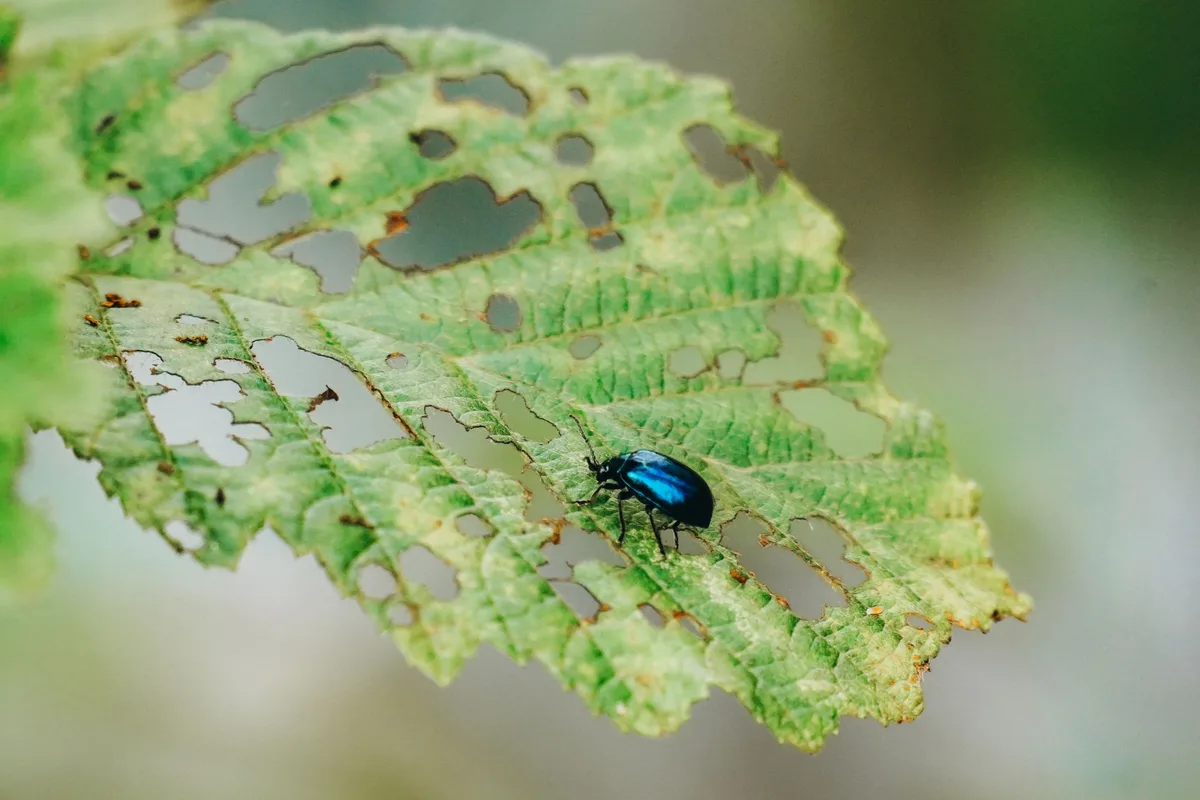
Adult beetle control targets beetles actively feeding on plants. These methods provide immediate relief but don’t prevent new beetles from arriving or stop next year’s generation. You’ll need repeated applications throughout the four to six week flight season.
Neem Oil: Feeding Disruption Without Harsh Toxicity
Neem oil is extracted from neem tree seeds and contains azadirachtin, a compound that disrupts insect feeding and reproduction. It doesn’t kill beetles instantly but makes treated plants unappealing. Beetles stop feeding within hours and leave to find untreated plants.
Neem also interferes with egg development.
Mix neem oil concentrate with water according to label directions, typically one to two tablespoons per gallon. Add a few drops of dish soap as an emulsifier. Spray all leaf surfaces thoroughly, including undersides.
Reapply every seven days throughout beetle season. Rain washes neem off, so reapply after heavy rain even if seven days haven’t passed.
Apply neem in early morning or evening when temperatures are below 80°F. High heat can cause leaf burn on some sensitive plants. Test spray a few leaves and wait 24 hours before treating entire plants.
Neem has low toxicity to bees and beneficial insects compared to synthetic pesticides.
Pyrethrin and Spinosad: Fast Knockdown Organic Options
Pyrethrin is derived from chrysanthemum flowers and kills beetles on contact through nervous system disruption. It breaks down rapidly in sunlight, typically within 24 hours, leaving no long-term residue. This makes it safe for use around edibles but requires frequent reapplication.
Spray pyrethrin in evening after bees return to hives. It’s highly toxic to bees during application but the short residual period reduces overall risk. Cover all plant surfaces where beetles are feeding.
Expect to see dead beetles within minutes to hours. Reapply every five to seven days.
Spinosad is a bacterial fermentation product that works through ingestion. Beetles must eat treated foliage to be affected. It provides longer residual control than pyrethrin, typically 7-10 days.
Spinosad has low bee toxicity once spray deposits dry. It’s acceptable for organic gardening and approved for most edible crops with short pre-harvest intervals.
Carbaryl and Synthetic Insecticides: When Heavy Damage Requires It
Carbaryl (commonly sold as Sevin) provides the strongest knockdown and longest residual control for Japanese beetles. It kills on contact and remains effective for 7-14 days depending on weather. Use it when beetle populations are overwhelming and gentler options can’t keep up.
The tradeoff is broad-spectrum toxicity. Carbaryl kills beneficial insects including bees, ladybugs, and parasitic wasps. Apply only in evening when pollinators are inactive.
Avoid spraying any blooming plants. Consider spot-treating only the most heavily damaged plants rather than blanket applications.
Synthetic pyrethroids like bifenthrin and lambda-cyhalothrin offer similar performance with slightly lower bee toxicity. These products work well for ornamentals where you need reliable season-long protection. Always follow label restrictions regarding aquatic areas.
Pyrethroids are highly toxic to fish and aquatic invertebrates.
Reapplication Timing and Rain Washoff
Most contact insecticides require reapplication every 7-14 days throughout beetle season. Mark calendar dates for reapplications so you don’t forget. Skipping reapplications allows beetle populations to rebuild and feeding damage to resume.
Rain washes spray residues off leaves faster than dry conditions. If you get heavy rain within 48 hours of application, consider the treatment lost and reapply once foliage dries. Light rain after the spray has dried for 24 hours usually doesn’t require immediate reapplication.
Systemic products absorbed by leaves are less vulnerable to rain washoff than contact sprays.
The Japanese Beetle Trap Debate: Why Most Experts Say Skip Them
Japanese beetle traps use floral scent lures and sex pheromones to attract beetles into a collection bag. They catch hundreds or thousands of beetles per trap. The problem is they attract far more beetles to your property than they actually capture.
Research from multiple state extension services consistently shows traps increase plant damage rather than reducing it.
The pheromone plume can draw beetles from 200-300 feet away. Many beetles intercept the scent before reaching the trap and stop to feed on nearby plants. You end up concentrating beetles from the entire neighborhood onto your property.
Untrapped beetles cause more total damage than if you’d never set the trap.
If neighbors are using traps, your plants benefit slightly since some beetles get caught before reaching your yard. But don’t set traps on your own property unless you’re willing to sacrifice nearby plants. The few situations where traps make sense include placing them at property boundaries far from valuable plants, essentially using them to protect one area by sacrificing another.
Better alternatives include the hand-picking and spray methods covered earlier. Both remove or repel beetles without attracting additional insects to your property. Save your money and skip the traps.
Mistakes That Waste Money and Make the Problem Worse
Applying grub control in winter or midsummer misses the active feeding window completely. Grubs are either dormant deep in soil or haven’t hatched yet. You’ll see zero results and need to retreat during the correct window.
Using broad-spectrum insecticides during bloom kills pollinators along with beetles. If you must spray flowering plants, wait until evening after bees return to hives. Better yet, avoid spraying blooms entirely and focus on non-flowering foliage.
Placing traps near valuable plants attracts more beetles to the exact area you’re trying to protect. If you insist on using traps, place them at least 50 feet away from gardens, ideally at property boundaries where intercepted beetles can’t reach prized plantings.
Skipping post-application irrigation for grub treatments leaves the product sitting on grass blades instead of moving into soil. Most grub control products require at least half an inch of water immediately after application to reach the root zone where grubs feed.
Treatment Timing Calendar: What to Do When
Late May through Early June: Install row covers on vulnerable edibles before first beetles arrive. Begin daily morning hand-picking rounds as soon as you spot the first scout beetles.
Late June through August: Continue hand-picking and apply foliar sprays as needed. Reapply contact insecticides every 7-14 days. Monitor plants daily for new damage.
Mid-August through September: Apply grub control when soil temperature drops to 50-70°F. Water lawn before and after application. This is your most important treatment window for long-term control.
April through May: Apply spring grub control only if you missed fall treatment and confirmed grub damage exists. Use fast-acting chemical products rather than biological controls in spring.
Safety Considerations: Pollinators, Pets, and Pre-Harvest Intervals
Never apply insecticides to blooming plants when bees are active. Most beetle control products are toxic to pollinators during application. Spray in evening after 8 PM when bees have returned to hives.
Keep pets and children off treated lawns until spray deposits dry completely, typically two to four hours. Grub control products applied to lawns generally allow re-entry once watering is complete and the lawn surface dries.
Check pre-harvest intervals for any product applied to edibles. This is the mandatory waiting period between application and harvest. Neem oil typically has zero-day intervals.
Spinosad requires one to three days. Synthetic products may require 7-21 days depending on the crop and chemical.
Store all pesticides in original containers in a locked location away from children and pets. Dispose of empty containers according to label directions. Most communities have hazardous waste collection programs for pesticide disposal.
When Neighbors Have Beetles Too: Managing Reinfestation
Beetles fly readily between properties within a 1,000-foot radius. If your neighbor’s yard produces thousands of emerging adults each summer, constant reinfestation is inevitable. Your control efforts protect your plants but can’t eliminate the regional population.
Focus on grub control in your own lawn to stop your property from contributing to the neighborhood beetle population. Encourage neighbors to do the same. Community-wide grub control programs reduce overall beetle pressure more effectively than isolated efforts.
Accept that some adult beetles will always reach your plants from outside sources. Set realistic expectations. The goal is manageable damage, not zero beetles.
Healthy plants tolerate 20-30% defoliation without significant harm.
How to Know If Your Treatment Actually Worked
For grub control, dig test holes in treated areas four to six weeks after application. Check the top three inches of soil for live grubs. You should see at least 75% reduction compared to pre-treatment counts.
Finding fewer than five grubs per square foot indicates successful control.
For adult beetle treatments, monitor daily feeding damage. Effective control means damage stops progressing or slows dramatically within 48-72 hours of application. New leaves should emerge clean without skeletonization.
If damage continues at the same rate, increase application frequency or switch to a stronger product.
Compare treated plants to untreated controls if possible. A few unprotected plants in a corner of your yard show what would happen without intervention. The difference confirms whether your chosen method is worth the effort and cost.
Document beetle counts and damage levels weekly through photos or written notes. This helps you evaluate what worked and refine your strategy for next season. Successful long-term control comes from learning which methods fit your specific situation.