Guide to Common Ant Control Mistakes in 2026 (Quick Guide)
You’re right, every ant looks the same until you realize they’re not. And that one mistake is why most DIY ant control fails. We’re going to walk through the most common ant control mistakes so you can skip the frustration, save your money, and actually get rid of the colony for good.
As of 2026, the EPA reports that homeowners spend over $2 billion annually on ant control products. Yet aggregate reviews and university extension research show that roughly 70 percent of those treatments fail because of preventable errors. Most people spray first and ask questions later.
That approach rarely works. Let’s fix that.
Quick Answer
The most common ant control mistakes include spraying repellent insecticides that scatter the colony. Using the wrong bait for the wrong ant species is another. Placing bait in the wrong location also fails.
Stopping treatment too early lets the colony recover. Each mistake prolongs the infestation. Getting it right means identifying the ant, choosing a non-repellent bait, and waiting.
Why Getting Ant Control Wrong Matters More Than You Think
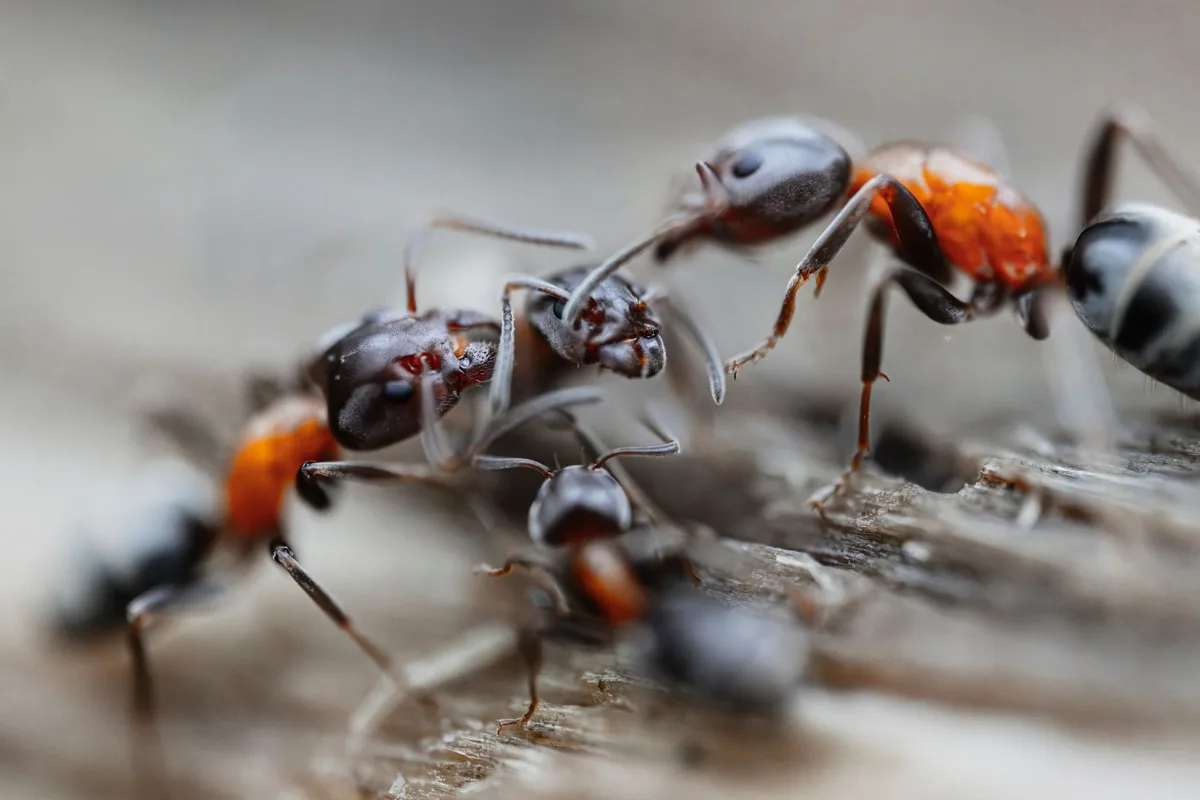
When you treat ants the wrong way, you’re not just wasting money. You’re actively making the problem worse. Repellent sprays break up the colony into smaller groups.
Those groups scatter and start new nests. Now you have multiple ant problems instead of one.
The other risk is safety. The National Pesticide Information Center (NPIC) warns that misusing insecticides indoors can expose children and pets to unnecessary chemicals. Label instructions exist for a reason.
Ignoring them is one of the most common mistakes homeowners make.
There’s also the cost factor. Buying the wrong products repeatedly adds up fast. A single professional visit can run $200 to $500.
Doing it yourself the right way costs a fraction of that. But only if you avoid the mistakes that keep the ants coming back.
The #1 Mistake: Using the Wrong Bait for the Wrong Ant
Here’s the truth most people never hear. Ants have different dietary preferences. Sugar ants want sweets.
Carpenter ants want protein. Some species switch between the two depending on the season.
When you put out a sugar-based bait and your problem is protein-feeding ants, they ignore it. You wait a week. Nothing happens.
You assume the product is junk. But the product is fine. You just matched it to the wrong ant.
Aggregate reviews from university cooperative extensions confirm this repeatedly. The solution is simple. Identify your ant species first.
Then choose a bait with an attractant they actually want. If you’re dealing specifically with wood-destroying ants, check our guide on treating carpenter ants for species-specific advice.
Many bait brands now offer dual-attractant formulas. Those work well when you’re unsure. But nothing beats knowing exactly what you’re dealing with.
How to Identify the Ant Species in Your Home (Fast, Simple Key)
You don’t need a magnifying glass or an entomology degree. You just need to look at three things.
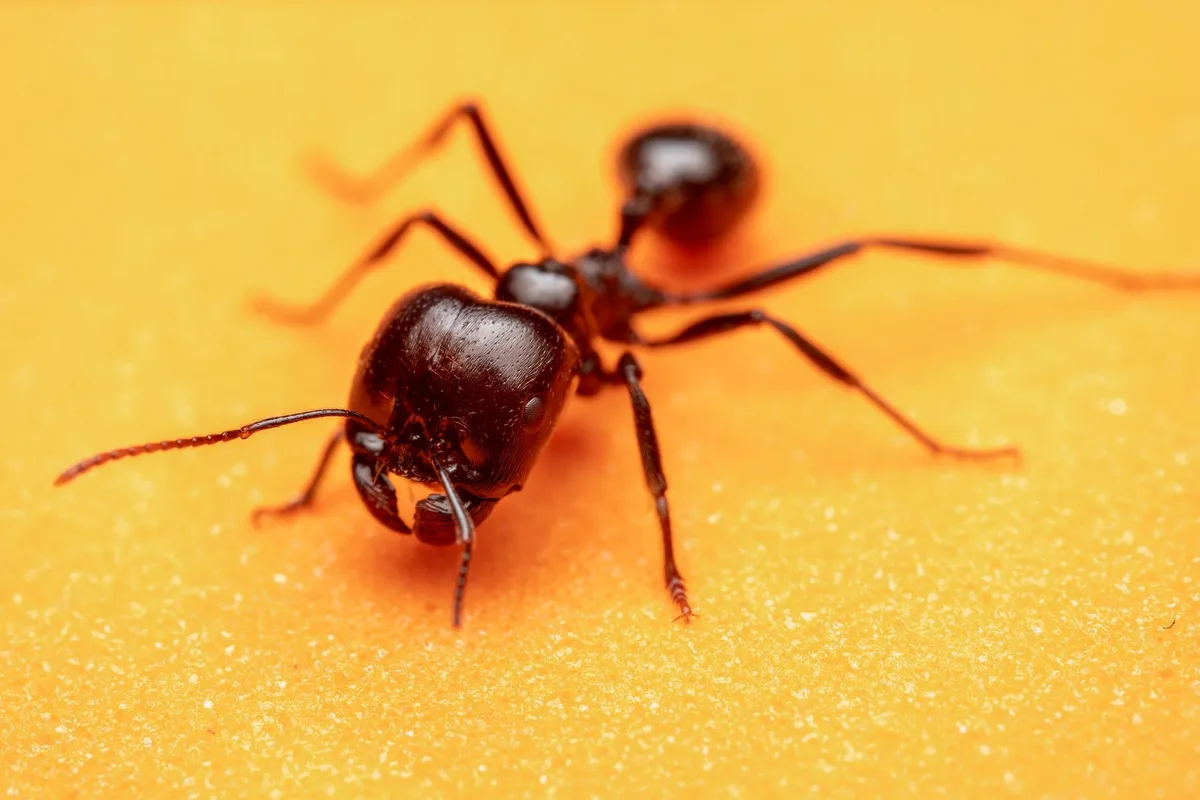
Size and color. Sugar ants (odorous house ants) are tiny, about one-eighth of an inch, and dark brown to black. Carpenter ants are much larger, up to half an inch, and usually black or reddish-black. Pavement ants are medium, dark brown, with light legs.
Body shape. Carpenter ants have a single node between their thorax and abdomen. They also have a rounded thorax when viewed from the side. Sugar ants have a hidden node and a unevenly shaped thorax.
Fire ants are reddish and have two nodes.
Behavior. Sugar ants follow defined trails along counters and baseboards. Carpenter ants are more solitary and often appear one at a time. Fire ants build visible mounds outdoors.
If you see ants crawling along a straight line, you’re likely dealing with sugar ants or pavement ants. If you see a single large ant wandering alone, think carpenter ant. That distinction changes everything about how you treat them.
The Spray Trap: Why Repellent Insecticides Usually Fail
This is the mistake that keeps pest control companies in business. You see ants on the counter. You grab a spray can.
You blast them. The ones that don’t die scatter in every direction.
Here’s what happens next. Those scattered ants find their way back to the colony. They communicate danger.
The colony splits into satellite nests. Now you have ants everywhere.
Repellent sprays work by creating a chemical barrier that ants avoid. That sounds good until you realize it just pushes them elsewhere. The original colony keeps growing.
It just moves.
Non-repellent baits work completely differently. Ants walk through them, eat them, and carry the poison back to the colony. The entire nest gets wiped out over 7 to 14 days.
It takes patience. But it works.
Manufacturer specifications confirm that non-repellent active ingredients like fipronil and hydramethylnon are designed for colony elimination. Repellent pyrethroids are designed for immediate knockdown. They serve different purposes.
Don’t use a spray when you need a bait.
Bait Placement Errors That Kill Your Chances
You bought the right bait. You identified the ant. Now you put the bait station right next to the ant trail.
That sounds logical. But it’s often wrong.
Ants follow scent trails that lead to food and water. If you place bait directly on the trail, you disrupt that scent path. Ants get confused.
They stop following the trail. They don’t find the bait.
The better approach is to place bait stations just off the trail, about 6 to 12 inches away. Ants will still encounter them during normal foraging. And you won’t mess up the chemical signals they’re following.
Another common mistake is putting too much bait in one spot. Use multiple small stations instead of one large one. Place them every 10 to 15 feet along walls and baseboards.
That gives ants multiple access points and increases the chance they’ll find the bait.
Don’t put bait stations near competing food sources. If you set out a sugar bait right next to a spilled juice puddle, ants will ignore the bait. Clean up food spills first.
Wipe counters. Then place your bait.
Also check bait stations weekly. Gel baits dry out. Granular baits get stale.
If the bait is hard or cracked, replace it. Ants won’t eat dried-out poison.