How to Rotate Insecticides for 2026: Beginner-Friendly Guide
You’ve been spraying the same insecticide all season, and suddenly it’s not working. The bugs are back, and they’re thriving. That’s because you’re feeding the resistance machine.
Learning how to rotate insecticides is the only way to stay ahead of this problem and keep your crops protected season after season.
As of 2026, the IRAC database lists over 30 distinct mode-of-action groups for insecticides worldwide. Agricultural experts agree that using just one group all season guarantees resistance within three to five years. Let’s walk through what real rotation looks like and how to build a system that works.
Quick Answer
Insecticide rotation means switching between different IRAC mode-of-action groups. Use a different group for each application. Never use the same group twice in a row.
This delays resistance and keeps your sprays effective. Check the IRAC code on every label before you spray.
Why You Can’t Just Spray Whatever You Want
Here’s the hard truth. Insects evolve fast. They reproduce in days or weeks, not years.
When you hit them with the same chemical over and over, you’re running a selection experiment. The few bugs that survive pass that resistance to their offspring. Within a few generations, your go-to product is useless.
The stakes are higher than just wasted spray. Resistant pests cause crop losses that can hit 30 percent or more in a single season. You end up applying higher rates, which costs more money and increases environmental harm.
Some products get pulled from the market entirely when resistance becomes widespread. That’s exactly what happened with several pyrethroid formulations in cotton production over the last decade.
This isn’t a hypothetical problem. It’s happening in real fields right now. Common household pests like carpenter ants develop resistance to popular sprays within just a few seasons.
The same principle applies on a farm scale, and the consequences are multiplied.
Resistance management is not optional. It’s a basic requirement for anyone who relies on chemical pest control. If you’re not rotating, you’re actively creating a problem for yourself next season.
The Core Rule: Switch Mode-of-Action Groups
The single most important concept in insecticide rotation is the mode of action. The mode of action is how the chemical kills the pest at the molecular level. It’s the specific biological pathway the insecticide disrupts.
The Insecticide Resistance Action Committee (IRAC) classifies all insecticides into numbered groups based on their mode of action. Group 1A includes carbamates. Group 3A includes pyrethroids.
Group 5 includes spinosyns. Group 28 includes the diamides. The list goes on to over 30 groups as of 2026.
Here’s the rule that matters. Two products from the same IRAC group are essentially the same weapon, even if they have different brand names. Bifenthrin and cypermethrin are both in Group 3A.
They work the same way. Switching between them is not rotation. It’s a waste of effort.
To properly rotate insecticides, you need to pick a product from a different IRAC group for each sequential application. If you used a Group 4A neonicotinoid last spray, your next spray must come from a different group like Group 5 or Group 28. This forces the pest population to deal with a completely different attack mechanism.
How Resistance Actually Happens
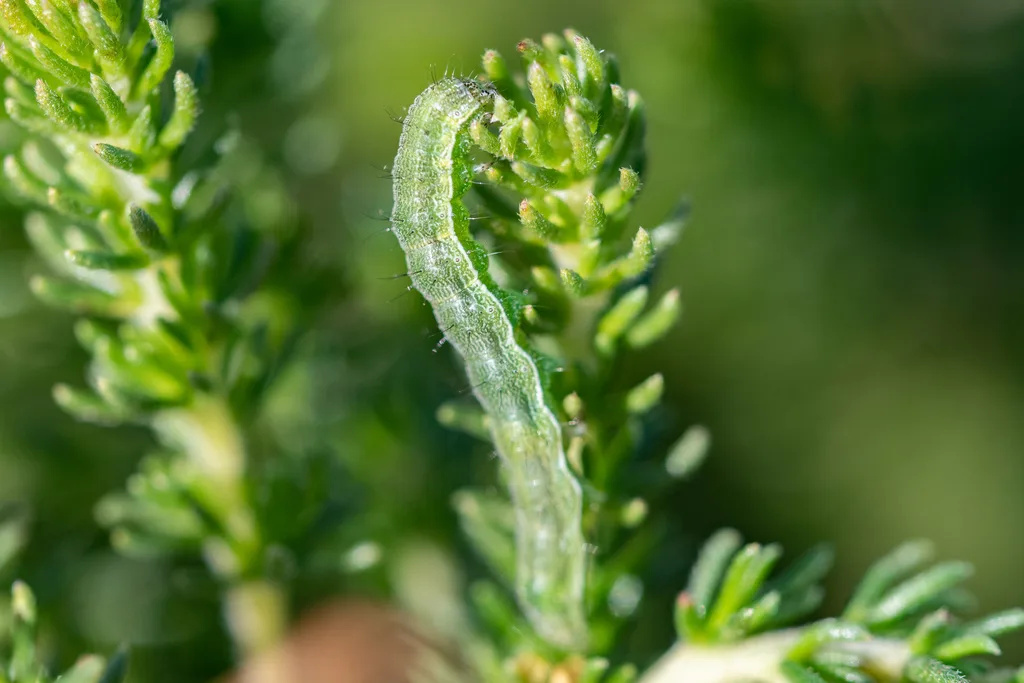
The biology behind resistance is simple but relentless. Every pest population has natural genetic variation. A tiny fraction of insects, maybe one in a million, carries a mutation that makes them less susceptible to a particular insecticide.
When you spray, that mutant individual survives while the rest die. It reproduces, often rapidly, and passes the resistance gene to its offspring. The next generation has a higher proportion of resistant individuals.
Spray again with the same product, and you kill fewer bugs. This continues until the product is essentially useless.
For a pest like Helicoverpa armigera, the cotton bollworm pictured above, a generation can complete in as little as four weeks under warm conditions. That means six to eight generations per season in many growing regions. Resistance can develop to a usable level in two to three seasons if you don’t rotate.
High-resistance-risk groups include the pyrethroids (Group 3A) and the neonicotinoids (Group 4A). Moderate-risk groups include the spinosyns (Group 5) and the diamides (Group 28). Low-risk groups include many biological insecticides like Bacillus thuringiensis (Group 11), but even these can lose effectiveness with overuse.
Crop stress also plays a role. Plants that are already struggling from poor nutrition or drought are more vulnerable to pest damage, which tempts growers to spray more frequently. Maintaining healthy plants through good soil management reduces pest pressure and makes your rotation plan easier to stick with.
The #1 Mistake That Wastes Money and Creates Resistance
The single most common error in insecticide rotation is what experts call “false rotation.” This happens when a grower switches brand names but stays within the same IRAC group.
Here’s a typical scenario. You spray a product containing bifenthrin (Group 3A) for thrips. Next week, you see aphids and grab a different bottle off the shelf.
It contains lambda-cyhalothrin, also Group 3A. You think you’ve rotated. You haven’t.
The pest population faces the same mechanism, and resistance continues to build.
The same mistake happens with tank mixes. Some growers combine two products from the same MoA group thinking they’re getting broader control. They’re just doubling the selection pressure on that one group.
To avoid this, check the label for the IRAC group code. It’s usually printed prominently on the front or in the active ingredient section. In the United States, the EPA requires resistance management statements on labels, and many include the IRAC group number.
Make it a habit to verify before every application.
The other big mistake is rotating between seasons but not within the season. Using one group all summer and switching to a different group next year is better than nothing, but it’s not sufficient. Resistance can build within a single season, especially with fast-reproducing pests.
You need to alternate between at least two, ideally three, different MoA groups within the same growing season.
Your Step-by-Step Rotation Plan
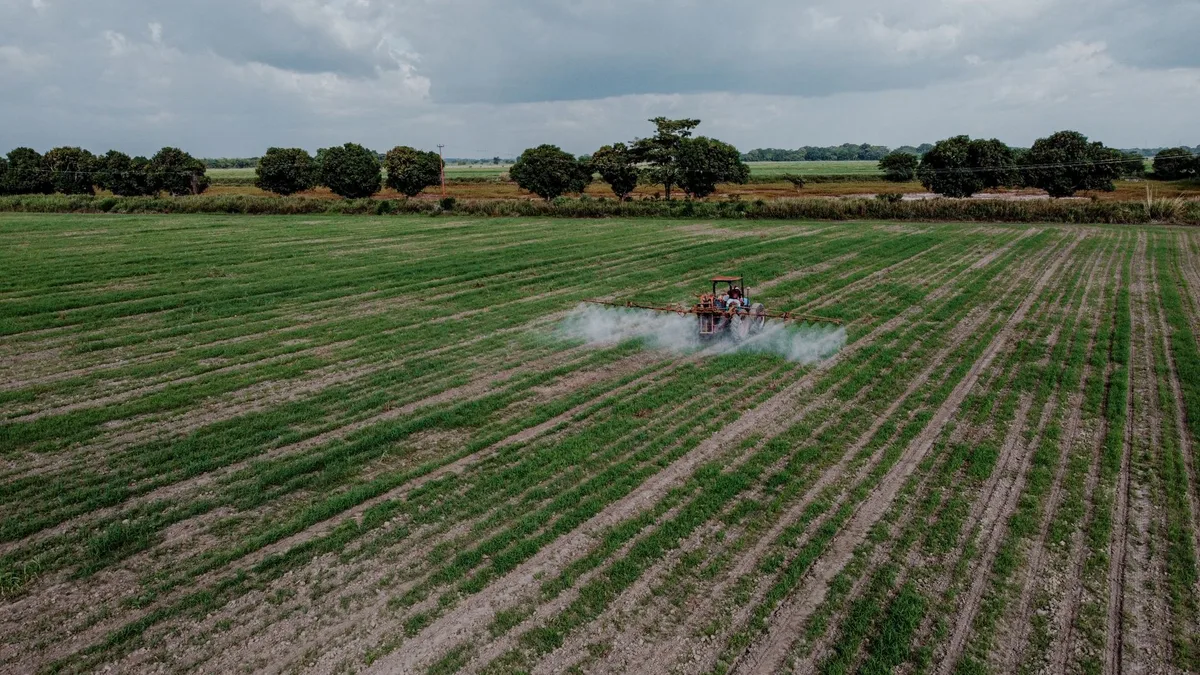
Building a rotation plan starts before the season begins. Here’s how to set one up that actually works.
Step 1: Know your pest.
Identify the primary pest and its life cycle. Different pests have different resistance risks and different susceptible MoA groups. A plan for Colorado potato beetle won’t work for aphids.
Step 2: List your available MoA groups.
Write down every insecticide you’re willing to use this season. Look up each one’s IRAC group. Group them by MoA number.
You need at least two groups. Three is better. Four is ideal.
Step 3: Map the application windows.
Mark your expected spray dates based on crop stage and pest pressure forecasts. Each window gets a different MoA group. Rotate sequentially.
Group A for the first spray, Group B for the second, Group C for the third.
Step 4: Plan for the unexpected.
Pest pressure can spike after a spray. You may need an extra application. Have a backup MoA group in reserve.
Never default back to a group you already used.
Step 5: Consider tank mixes the right way.
Tank mixing two products from different MoA groups can be effective. It exposes the pest to two attack mechanisms at once. Just make sure the products are physically compatible and the label allows mixing.
Here’s a sample three-group rotation for a typical vegetable crop:
| Application Window | MoA Group | Example Active Ingredient |
|---|---|---|
| Early season (seedling) | Group 4A | Imidacloprid |
| Mid season (vegetative) | Group 5 | Spinosad |
| Late season (fruiting) | Group 28 | Chlorantraniliprole |
This is just an example. Your actual plan depends on local pest species, product registrations, and the specific crops you’re growing.
What to Do When Resistance Has Already Started
It’s the moment nobody wants. Your spray goes on at the right rate and timing, but the bugs are still feeding. You’ve got a resistance problem.
Here’s what to do next.
Confirm it first.
Don’t jump to conclusions. Check your application quality. Did you use the right nozzle?
Was the water pH too high for the product? Did you hit the right growth stage? Ruling out application error is step one.
Switch to a completely different MoA group immediately.
Do not try a higher rate of the same group. That accelerates resistance. Pick a product from a group you haven’t used in at least two seasons.
A rescue treatment should be a heavy hitter with a different mode of action.
Scout hard after the rescue spray.
Look for survivors 48 to 72 hours after application. If you still see live insects, you may have cross-resistance. That means the pest is resistant to two or more MoA groups.
This is where you need expert help.
Consider non-chemical control.
When resistance is confirmed, chemicals become a last resort. Use biological controls like Bacillus thuringiensis or beneficial insects. Combine with cultural practices like crop rotation or trap crops.
This integrated approach reduces selection pressure.
If you’re dealing with a large-scale infestation and resistance is confirmed, contact your local extension entomologist. They can run a resistance bioassay to identify which MoA groups still work. Relying on guesswork at this stage wastes time and money.
Legal and Safety Must-Knows
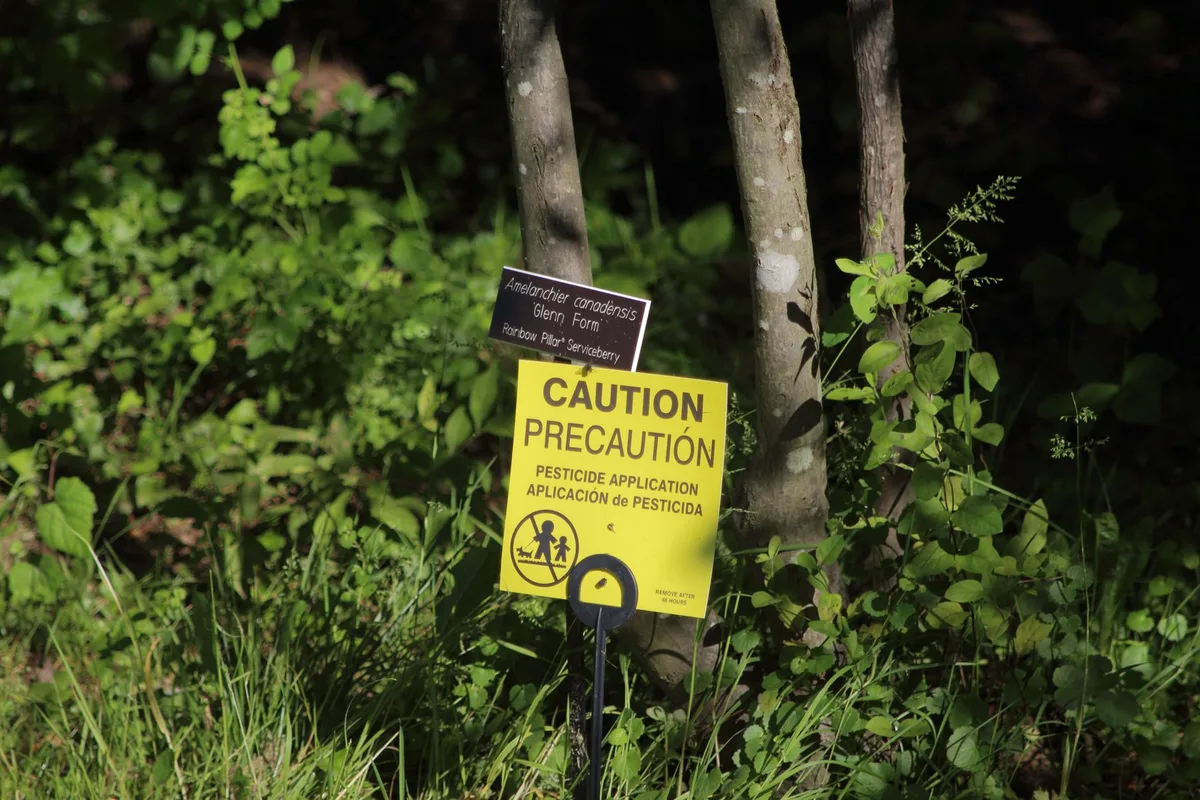
Label requirements for rotation are not suggestions. They are legally enforceable. In the United States, the EPA mandates resistance management statements on many insecticide labels.
These often specify a maximum number of consecutive applications of the same MoA group.
Pre-harvest intervals (PHI) and re-entry intervals (REI) shift with rotation.
Each product has its own PHI and REI. When you switch products, those numbers reset for the new product. You can’t carry over the PHI from the previous spray.
Check the label of the new product before you apply.
Pollinator protection is non-negotiable.
Some MoA groups are highly toxic to bees. Neonicotinoids (Group 4A) are a prime example. If you rotate to a neonicotinoid during bloom, you risk killing pollinators and violating label restrictions.
Always check the environmental hazards section of the label.
Recordkeeping matters more than you think.
Many states require detailed records of pesticide applications. Include the product name, IRAC group, rate, date, crop, and target pest. Good records help you track your own rotation history.
They also protect you in case of an audit or drift complaint.
If you’re unsure about any label requirement, contact your state department of agriculture or the manufacturer directly. Never guess.
Expert Tips for Long-Term Rotation Success
Rotation isn’t a one-season project. It’s an ongoing strategy that pays off over years. Here are the expert-level tips that separate good rotation from great rotation.
Keep a rotation log.
Use a notebook or a spreadsheet. Record every application with its IRAC group. After two or three seasons, you’ll see patterns.
You’ll know which groups you overuse and which you neglect. Adjust accordingly.
Don’t skip rotational sprays because of cost.
Yes, buying multiple products costs more upfront per season. But the cost of resistance is far higher. A single resistant outbreak can cost more than ten seasons of rotation products.
Treat rotation as an investment, not an expense.
Use lower-risk groups early.
Save your most potent new chemistry for peak pest pressure later in the season. Use older, lower-risk groups early when pest numbers are low. This preserves your best weapons for when you really need them.
Monitor beneficial insects.
Broad-spectrum insecticides kill good bugs too. If your rotation kills off natural predators, you may trigger secondary pest outbreaks. Choose selective products when possible.
This keeps your biological control program intact.
Coordinate with neighbors.
Resistance doesn’t respect property lines. If your neighbor uses only pyrethroids, you’re both at risk. Talk to nearby growers about shared rotation strategies.
Some regions have mandatory resistance management guidelines for this reason.
Quick Answers to Common Rotation Questions
Can I use the same product twice in a row?
Only if the label explicitly allows it and you’re using it in a tank mix with a different MoA group. For most products, the label limits consecutive applications to one or two. Check before you spray.
How many different MoA groups do I need per season?
At least two. Three is better. For high-risk pests like diamondback moth or western flower thrips, aim for four or more groups across the season.
The more diversity, the slower resistance develops.
Does rotation matter for organic insecticides?
Yes. Organic products like spinosad (Group 5) and Bacillus thuringiensis (Group 11) still have specific modes of action. Overusing any single organic product will eventually select for resistance.
Rotate between different organic MoA groups just like you would with synthetics.
What’s the difference between rotation and tank mixing?
Rotation means using different MoA groups in separate applications over time. Tank mixing means combining two or more MoA groups in one spray. Both are valid.
Tank mixing can be more effective when done correctly, but it requires careful label checking.
When should I seek professional help?
If you see control failures despite proper application and rotation, contact your local extension office or a certified crop advisor. They can test resistance levels and recommend a tailored plan. Waiting too long makes the problem worse.
The One-Page Rotation Decision Guide
This is the cheat sheet you can pin to the shed wall or keep in your spray log. It covers the three critical decisions you’ll face every season.
Decision 1: Rotate or not?
If you’ve used the same MoA group on this field within the last 14 days, rotate. If you’re starting a new pest flush and haven’t sprayed for 30+ days, you can repeat the same group once. But never three times in a row.
Decision 2: Tank-mix or sequential spray?
Tank-mix when you have multiple pest species at the same growth stage and both target pests are susceptible to at least one product. Sequential sprays work better when one pest dominates and you want to preserve beneficial insects between applications.
Decision 3: Skip spraying entirely?
If pest pressure is below the economic threshold, don’t spray. Every unnecessary application adds selection pressure. Scout first.
Spray only when counts justify it.
Here’s the quick reference table:
| Situation | Action |
|---|---|
| First spray of season | Use any MoA group you haven’t used in last 12 months |
| Second spray within 30 days | Switch to a different MoA group |
| Third spray in same season | Use a third MoA group or tank-mix two different groups |
| Resistance suspected | Use a rescue product from a group not used in 2+ seasons |
| Organic rotation | Rotate between Group 5, Group 11, Group UN (neem) |
Stick to this guide and you’ll stay ahead of resistance without overcomplicating the process.
Frequently Asked Questions
How long should I wait between rotating insecticides?
At least 7 to 14 days for most products. This allows the previous product to degrade and reduces the chance of cross-resistance from residual exposure.
Can I rotate between different brands of the same active ingredient?
No. That’s false rotation. If the active ingredient is the same, the IRAC group is the same.
You must switch to a different active ingredient from a different MoA group.
What happens if I accidentally spray the same MoA group twice?
It’s not the end of the world, but it’s a missed opportunity. Monitor closely for control failures. Plan to use a different group for the next spray and extend the interval if possible.
Do I need to rotate insecticides for home vegetable gardens?
Absolutely. Home gardens face the same resistance risks as commercial farms. Rotate between products like spinosad, Bt, neem oil, and insecticidal soap.
Even organic products need rotation.
How do I find the IRAC group number on a label?
Look for the active ingredient statement on the front panel. The IRAC group code is often printed as “IRAC Group 3A” or “Group 3A” in a box near the active ingredient. If you can’t find it, check the manufacturer’s website or call their technical support line.