What Causes Lawn Grubs 2026
I'll get straight to it. If you're seeing brown patches spread across your lawn, and the turf peels back like a cheap rug, you're probably dealing with lawn grubs. What causes lawn grubs is a question that starts with beetles and ends with their hungry larvae living just beneath your grass.
Brown patches aren't always grubs, but when the turf lifts easily and reveals white C-shaped insects, you've found your culprit.
According to research from land-grant university extension programs, a healthy cool-season lawn can tolerate up to five to ten grubs per square foot before damage becomes visible. Anything above that threshold, and the root system gets chewed up faster than the grass can regrow. Before we get into the species and the visual cues that tell them apart, let's talk about why you need to identify them correctly in the first place.
Quick Answer
Lawn grubs are beetle larvae. They hatch from eggs laid in your soil. They feed on grass roots.
This kills patches of turf. Adult beetles lay eggs in summer.
Why Visual Identification Matters for Grub Control
You can't treat what you can't identify. That sounds obvious, but a shocking number of homeowners spray for grubs without ever confirming they have them. The damage from root-feeding grubs looks very similar to drought stress and certain fungal diseases.
If you're unsure, check the turf's grip on the soil before reaching for a fungicide.
Here's where the visual piece comes in. Grub damage has a telltale sign: the turf can be rolled back like sod because the roots are gone. Drought-damaged grass holds tight to the soil.
That one visual cue saves you from applying chemicals you don't need.
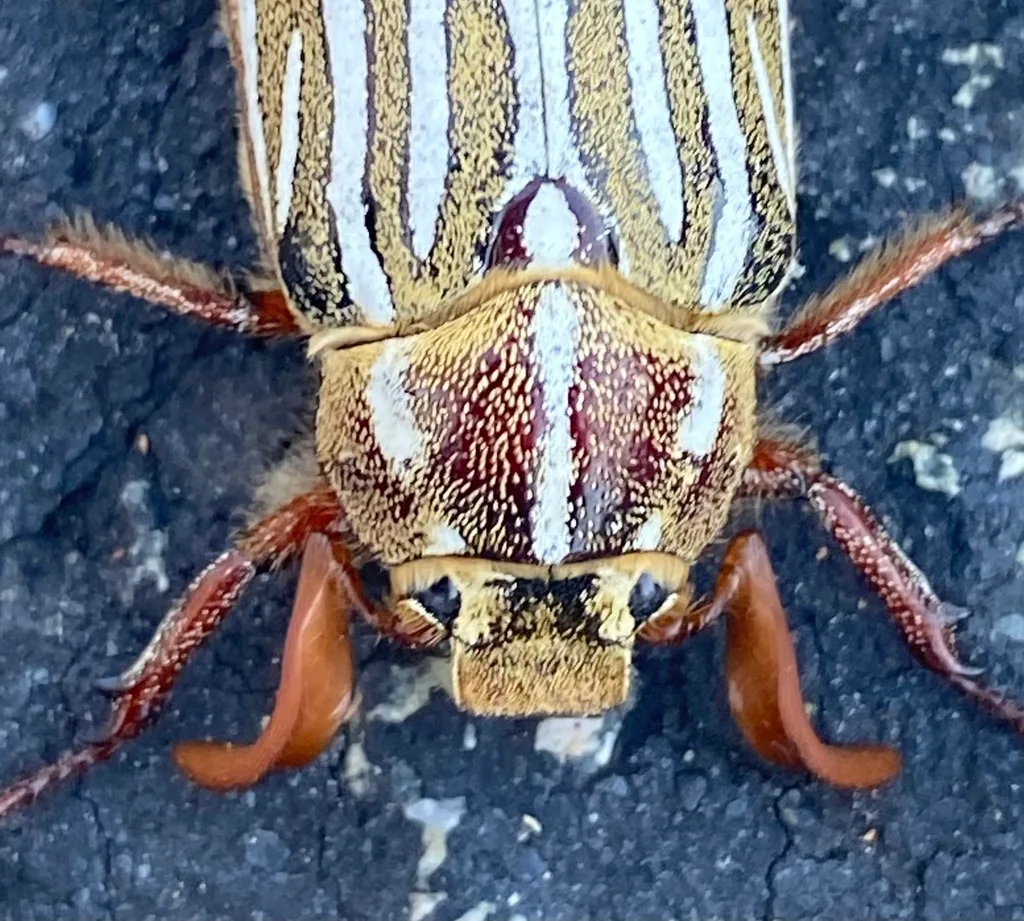
Different grub species also require different treatment timing. Japanese beetle grubs and European chafer grubs have staggered egg-laying periods. A product applied in late July for chafers might miss the Japanese beetles entirely.
You have to know who you're fighting, and that starts with looking at the grub itself.
The Real Causes: Beetles, Lifecycles, and Lawn Conditions
The root cause of lawn grubs is always the same: adult beetles chose your lawn as a nursery. Female beetles burrow into moist soil and lay eggs in batches. Those eggs hatch into the C-shaped larvae we call grubs.
The lifecycle follows a predictable pattern. Adult beetles emerge from the soil in late spring to mid-summer, depending on the species and your local climate. They mate, feed on ornamental plants, and then the females fly to grassy areas to lay eggs.
Moist, well-watered lawns with a thick thatch layer are prime real estate for egg-laying. Maintaining a healthy lawn with regular feeding helps it withstand grub pressure.
Here's a quick overview of the four main players you'll encounter:
| Beetle Species | Adult Flight Period | Egg-Laying Window | Typical Region |
|---|---|---|---|
| Japanese beetle | Late June to August | Mid-July onward | Eastern and Midwest US |
| European chafer | Late May to early July | June | Northeast US, Pacific NW |
| Northern masked chafer | Late June to early August | July | Midwest, Northeast |
| June beetle | May to June (varies) | Late spring | Nationwide, more common in South |
Grubs hatch and feed through the rest of summer and early fall. They grow through three stages called instars, getting bigger with each molt. By late fall, they burrow deeper to survive winter.
In spring, they move back up, feed for a few weeks, then pupate into adult beetles. The cycle repeats.
As of 2026, Japanese beetle populations continue to expand westward. That makes them an increasing concern for more homeowners across the country.
Step-by-Step: How to Sample and Find Grubs (With Visual Cues)
You don't need a PhD in entomology to find grubs. You need a shovel or a sharp trowel, about sixty seconds per sample, and a willingness to get your hands dirty.
Steps for a reliable square-foot sample:
- Use a shovel or utility knife to cut three sides of a one-foot square in the turf.
- Peel that flap of turf back like a hinge.
- Look at the soil surface and root zone for white C-shaped larvae.
- Count how many you see in that square foot.
- Repeat in three to five random spots across the affected area.
If you find five to ten grubs per square foot in a healthy lawn, you've hit the threshold where control is justified. Below that, the grass can usually outgrow the damage on its own.
The visual cues are simple. Grubs curl into a C shape when disturbed. You'll see a brown head capsule at one end.
Their bodies are creamy white with tiny legs near the head.
If you roll one onto its back, you can see a patterned area on the last segment of the abdomen. That's the raster, and it's your ticket to species identification.
A common mistake is only checking soil near the edge of brown patches. Grubs move and cluster, so sample both damaged and seemingly healthy areas. You might find grubs where the grass still looks green.
Key Visual Identifiers: C-Shape, Head Capsule, and Raster Pattern
If you've flipped a grub onto its back, you're already most of the way toward identifying it. The underside of the last abdominal segment has a distinct pattern of hairs and spines called the raster. It's as unique as a fingerprint for each scarab species.
Here's what to look for with a hand lens or a smartphone macro shot:
Japanese beetle grub
- Raster: two parallel rows of short spines forming a V shape
- Often described as looking like a tiny mustache
European chafer grub
- Raster: a transverse, curved row of stout spines with two smaller rows behind it
- More like a random scattering pattern
Masked chafer grub
- Raster: a single row of curved, stout spines with a broken double row at the side
- Shapes vary between Northern and Southern species
June beetle grub
- Raster: two parallel rows of backward-curving spines, spaced well apart
- A larger grub overall, often over an inch
The head capsule color is another clue. Most grubs have a brown head, but the shade varies. The C-shape is universal for scarabs, so if you find a curled grub, you're in the right family.
A straight, legless larva or one with no distinct head capsule usually isn't a grub.
Getting the raster right matters because it tells you the species. The species tells you the treatment window. A Japanese beetle grub and a masked chafer grub may share the same lawn, but they don't share the same egg-laying dates.
Grub Species Comparison: Japanese Beetle vs. European Chafer vs. Masked Chafer vs. June Beetle
Once you've identified the raster pattern, you can place your grub into one of four buckets. Each bucket comes with its own lifecycle, preferred grass, and damage potential.
| Species | Mature Size | Body Color | Raster Pattern | Key Trait |
|---|---|---|---|---|
| Japanese beetle | ~1 inch | Creamy white | Two parallel rows (V shape) | Most common in east, severe leaf feeder as adult |
| European chafer | ~¾ inch | White | Scattered spines, transverse row | Tolerates cooler soil, feeds well into fall |
| Northern masked chafer | ~1 inch | Grayish-white | Single curved row plus broken side rows | Feeds later into fall, tolerates drier soil |
| Southern masked chafer | ~1 inch | Grayish-white | Similar to Northern but distinct layout | Dominant in the Southeast |
| June beetle | 1 to 1½ inches | Off-white | Two parallel rows, widely spaced | Large grub, 2-3 year lifecycle |
The biggest practical difference is the treatment approach. Annual species like Japanese beetles and chafers complete their lifecycle in one year. June beetles take two to three years, meaning you can have overlapping generations in the same lawn.
If you're managing a lawn with a mix of species, you need a broader strategy. Sampling multiple times across the season helps you track which grubs are active when.
For visual comparison, look at the head capsule size relative to the body. June beetle grubs have a noticeably larger head capsule than Japanese beetle grubs at the same instar. The body size alone can mislead you without checking the raster.
The product you choose depends on the grub species and timing. Many general purpose insecticides work, but specific timing is key for effective control. USDA Agricultural Research Service publishes updated lifecycle maps that help you dial in that timing for your region.
Common Visual Mistakes: Drought vs. Grub Damage, Fungus vs. Grubs, Animal Digging Patterns
The biggest mistake homeowners make is mistaking grub damage for drought stress. Both turn the lawn brown and patchy. But the difference is in your hands, literally.
Grab a handful of turf near the edge of a brown spot and pull firmly.
If the grass lifts easily, like peeling back a carpet, the roots are gone. That’s grub damage. If the grass holds tight, you’re looking at drought or a disease.
Here’s what each damage type looks like side by side:
| Damage Type | Root System | Patch Shape | Animal Activity | Peeling Test |
|---|---|---|---|---|
| Grub damage | Severed or missing | Irregular, spreading | Skunks, raccoons, crows digging | Turf lifts easily |
| Drought stress | Intact, dry | Uniform, often near pavement | None | Turf holds firm |
| Fungal disease | Intact with lesions | Circular or ring-shaped | None | Turf holds, but leaves may show spots |
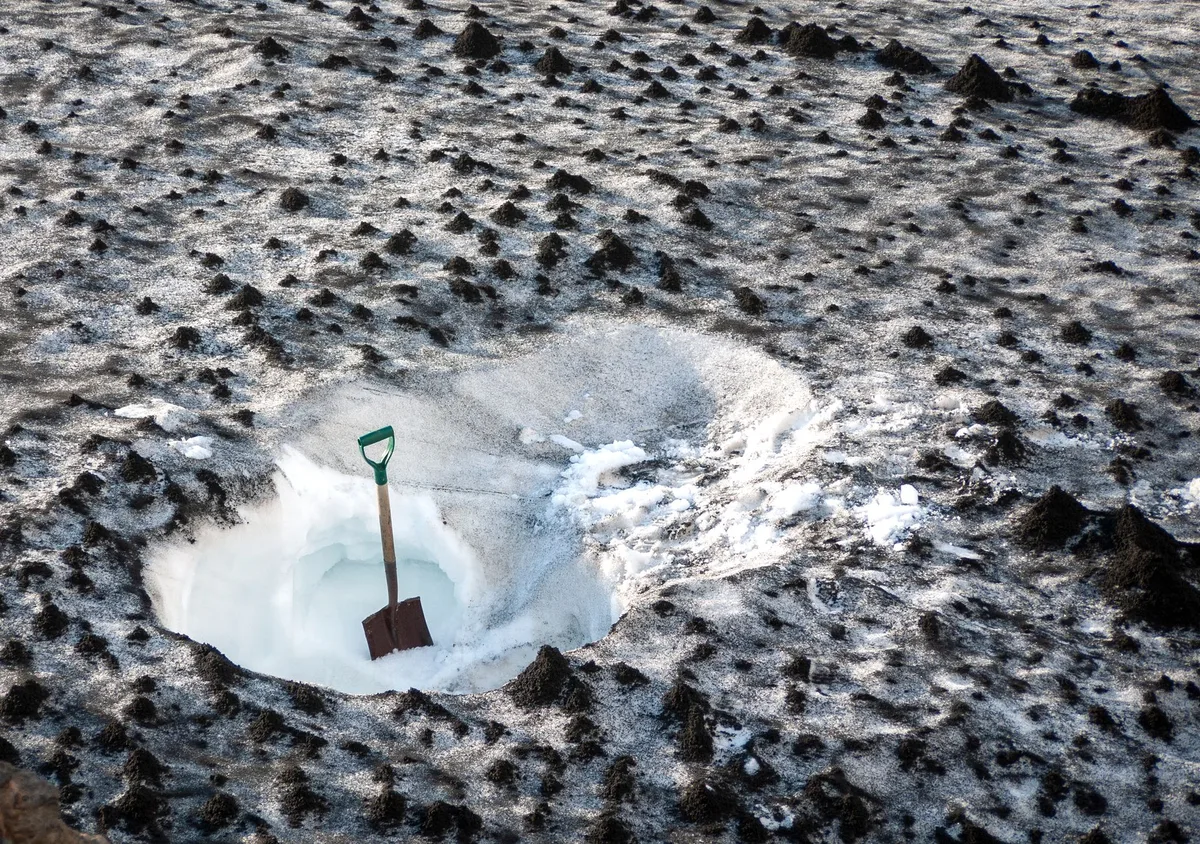
Animal digging is a dead giveaway. Skunks, raccoons, and crows tear up lawns to eat grubs. You’ll see cone-shaped holes, overturned sod, and scattered debris.
If you spot that pattern, peel back a square and count grubs. You’ll almost always find them.
Fungal diseases like brown patch or dollar spot can look similar but have distinct signs. Look for leaf lesions, a grayish ring or circular patch, and no root damage. A fungicide might help there, but it won’t touch grubs.
Don’t treat blindly.
Adult Beetle Flight Periods: When to Look and What to Look For
Adult beetles don’t cause direct damage to your lawn. But they are the source of every grub. Knowing when they fly tells you when to sample and when to apply preventive treatments.
Beetles emerge from the soil when the temperature hits a certain threshold. In our research, the most reliable trigger is soil temperature at 2 to 4 inches deep reaching 50°F for Japanese beetles and 60°F for European chafers. That usually aligns with June in the Northeast and May in the South.
Here’s a timeline for the most common species:
- Japanese beetle: flies late June through August in most of the US. Peak egg-laying is late July to early August.
- European chafer: flies late May to early July, with peak in mid-June.
- Northern masked chafer: flies late June to early August, peaking in July.
- June beetle: flies May to June, but adults are less commonly seen because they feed at night.
What should you look for? On warm summer evenings, check your porch lights and outdoor fixtures. Beetles are attracted to light.
Japanese beetles are easy to spot with their metallic green bodies and copper wing covers. European chafers are tan and smaller.
If you see a lot of beetles around your lawn and ornamentals, especially after a rain, grubs are likely on the way. This is your window to apply preventive products or to sample the soil a few weeks later.
Soil Conditions That Encourage Grub Infestation
Not every lawn attracts grubs equally. Beetles are picky. They look for specific conditions when choosing where to lay eggs.
Understanding those conditions helps you reduce your lawn’s appeal.
The three biggest factors are moisture, thatch, and soil temperature.
Moisture. Female beetles need damp soil to bury their eggs. Overwatered lawns are prime real estate. If you water heavily in June and July, you’re rolling out a welcome mat.
Maintaining a steady, deep watering schedule, but not daily, reduces the surface moisture that beetles favor.
Thatch. A thick thatch layer (over half an inch) provides insulation and a safe place for eggs to hatch. Thatch holds moisture near the soil surface. Raking or core aeration helps break it down.
Keeping thatch manageable also improves the effectiveness of biological controls like nematodes.
Soil temperature. Beetles are cold-blooded. They don’t fly until the soil warms up. But once it does, they’re active until the soil cools again.
If you live in a region with mild summers and warm soil persisting into September, grubs may feed longer into fall.
Sandy soils drain faster and are less attractive to beetles. Heavy clay soils hold moisture and heat longer, making them more appealing. But you can’t change your soil type, only how you manage it.
Grass type also matters. Kentucky bluegrass and perennial ryegrass are favorites. Tall fescue, especially endophyte-enhanced varieties, is less appealing to some beetles.
Our research from extension studies shows endophyte-infected tall fescue can reduce grub populations by 30 to 50 percent.
Prevention Through Lawn Management: Thatch, Moisture, and Grass Type
Prevention is easier than cure. You can’t stop beetles from flying over your yard, but you can make it less inviting for them to stay.
Start with thatch. If your lawn has more than half an inch of organic buildup between the soil and grass, dethatch in spring or early fall. Use a power rake or a dethatching blade.
A thin thatch layer dries faster and gives grubs fewer places to hide.
Next, water smartly. Water deeply once or twice a week rather than a light daily sprinkling. Deep watering encourages deep root growth, which helps grass survive some root loss.
It also keeps the soil surface drier between waterings. Beetles prefer consistently moist soil for egg laying.
Cut your grass at three inches or higher. Taller grass shades the soil, keeping it cooler and less appealing to beetles. It also reduces moisture evaporation.
But don’t let it get too long, or you’ll create a thatch problem.
Choose grass varieties that resist grubs. Endophyte-enhanced tall fescues contain a natural fungus that repels many insect pests. If you’re overseeding or starting a new lawn, this is a smart long-term move.
Pair it with a slow release fertilizer to keep the grass vigorous without excessive thatch.
Aerate your lawn annually in fall or spring. Aeration reduces soil compaction, improves drainage, and breaks up thatch. It also lets water penetrate deeper, promoting deeper roots.
Expert Tips: When to Treat and When to Wait
Not every grub population needs chemical treatment. Knowing the threshold is your first decision. If you sample and find fewer than five grubs per square foot in a healthy lawn, do nothing.
The grass can outgrow the damage. If you find five to ten, consider treatment only if the lawn is already stressed. For ten or more, treatment is typically justified.
Treatment timing is everything. Preventive products (like imidacloprid or chlorantraniliprole) work best when applied before eggs hatch. That means late June to early July for most species.
If you apply too late, the grubs are already large and feeding, and curatives may be needed.
Curatives (like trichlorfon or carbaryl) kill active grubs quickly. Use them when you find damage in late summer or early fall. They’re not as persistent, so you may need a second application a few weeks later if new grubs hatch.
Biological options like nematodes and milky spore work, but they’re slower. Nematodes (Heterorhabditis bacteriophora) need moist soil and temperatures above 50°F. Apply in late summer or early fall when grubs are small.
Milky spore builds up over two to three years. It’s a long-term solution, not an emergency fix.
Our research from university extension programs confirms that skip treatments if you’re below threshold. Overspraying kills beneficial insects and earthworms. Practice integrated pest management.
Monitor first, treat only when needed.
Always read the label. Some products have restrictions on flowering weeds to protect pollinators. Keep pets off treated areas until dry.
If you’re unsure, consult your local extension office. They know your region’s specific species and flight windows.
FAQs About Grub Causes and Identification
Will grubs go away on their own?
Not reliably. A small population may die off in a dry year. But in most cases, they overwinter and come back larger.
If you have more than five per square foot, they won't disappear without intervention.
Can grubs be killed by cold weather?
No. Grubs burrow below the frost line in winter. They survive freezing soil by entering a dormant state.
A cold snap won't reach them deep enough to make a difference.
How long do grubs feed before turning into beetles?
Annual species feed through summer and fall, then again briefly in spring. They pupate in late spring and emerge as adults about four to six weeks later. The total grub stage lasts about ten months.
Do grubs prefer certain grass types?
Yes. Kentucky bluegrass and perennial ryegrass are prime targets. Endophyte-enhanced tall fescue is less attractive.
If you're reseeding, choose resistant varieties for long-term reduction.
Can I have grubs without seeing brown patches?
Absolutely. Low populations cause no visible damage. The grass outgrows the root loss.
You'd only find them if you sample. That's why regular monitoring matters.
Visual Reference Guide Summary
Use these four visual checks to confirm grubs are the problem.
The peeling test. Lift a square foot of turf. If it rolls back cleanly, roots are eaten. That's grub damage.
If it holds tight, suspect drought or fungus.
The C-shape. A curled, white body with a brown head is a scarab grub. Straight, legless larvae are not grubs.
The raster pattern. Flip the grub over. Use a hand lens to see the spine arrangement. That tells you the species and the treatment timing.
The animal sign. Skunks, raccoons, and crows digging small holes in your lawn are almost always hunting grubs. Follow their lead. Sample where they dig.
Compare what you see to the photos in this guide. If you're still unsure, take a clear photo and send it to your local extension office. They identify grub species for free in most states.