Guide to Are Mosquito Yard Sprays Safe for Pets in 2026
You walk outside, and your dog is already sniffing the grass you just had sprayed for mosquitoes. You freeze. Your stomach drops.
Are mosquito yard sprays safe for pets? It's a question that every responsible pet owner asks, and the honest answer is more complicated than most companies want you to believe.
Here's what the research actually shows: The EPA registered over 4,000 pesticide products for mosquito control as of 2026, and their safety profiles vary wildly depending on the active ingredient, the concentration, and the specific pet in question. Some are relatively safe when used correctly. Others can cause real harm.
The key is knowing which is which before you pull the trigger on a treatment. Let's get into it.
Quick Answer
It depends on the product. Some yard sprays are safe for pets. Others can cause serious harm.
Cats face the highest risk. Always check the label and active ingredients first.
What's Actually in Those Yard Sprays?
To understand safety, you need to know what you're spraying. Most mosquito yard sprays fall into two broad categories: synthetic pyrethroids and plant-derived essential oil blends. The differences matter enormously.
Synthetic Pyrethroids (Bifenthrin, Permethrin, Lambda-Cyhalothrin)
These are the workhorses of the mosquito control industry. They're synthetic versions of natural compounds found in chrysanthemum flowers. They work by attacking the nervous system of insects, causing paralysis and death.
On mammals, the effect is usually much milder because our bodies can metabolize these compounds.
But here's the catch: not all mammals are the same.
- Bifenthrin, Generally low toxicity to dogs and cats when used according to label directions. It's one of the safer synthetic options for yards with pets.
- Permethrin, Highly toxic to cats. Moderately toxic to dogs. This is the one you need to watch out for most.
- Lambda-cyhalothrin, Similar to bifenthrin, but slightly more toxic to fish and aquatic life. Considered low to moderate risk for dogs and cats.
Natural Essential Oil Blends
You'll see products labeled as "natural" or "plant-based" containing garlic oil, cedar oil, peppermint oil, lemongrass oil, or neem oil. Many pet owners assume these are automatically safer. That's not always true.
| Ingredient | Pet Safety Note |
|---|---|
| Garlic oil | Toxic to dogs and cats in high concentrations. Can cause hemolytic anemia. |
| Tea tree oil | Highly toxic to cats and small dogs. Causes neurological symptoms. |
| Peppermint oil | Can cause respiratory irritation and skin reactions. |
| Cedar oil | Generally considered low risk. One of the safer natural options. |
| Lemongrass oil | Mildly irritating. Can cause gastrointestinal upset if ingested. |
The problem with "natural" labels is that they aren't regulated for safety claims the same way synthetic pesticides are. A product can call itself natural while containing concentrations of essential oils that are actually more toxic to pets than a properly formulated synthetic alternative. Our research shows that some essential oil yard sprays have caused more reported pet incidents than properly applied bifenthrin products.
What the Labels Don't Tell You
Label instructions are written for humans, not for pets. They tell you the re-entry interval for people, but they rarely mention specific risks for dogs versus cats versus birds versus reptiles. You have to read between the lines.
If a label says "harmful if absorbed through skin" without specifying pets, assume it applies to your animals too. The same goes for runoff warnings. If a product says "toxic to aquatic organisms," that includes your backyard pond and the frogs that live in it.
The Big Difference Nobody Talks About: Dogs vs. Cats
This is the single most important thing to understand, and it's almost never mentioned in product marketing. Cats are not small dogs. Their bodies process chemicals completely differently.
Why Cats Are at Much Higher Risk
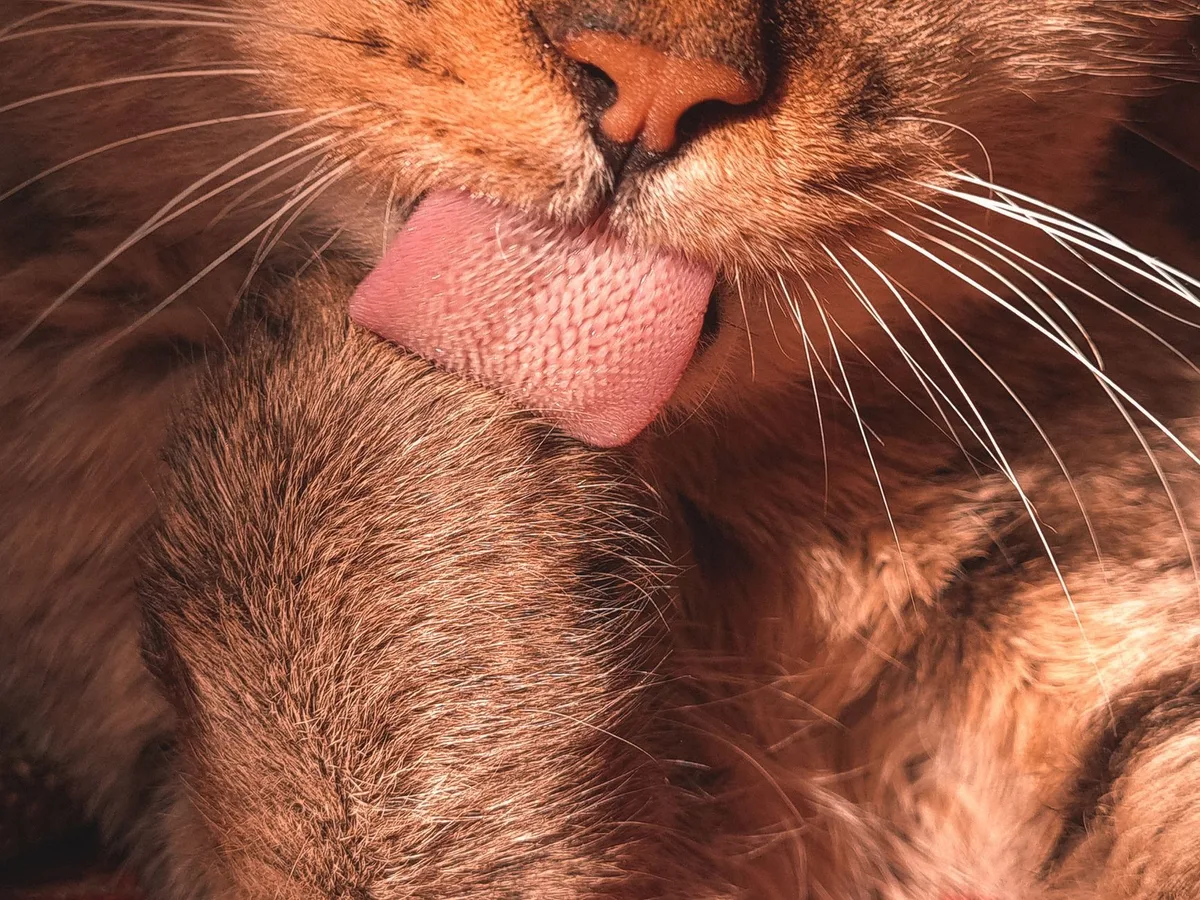
Cats lack a specific liver enzyme called glucuronyl transferase. This enzyme is critical for breaking down pyrethroids like permethrin. Without it, permethrin builds up in a cat's system and can cause severe neurological symptoms: drooling, tremors, seizures, and even death.
This isn't theoretical. Veterinary toxicology literature is full of case studies where cats were exposed to permethrin from yard sprays, flea treatments, or even from walking on a treated lawn and then grooming their paws. The American Veterinary Medical Association has flagged this issue for years.
Even bifenthrin, which is generally safer for cats, needs to be approached with caution. The margin of safety is thinner than it is for dogs.
Breed-Sensitive Dogs
Some dog breeds are more vulnerable too. Dogs with the MDR1 gene mutation, most commonly seen in Collies, Australian Shepherds, and other herding breeds, lack the ability to keep certain drugs and pesticides out of their brains. These dogs are more susceptible to neurotoxicity from pyrethroids.
If you own a herding breed, you need to be extra careful with any mosquito yard spray. A standard safe dose for a Labrador could cause problems for a Collie.
Small Pets, Birds, and Reptiles
Birds are extremely sensitive to pyrethroid sprays. Their respiratory systems are highly efficient, meaning they absorb airborne pesticides faster than mammals. If you have an outdoor aviary or free-range chickens, do not spray anywhere near them.
Reptiles and amphibians absorb chemicals through their skin. A frog or lizard that crawls through a treated area can absorb a dangerous dose. Fish are also highly sensitive to pyrethroids, which is why runoff into ponds or water features is such a concern.
How These Sprays Actually Affect Your Pet
The route of exposure matters just as much as the chemical itself. A pet can be exposed in three ways: ingestion, skin absorption, and inhalation.
Ingestion
This is the most common route. A dog walks through a treated lawn, licks its paws, and ingests whatever residue is there. A cat grooms its fur after brushing against treated foliage and swallows the chemical.
Puddles of diluted spray concentrate in the yard can also be a source.
Dry spray residue is generally less hazardous than wet, but it still poses a risk. The amount needed to cause symptoms varies. For permethrin in cats, it's a surprisingly small amount.
Skin Absorption and Grooming
Pyrethroids are not absorbed through healthy skin very efficiently in mammals. That's good news for you. But for pets, the concern is that they groom.
A chemical that sits on the fur gets licked off and ingested. That's where the real danger comes from.
Pets with skin conditions, open wounds, or thin coats may absorb more through the skin itself. Puppies and kittens have thinner skin and less body mass, which makes them more vulnerable.
Inhalation During and After Application
During the spray itself, the mist hangs in the air. Any pet that is outside during application will inhale some of it. This is the main reason you need to keep pets inside until the spray has fully dried.
After drying, the inhalation risk drops significantly. But fogging treatments, which create ultra-fine droplets, can linger in the air longer. If you're using a fogger, the waiting period should be longer.
The Real Risk Timeline: Before, During, and After Treatment
Timing is everything. The moment you schedule a treatment, the clock starts ticking. Here's how to manage each phase.

Application Day: What to Do With Your Pets
Before the applicator arrives, bring all pets inside. This includes dogs, cats, birds, reptiles, and small mammals like rabbits or guinea pigs. Close windows that face the treatment area.
Cover any outdoor pet water bowls, food dishes, and toys.
If you're using a professional service, ask them to avoid spraying areas where your pets spend the most time. Perimeter-only treatments are safer than full-yard broadcasts. Most reputable companies will do this if you ask.
If you're doing it yourself, read the label instructions for re-entry time. Do not guess. Do not use a shorter window than the label says.
The Drying Window
This is the most critical period. Most synthetic pyrethroid sprays dry in 30 minutes to 2 hours, depending on temperature and humidity. The label will specify a re-entry interval.
Some say 30 minutes. Others say 4 hours.
Here's the catch: the label re-entry interval is usually for humans. For pets, especially cats, you should add extra time. A good rule of thumb is to double the label's re-entry interval for cats.
If the label says 30 minutes, wait an hour. If it says 2 hours, wait 4.
Even after the spray dries, the residue is still present. It's less risky, but it's not zero risk.
Residual Risk: How Long Does It Stay Active?
Synthetic pyrethroids can remain active on foliage for 2 to 6 weeks, depending on sun exposure, rain, and temperature. "Active" means it can still kill insects. It can also still affect pets if ingested in large enough quantities.
The concentration decreases over time. The first few days after treatment are the highest risk. After a week, the risk drops substantially, especially if there has been rain or watering.
Essential oil sprays break down much faster, usually within 2 to 7 days. That's a benefit for safety, but it's also why they need more frequent application.
If you want to create a more comprehensive pet-safe yard, consider adding some plants that naturally repel mosquitoes around the perimeter. Looking at best plants for a bedroom might give you ideas, but for the yard, species like marigolds, lavender, and rosemary can help reduce mosquito pressure without chemicals. That's a complementary strategy, not a replacement for barrier sprays.
When choosing yard treatments, be careful about combining products. Using a mosquito spray alongside other yard chemicals can increase exposure. If you're already applying lawn fungicide treatments or other yard insecticides, check the active ingredients to avoid stacking toxic loads.
Your pet's liver can only handle so much.
Safer Alternatives That Actually Work
If the risks of chemical sprays make you uneasy, you have options. Some of them work surprisingly well. None of them are perfect, but combining a few strategies can dramatically reduce your reliance on pesticides.
Granular Treatments vs. Liquid Sprays
Granular mosquito treatments work differently than liquid sprays. You spread them across the lawn, then water them in. The granules release the active ingredient into the soil and grass, where it targets mosquito larvae and resting adults.
The safety advantage is real. Granules don't create airborne mist. They don't drift into neighboring yards.
Pets can't inhale them during application. Once watered in and dry, the residue is bound to the soil and grass blades rather than sitting on top of foliage.
The trade-off is coverage. Granules don't reach the undersides of leaves where adult mosquitoes rest. They're better for larval control than for knocking down a heavy adult population.
If you have standing water or dense vegetation, granules alone won't cut it.
Perimeter-Only Barrier Sprays
Instead of spraying your entire yard, treat only the perimeter. Spray a 3 to 5 foot band along fences, hedges, and the edges of your property. This creates a barrier that mosquitoes have to cross to enter your yard.
The benefit for pets is obvious. The treated area is at the edges, not in the middle where your dog runs and your cat patrols. Your pets can still access the main lawn and garden without walking through fresh spray.
This approach works best for yards that are at least a quarter acre. On smaller lots, the perimeter band takes up too much of the usable space. But for most suburban yards, it's a solid compromise between effectiveness and safety.
Mosquito Traps and Dunks
Mosquito traps use CO2, propane, or fans to attract and capture mosquitoes. They don't use any pesticides at all. The mosquitoes fly in and get trapped or dehydrated.
The catch is cost. Good traps run from $200 to $700. They need regular maintenance.
They work best when placed away from where people and pets spend time, because the trap itself attracts mosquitoes to the area.
Mosquito dunks are a different tool. They contain Bacillus thuringiensis israelensis (Bti), a bacteria that kills mosquito larvae but is harmless to pets, birds, fish, and beneficial insects. You drop them in standing water, bird baths, rain barrels, and clogged gutters.
They're cheap, safe, and highly effective for larval control.
Habitat Management
This is the most overlooked strategy. Mosquitoes need standing water to breed. Eliminate the breeding sites, and you reduce the population without spraying a single drop.
Walk your yard and look for anything that holds water. Old tires, clogged gutters, saucers under flower pots, kids' toys, tarps with sagging pockets, and low spots in the lawn. Dump them, drain them, or fill them.
If you have a pond, add a fountain or aerator. Moving water doesn't attract mosquitoes. If you have a rain barrel, cover it with fine mesh.
If you have bird baths, change the water every three days.
This is the kind of work that pays off over time. It's not a quick fix, but it's the safest option for pets by a wide margin. Pair it with some plants that attract hummingbirds to your yard, and you get natural pest control plus something beautiful to watch.
How to Choose a Yard Spray If You Have Pets
If you decide to use a chemical spray, you need to be strategic. Not all products are created equal, and the label is your best friend.
What to Look For on the Label
Start with the active ingredient. If you have cats, avoid anything with permethrin. Period.
Look for bifenthrin or lambda-cyhalothrin instead. These are safer for felines when used correctly.
Check the re-entry interval. Shorter is better, but don't take it at face value. As we covered earlier, double it for cats.
If the label says 30 minutes, wait an hour. If it says 2 hours, wait 4.
Look for warnings about aquatic toxicity. If a product is toxic to fish, it's also risky for amphibians and reptiles. Avoid spraying near ponds, streams, or water features.
Check for bee toxicity warnings. This matters for your garden and for the broader ecosystem. Some products are labeled as "low risk to bees once dry." Others are toxic on contact.
Choose the former.
What to Ask a Professional Applicator
If you hire a company, ask specific questions. Don't just ask "Is it safe for pets?" Every company will say yes. Ask what active ingredient they use.
Ask for the exact product name. Ask what the re-entry interval is for pets specifically, not just for humans.
Ask if they can do a perimeter-only treatment. Ask if they can avoid spraying flowering plants. Ask if they use a coarse spray rather than a fine mist, which reduces drift.
A good company will answer these questions without hesitation. A bad one will give you vague reassurances. Trust the answers, not the tone.
When Natural Isn't Safer
This is worth repeating. Natural does not mean safe. Garlic oil, tea tree oil, and peppermint oil can all cause problems for pets.
Some essential oil products have caused more reported incidents than properly applied synthetic products.
The issue is concentration. A natural product with 10 percent tea tree oil is more dangerous to a cat than a synthetic product with 0.05 percent bifenthrin. Don't let the marketing fool you.
If you want to go natural, choose products based on cedar oil or neem oil. These have the best safety profiles among plant-based options. And always follow the same precautions you would with a synthetic product.
Common Mistakes Pet Owners Make
Even well-intentioned pet owners make errors. Here are the ones we see most often.
Assuming Pet-Safe Means Zero Risk
No pesticide is completely risk-free. Pet-safe means the risk is low when used correctly. It does not mean your pet can roll around in the wet grass immediately after treatment.
Treat pet-safe labels as a guide, not a guarantee. Follow the instructions. Use common sense.
If it smells strong, it's probably still wet.
Letting Pets Out Too Soon
This is the most common mistake. The label says 30 minutes, so you let the dog out after 30 minutes. But the label's re-entry interval is for humans, not for pets.
And it assumes ideal drying conditions.
On a humid day, the spray might still be wet after an hour. On a cool day, it might take two hours. Use your judgment.
If the grass still looks wet or smells like chemicals, wait longer.
Ignoring Runoff Into Water Bowls or Ponds
Spray drift can travel farther than you think. A light breeze can carry droplets 10 to 20 feet. If your pet's water bowl is near the treatment area, it can get contaminated.
Move water bowls inside during treatment. Cover ponds and water features. Rinse any outdoor bowls before refilling them after the spray has dried.
Over-Applying Concentrates
DIY concentrates are potent. A little goes a long way. Using more than the label recommends does not kill more mosquitoes.
It just increases the risk to your pets and the environment.
Measure carefully. Use the exact dilution ratio on the label. If you're unsure, use less rather than more.
You can always reapply if needed.
When to Call the Vet (Signs of Poisoning)
Knowing the signs of pesticide poisoning can save your pet's life. Time matters. The sooner you recognize the symptoms, the better the outcome.
Symptoms in Dogs
The first signs are usually subtle. Your dog might drool more than usual. They might seem unsteady on their feet.
They might vomit or have diarrhea.
As the poisoning progresses, you'll see more obvious neurological symptoms. Tremors, especially in the face and legs. Muscle twitching that doesn't stop.
Seizures in severe cases.
If your dog shows any of these signs after a yard treatment, call your vet immediately. Do not wait to see if it gets better. Pyrethroid poisoning can escalate quickly.
Symptoms in Cats
Cats are more sensitive, so symptoms appear faster and are often more severe. The classic signs are drooling, tremors, and hyperexcitability. A poisoned cat might seem agitated or restless.
They might twitch their ears or flick their tail constantly.
In severe cases, cats can have full-body seizures. They can lose the ability to walk. They can become comatose.
If you suspect your cat has been exposed, do not wait. Take them to the vet immediately. Time is critical.
What to Do If You Suspect Exposure
First, remove your pet from the treated area. Bring them inside. If the product is still wet on their fur, wash them with mild dish soap and warm water.
Do not use hot water, which opens pores and increases absorption.
Do not induce vomiting unless your vet tells you to. Some pesticides cause more damage coming up than going down.
Call your vet or the ASPCA Animal Poison Control Center. Have the product label or container ready. They will ask for the active ingredient and concentration.
If you're far from a vet, call the National Pesticide Information Center at 1-800-858-7378. They can provide guidance on what to do next.
The bottom line is simple. Prevention is better than treatment. Follow the safety steps we've covered, and you'll likely never need this section.
But if you do, act fast and stay calm.
The Bottom Line: What I'd Do With My Own Pets
After digging through the research, the label data, and the veterinary literature, here is the honest take. There is no perfect answer. But there is a smart approach.
If I had dogs only, I would use a bifenthrin-based perimeter spray applied by a professional who understands pet safety. I would keep the dogs inside for at least two hours after treatment. I would wait four hours before letting them onto the treated areas.
If I had cats, I would skip chemical sprays entirely. The risk is too high for too little reward. I would use mosquito dunks in standing water, a CO2 trap placed away from the house, and rigorous habitat management.
I would add cedar oil as a spot treatment only if absolutely necessary.
If I had birds, reptiles, or a pond with fish, I would not spray anything. Full stop. The alternatives work well enough for most yards.
Frequently Asked Questions
How long after mosquito spray can pets go outside?
Wait until the spray is completely dry. For most products, that is 30 minutes to 2 hours. For cats, double that time.
If the grass still smells like chemicals or feels damp, wait longer.
Is bifenthrin safe for dogs?
Bifenthrin has low oral toxicity for dogs when used according to label directions. It is one of the safer synthetic options. Dogs with the MDR1 gene mutation may be more sensitive, so use extra caution with herding breeds.
Can mosquito yard spray kill cats?
Yes, in rare cases. Permethrin-based sprays can cause severe neurological symptoms in cats, including seizures and death. Even bifenthrin poses a higher risk to cats than to dogs.
Keep cats away from treated areas for at least 4 hours.
Are natural mosquito yard sprays safer for pets?
Not always. Some natural sprays contain essential oils like tea tree or garlic that are toxic to pets. Cedar oil and neem oil are safer natural options.
Always check the active ingredients regardless of the label.
What should I do if my pet licks treated grass?
Monitor them closely for symptoms like drooling, vomiting, or tremors. Wash their mouth and paws with mild soap and water. Call your vet or the ASPCA Animal Poison Control Center if any symptoms appear.
Do mosquito traps work without chemicals?
Yes. CO2 traps and fan-based traps capture mosquitoes without pesticides. They cost more upfront but are completely safe for pets.
They work best when combined with habitat management and mosquito dunks for standing water.