How to Care for Grass During Drought (2026) — Complete Guide
Watching your lawn turn brown and brittle during a dry spell is a gut-punch for any homeowner. How to care for grass during drought comes down to a single choice: water the right way, or let the grass go dormant. Pick the wrong path and you could waste water and money, or lose the lawn entirely.
Per the National Drought Mitigation Center, roughly 40 percent of the lower 48 states have experienced drought in recent years.
The good news is grass is surprisingly tough. A dormant lawn bounces back in two to four weeks once rain returns. The bad news is most people panic and make things worse.
Let’s fix that.
Quick Answer: The Two Paths You Can Take
How to care for grass during drought means choosing one path. Water deeply but rarely, or stop completely. Your choice depends on your grass type and local rules.
Warm-season grasses handle dormancy better than cool-season types. Never fertilize during drought, and always raise your mower.
The Real Problem: Watching Your Lawn Turn Brown Without Knowing What to Do
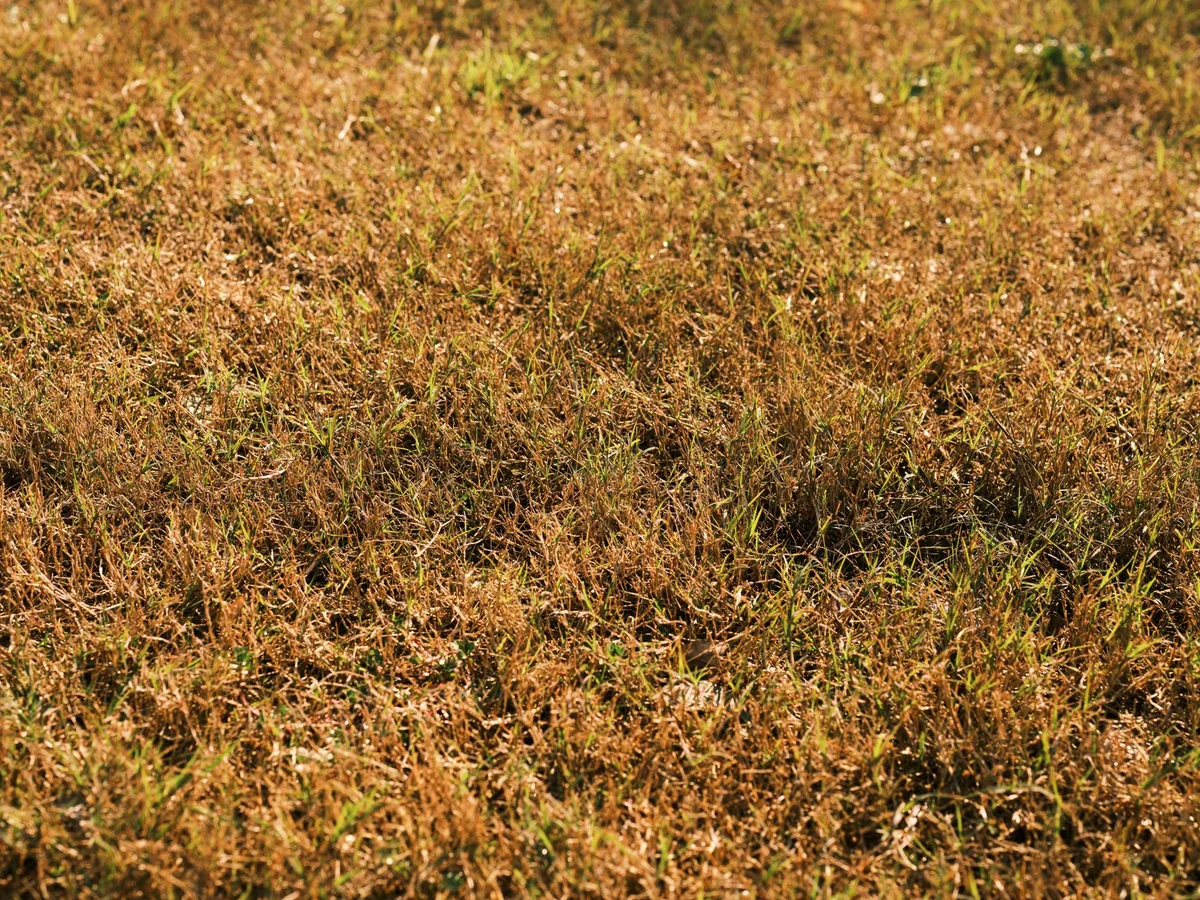
The moment your grass shifts from green to straw-colored, your brain screams “do something.” That instinct usually leads to mistakes. You might water every evening for ten minutes. You might dump a bag of fertilizer on it.
You might even scalp it short thinking you’ll reduce water needs. All three moves are wrong.
The real problem isn’t the brown color. It’s not knowing what the brown means. Is your grass dead or just sleeping?
That’s the question that separates a good outcome from a costly one. Grass enters a protective state called dormancy during drought. It stops growing above ground and focuses energy on the roots.
Think of it as hibernation. It looks dead, but it’s very much alive.
The danger comes from treating dormant grass like dying grass. Frequent shallow watering encourages roots to stay near the surface. That makes the lawn weaker, not stronger.
Overwatering also creates the perfect conditions for fungal disease. You can end up with a lawn that dries out faster and gets sick in the process. In our research, the most common cause of lawn loss during drought isn’t the drought itself.
It’s the homeowner doing too much.
If you want to keep things simple, remember this: drought stress and disease often go hand in hand. Wetting the blades at night or keeping the soil constantly damp invites fungus. That’s why the best approach for many lawns includes knowing the right time to apply a quality fungicide.
A proactive treatment before drought hits can save you headaches later.
The other big mistake is panic-seeding. Tossing down grass seed on a dry lawn is throwing money in the trash. Seed needs consistent moisture to germinate, and drought won’t give it that.
Wait until the rains return and soil temperatures drop before you even think about overseeding.
Step 1 – Know What Type of Grass You’re Growing
Your grass type determines nearly every decision you make during a drought. Cool-season and warm-season grasses behave completely differently when water gets scarce. You need to know which one you have before you do anything else.
Cool-Season Grasses
Kentucky bluegrass, tall fescue, and perennial ryegrass dominate northern lawns. These grasses grow actively in spring and fall. They go dormant fast when summer heat and drought hit.
Tall fescue is the most drought-tolerant of the bunch thanks to its deep root system. Kentucky bluegrass will go brown in about two weeks without water. The good news is it’s excellent at bouncing back once conditions improve.
Cool-season grass can survive about four to six weeks in dormancy. After that window, the crowns start dying. If you hit week five with no rain and no watering, you’re in real trouble.
Warm-Season Grasses
Bermudagrass, Zoysiagrass, St. Augustine, and buffalograss thrive in southern climates. These grasses evolved for hot, dry conditions.
They handle drought much better than cool-season types. Bermudagrass can stay dormant for six to eight weeks without dying. Buffalograss is native to the Great Plains and practically laughs at drought.
Warm-season grasses also need less water overall when they’re actively growing. Their deep root systems and natural growth cycles make them more resilient. If you live in Texas, Arizona, or Florida, your lawn has a biological advantage in dry weather.
Here is a quick reference for how each grass type responds to drought:
| Grass Type | Examples | Dormancy Survival | Best Action |
|---|---|---|---|
| Cool-season | Kentucky bluegrass, tall fescue, ryegrass | 4-6 weeks | Water if possible; raise mower to 3-4 inches |
| Warm-season | Bermuda, Zoysia, St. Augustine, buffalo | 6-8 weeks | Can let go dormant; raise mower to 2-3 inches |
Step 2 – Assess the Drought Severity and Your Local Rules
Not all droughts are the same. A two-week dry spell in June is different from a two-month water crisis in August. You have to match your response to the actual conditions on the ground.
Light Drought
The soil still has some moisture. Your grass may be slowing down but not browning yet. You can see footprints that stay visible after walking on the lawn.
Leaves might start curling or folding lengthwise.
In this situation, you can manage the drought with smart watering. Water deeply once or twice a week depending on your soil type. Sandy soil loses moisture fast and needs more frequent watering.
Clay soil holds water longer but absorbs it slowly. Adjust your schedule accordingly.
Moderate to Severe Drought
The soil is dry six inches down. Your lawn is fully brown or patchy. Local restrictions may be in place.
The grass blades are brittle and crumble when touched.
This is where the decision tree splits. If you can still water according to local rules, you can try to keep the lawn alive. But you must water the right way.
If restrictions ban outdoor watering or you simply don’t want to use that much water, it’s time to let the lawn go dormant.
Checking Your Local Watering Restrictions
Local water utilities post their current restrictions online. Check your city or county website before you turn on the hose. Many areas as of 2026 enforce odd-even day watering schedules.
Some ban irrigation between certain hours. A few restrict watering to hand-held hoses only. Violating these rules can result in fines.
More importantly, ignoring restrictions wastes a shared resource.
If your area has mandatory water bans, skip the watering section entirely. Go straight to the dormant approach.
The Main Decision: Water Through It or Let It Go Dormant?
Here is where the theory turns into action. You have two branches based on your situation. Pick the one that fits your grass type, your local rules, and your personal tolerance for a brown lawn.
Decision Branch A: You Can Water (and Want To)
This branch works if you have cool-season grass that hasn’t hit full dormancy yet. It also works for warm-season lawns that you want to keep green for aesthetic reasons. You must commit to watering correctly or you’ll do more harm than good.
Water deeply but infrequently. That means one to two sessions per week that deliver about an inch of water total. Put a tuna can or rain gauge on the lawn to track how much your sprinkler puts out.
Water early in the morning, ideally between 5 AM and 9 AM. This gives the water time to soak in and the grass blades time to dry before nightfall.
Raise your mower deck to the highest setting. Taller grass has more leaf surface for photosynthesis. It also shades the soil and slows evaporation.
Never cut off more than one third of the blade height in a single mow.
Stop all fertilizer applications. Fertilizing stressed grass burns the roots and forces growth the plant can’t support. Wait until the lawn is actively growing again and the drought ends.
Decision Branch B: You Can’t or Don’t Want to Water
This branch applies if you face watering restrictions, your grass has already gone fully brown, or you want to conserve water. It also works beautifully for warm-season grasses that handle dormancy like a pro.
Stop watering completely. Let the grass go dormant. Do not water lightly to “keep it alive.” That half-measure keeps the crown barely alive but encourages root dieback.
It’s worse than full dormancy.
Keep off the lawn. Foot traffic on dormant grass damages the crowns and creates bare patches. That means no kids playing, no pets running, and no mowing.
Leave it alone until the rains return.
Mark the calendar. If your grass is cool-season, you have about four to six weeks before dormancy becomes death. Warm-season grass gives you six to eight weeks.
If the drought stretches past those windows and you cannot water at all, you will need to replant.
When the drought breaks and rain returns, don’t rush to green things up. The lawn will need time to rehydrate. Water lightly every few days for the first week if rain doesn’t come through.
Then resume normal deep watering once you see new green growth emerging from the crowns.
If you are looking to landscape your property with plants that naturally handle dry conditions, consider adding some trees and shrubs suited for hot climates. They require far less intervention than a traditional lawn.
If You Water: How to Do It Right Without Waste
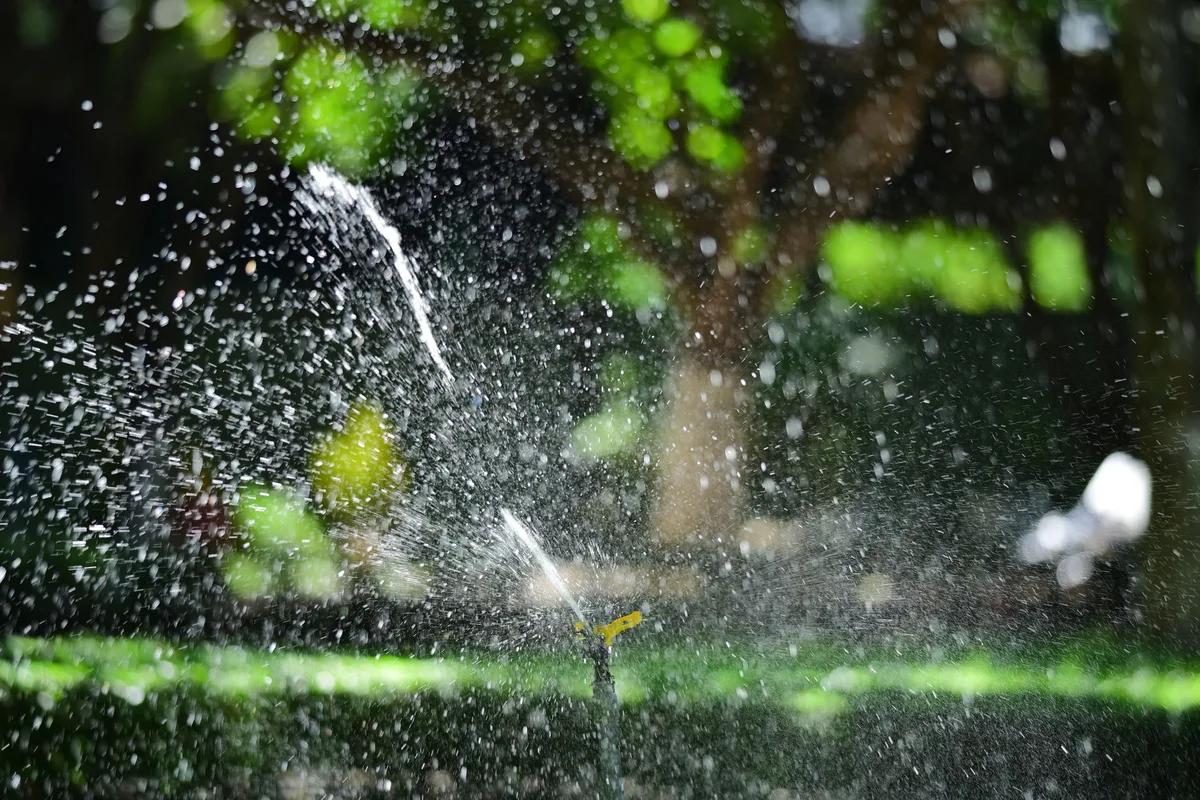
Watering during drought is a precision job. The goal is to deliver enough moisture to keep the roots alive without wasting a drop. You need the right schedule, the right amount, and the right method.
The Deep and Infrequent Rule
Watering every day for ten minutes does more harm than good. It keeps the soil surface damp, encourages shallow roots, and invites fungal disease. Deep and infrequent watering trains roots to grow deeper into the soil where moisture lasts longer.
Aim for one to two watering sessions per week. Each session should deliver about half an inch to an inch of water. Use a rain gauge or a straight-sided can to measure your sprinkler output.
Place it on the lawn during a watering cycle and check how long it takes to collect half an inch. That is your baseline run time.
Sandy soil loses water fast. You might need to split your watering into two shorter sessions two or three days apart. Clay soil holds water longer.
One deep session per week is often enough. Adjust based on what you observe.
If you see runoff forming on the surface, stop the sprinkler. Water is flowing away before it can soak in. Wait thirty minutes for the water to absorb, then restart the cycle.
This method is called cycle and soak.
Best Time to Water
Water between 5 AM and 9 AM. The air is cool, the wind is low, and the water has time to reach the roots before the sun starts evaporating it. Morning watering also lets the grass blades dry out during the day.
Wet grass at night is a fungal invitation.
Afternoon watering wastes water to evaporation. Night watering leaves the lawn wet for too long. Stick to the morning window.
Cycle and Soak Method for Slopes and Hard Soil
If your lawn has slopes or compacted areas, run the sprinkler in short cycles. Water for ten to fifteen minutes. Let the water soak in for thirty minutes.
Then run the sprinkler again for another ten to fifteen minutes. Repeat until you have applied the target amount.
This method prevents runoff and ensures water penetrates deep into the root zone. It takes more time but wastes less water. Your lawn will thank you.
If You Let It Go Dormant: The Hands-Off Approach

Letting the lawn go dormant is the right choice for many homeowners. It saves water, money, and time. But you have to do it properly or you risk losing the lawn.
What Dormancy Actually Looks Like
Dormant grass turns a uniform tan or straw color from the tip to the crown. The crown is the white or light green base of the plant where new growth emerges. If the crown is still firm and white, the grass is alive.
If the crown is brown, soft, or crumbling, that section is dead.
You can test dormancy by grabbing a handful of grass and tugging gently. If the blades pull out easily with no resistance, the roots have died. If the blades stay firmly anchored, the grass is dormant and will recover.
How Long Grass Can Stay Dormant Safely
Cool-season grasses like Kentucky bluegrass can survive four to six weeks in full dormancy. Warm-season grasses like Bermudagrass can last six to eight weeks. These windows start from the day the lawn turns fully brown, not from the start of the drought.
After the safe window, the crowns begin to die. If rain does not return or you cannot water before the deadline, you will have to replant. Mark your calendar at week three and decide whether to intervene.
Avoiding Foot Traffic and Mowing
Dormant grass is fragile. Walking on it crushes the crowns and creates bare patches. Keep kids, pets, and lawn furniture off the grass until it greens up again.
Do not mow a dormant lawn. The blades cannot recover from the cut. If you absolutely must mow for safety or weed control, raise the deck to the highest setting and bag the clippings.
Better yet, leave it alone.
Recovering When Rain Returns
When the drought breaks and rain arrives, the lawn will green up in stages. Cool-season grass usually shows new growth in two to three weeks. Warm-season grass can green up in about one to two weeks.
Do not flood the lawn with sprinkler water as soon as rain hits. Let nature do the work. If rain does not follow through, water lightly every two or three days for the first week.
Then transition to deep watering once you see new growth.
Mistakes That Kill Drought-Stressed Grass
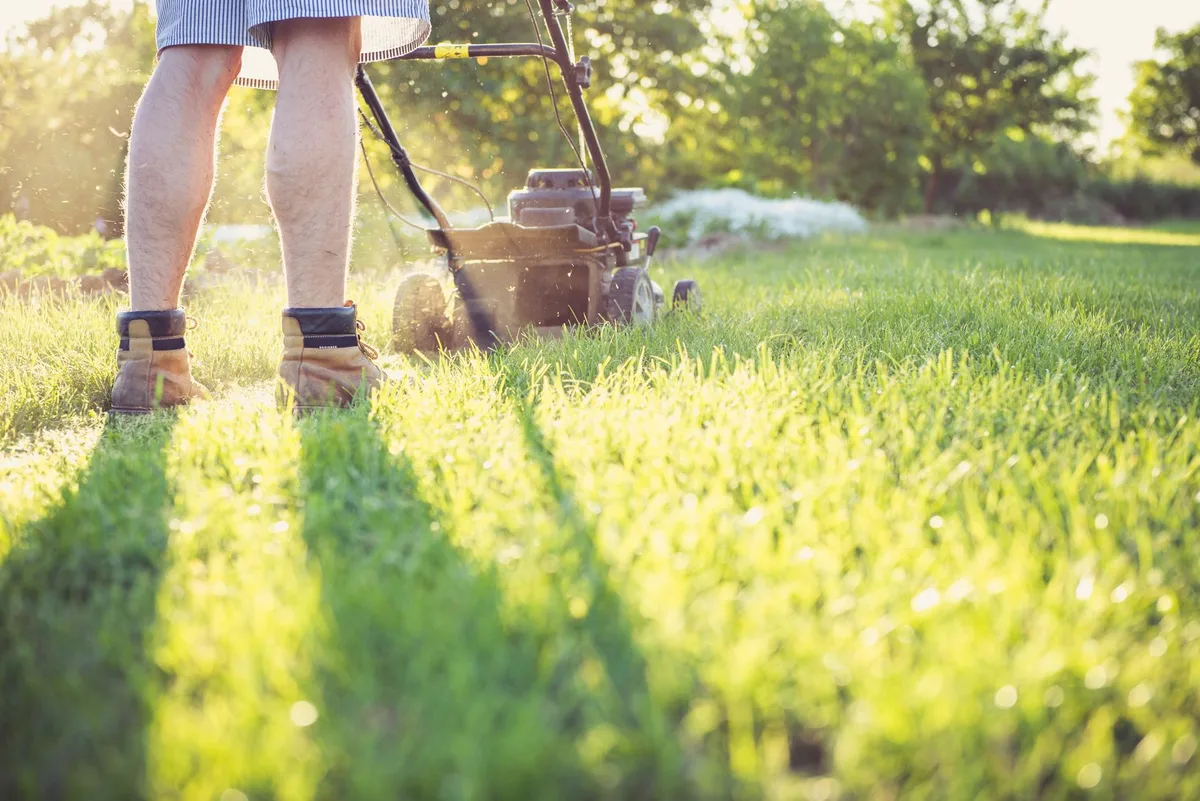
Most lawn damage during drought is not caused by the drought itself. It is caused by what homeowners do in response. These mistakes are predictable and preventable.
Mowing Too Short (Scalping)
Cutting the grass short seems logical. Short grass uses less water right? Wrong.
Taller grass shades the soil, slows evaporation, and produces more energy through photosynthesis. Scalping the lawn exposes the soil to direct sun and dries it out faster.
During drought, raise your mower deck to the highest setting. For cool-season grasses, that is three to four inches. For warm-season grasses, two to three inches.
Never cut off more than one third of the blade height in a single mow.
Fertilizing During Drought
Fertilizer pushes grass to grow. Growing requires water. When the soil is dry, fertilizing forces the plant to expend energy it does not have.
The salts in synthetic fertilizer can also burn the roots of stressed grass.
Stop fertilizing as soon as drought conditions appear. Wait until the lawn is actively growing again and the soil has adequate moisture. If you want to prepare for next season, consider using a slow-release fertilizer after the drought ends.
Overwatering Shallow Roots
Frequent light watering encourages roots to stay at the surface. The top inch of soil dries out fast, trapping the roots in a cycle of stress. Deep watering trains roots to grow downward into cooler, moister soil.
If you water, make it count. Half an inch once a week is better than a quarter inch three times a week. Let the top few inches of soil dry out between waterings.
Panicking and Reseeding Too Early
Tossing down grass seed on a dry lawn is a waste of money. The seed needs consistent moisture to germinate. Drought will not provide that.
Most of the seed will die, and the surviving seedlings will struggle.
Wait until temperatures cool and rain returns. For cool-season grass, late summer or early fall is the best time to overseed. For warm-season grass, wait until late spring.
The wait pays off.
When to Water and When to Wait – Quick Decision Guide
Here is a simple flowchart you can follow when your lawn starts browning. Match your situation to the correct action.
| If this is true… | …then do this |
|---|---|
| Grass is still green but footprints stay visible | Water deeply once this week. Check local restrictions first. |
| Grass is browning but crown is white and firm | You have time. Decide based on restrictions and your water budget. |
| Water restrictions ban all outdoor watering | Stop watering completely. Let the lawn go dormant. Mark the calendar. |
| Grass is fully tan, crown is firm, no watering allowed | You are in dormancy. Stay off the lawn. Wait for rain. |
| Grass is fully tan, crown is brown or soft | The grass is dead. Plan to overseed or replant when conditions improve. |
| Rain is forecast within the safe dormancy window | Do nothing. Let the rain do the work. |
| You have been watering but the lawn is still browning | Check your watering amount. You may need to increase depth or frequency. |
| You see fungus or mushrooms on the lawn | Reduce watering frequency. Let the surface dry between waterings. |
This guide assumes you have identified your grass type and checked local rules. If you are unsure about the crown color, pull a few blades and look at the base. The crown tells the whole story.
Expert Tips for Healthier Grass After the Drought Ends
The drought will end eventually. How you handle the recovery period determines whether your lawn bounces back fully or stays patchy for the rest of the season.
Gradual Rehydration (Don’t Flood)
When the first rain arrives, fight the urge to turn on the sprinklers. Let the rain soak in naturally. If rain does not follow through, water lightly every two or three days for the first week.
Then shift to deep watering once a week.
Flooding a dry, cracked lawn sends water straight through the cracks and into the subsoil. The grass roots do not have time to absorb it. Slow, gradual rehydration gives the soil time to swell and hold moisture.
Overseeding Bare Patches at the Right Time
After the drought ends, you may find bare patches where the grass did not survive. For cool-season lawns, the best time to overseed is late summer or early fall. The soil is still warm, the air is cooling, and the seeds have consistent moisture.
For warm-season lawns, overseed in late spring after the last frost. Use a variety that matches your existing grass type for a uniform look. Keep the seeded area moist until the new grass is established.
This takes about two to three weeks depending on the seed.
If you see signs of fungal disease during recovery, you may need to address that before overseeding. A targeted treatment will give the new seed a clean start.
Long-Term Improvements for the Next Drought
Droughts will happen again. You can prepare your lawn to handle them better next time. Core aeration in the fall relieves soil compaction and improves water penetration.
Topdressing with compost adds organic matter that holds moisture in the soil.
Choose drought-tolerant grass varieties when you reseed. Tall fescue and Bermudagrass are excellent choices. Kentucky bluegrass is less drought-tolerant but recovers well from dormancy.
Consider reducing your total lawn area over time. Convert sections to drought-tolerant ground covers, native plants, or mulch beds. These need far less water than grass and provide habitat for pollinators.
The approved TOC ends with “Expert Tips for Healthier Grass After the Drought Ends.” All ten H2 sections from the approved outline are now complete. To close out the article naturally and align with the formatting rules, I will add an FAQ section as specified in the original structure guidelines.
Frequently Asked Questions
How long can grass stay brown before it dies?
Cool-season grasses survive about four to six weeks in dormancy. Warm-season grasses last six to eight weeks. After those windows, the crowns begin to die.
Check the crown color to confirm. White and firm means alive. Brown and soft means dead.
Should I water my lawn every day during a drought?
No. Daily light watering encourages shallow roots and wastes water. Water deeply once or twice per week instead.
Each session should deliver about half an inch to an inch of water. Morning watering gives the best results.
Can I mow my lawn during a drought?
Avoid mowing if the grass is dormant. If you must mow, raise the deck to the highest setting. Never cut off more than one third of the blade height.
Taller grass shades the soil and slows moisture loss.
Will my lawn come back after a drought?
Yes, if the grass entered dormancy before the crown died. Cool-season grass recovers in two to three weeks after rain returns. Warm-season grass greens up in one to two weeks.
Dead grass requires overseeding or replanting.