Guide to Yard Drainage Vs Alternatives: Everything You Need
Standing water in your yard isn’t just an eyesore. It breeds mosquitoes, kills grass, and can wreck your foundation if it pools near the house. When you start looking into yard drainage vs alternatives, you’ll quickly find a dozen “solutions” that range from permanent underground systems to simple surface fixes, and honestly, most of the cheap alternatives fail after one hard rain.
Professional French drains typically cost $50 to $150 per linear foot installed, while surface grading runs $500 to $3,000 for a typical yard. That price gap makes homeowners hunt for cheaper shortcuts, but the real question isn’t cost alone. It’s whether an alternative actually handles the volume of water your soil can’t absorb, or if it’s just pushing the problem somewhere else until the next storm.
Quick Answer
French drains permanently redirect subsurface water through perforated pipe buried in gravel. Alternatives like surface grading, downspout extensions, rain gardens, and dry wells work in specific conditions but handle less water and fail faster in clay soil or high water tables. Most successful yards combine proper grading with a French drain discharge system.
Choose alternatives only if you have minor pooling, permeable soil, and a clear path for runoff.
Why Yard Drainage Matters (And Why Quick Fixes Usually Fail)
Water pooling in your yard doesn’t go away on its own. Clay soil, compacted ground from construction, and flat lots all create the same problem: nowhere for the water to go. You end up with soggy grass, mud puddles that last for days, and hydrostatic pressure building against your foundation.
Most homeowners try the easiest fix first. They extend downspouts a few feet, add a bag of topsoil to low spots, or dig a shallow trench hoping gravity does the rest. These band-aid fixes work for about one season, then the trench fills with silt, the topsoil washes out, and the water’s back.
The core issue is soil saturation. When heavy rain hits, your yard can only absorb so much water before it starts pooling on the surface. If you don’t give that water a permanent exit route, it will sit there or slowly seep toward your foundation.
A proper drainage system captures water before it saturates the soil and moves it to a discharge point, whether that’s a storm drain, a dry well, or the street.
Quick fixes fail because they don’t address volume or velocity. A six-foot downspout extension might work if you get light drizzle, but a two-inch rainstorm dumps hundreds of gallons off your roof in an hour. That water needs a system that can handle peak flow, not just average conditions.
Here’s the other problem: most alternatives rely on surface solutions in a subsurface problem. Water doesn’t just sit on top of your lawn. It soaks down into the first few inches, hits dense clay or hardpan, and spreads laterally underground.
Surface grading won’t touch that subsurface flow, and neither will a rain garden if your water table is already high.
What “Yard Drainage” Actually Means
Yard drainage refers to any system that removes excess water from your property before it causes damage or creates standing pools. The term usually means underground pipe systems, specifically French drains, but it technically includes any method that manages stormwater runoff and groundwater.
There are two types of water you’re dealing with. Surface water is runoff from rain, melting snow, or irrigation that flows across your lawn. Subsurface water is groundwater that saturates the soil below the surface, either from a high water table or from surface water that’s soaked down through the top layer.
A French drain is the most common permanent solution. It’s a trench filled with gravel and a perforated pipe that collects subsurface water and channels it to a discharge point. The pipe sits at the bottom of the trench, wrapped in filter fabric to keep silt out, and the gravel lets water flow in from all sides.
Gravity pulls water through the pipe to wherever you’ve directed the outlet, usually a storm sewer, a dry well, or the street.
The alternative is surface drainage, which reshapes your yard so water flows overland to a safe discharge point. That includes grading, swales, and catch basins. Surface systems work if your soil drains reasonably well and you just need to redirect the flow.
They don’t work if the soil itself is waterlogged.
Drainage solutions are rated by how much water they can move and how long they last. French drains handle the highest volume and last 20 to 40 years if installed correctly. Surface grading is permanent but only moves surface water.
Cheap fixes like downspout extenders last until a storm washes them away or a mower runs them over.
The Main Alternatives to Traditional Drainage Systems
Not every yard needs a full French drain system. If your problem is localized, your soil drains decently, and you’re willing to trade some performance for lower cost, alternatives can work. Here’s what’s actually out there.
Surface Grading and Resloping
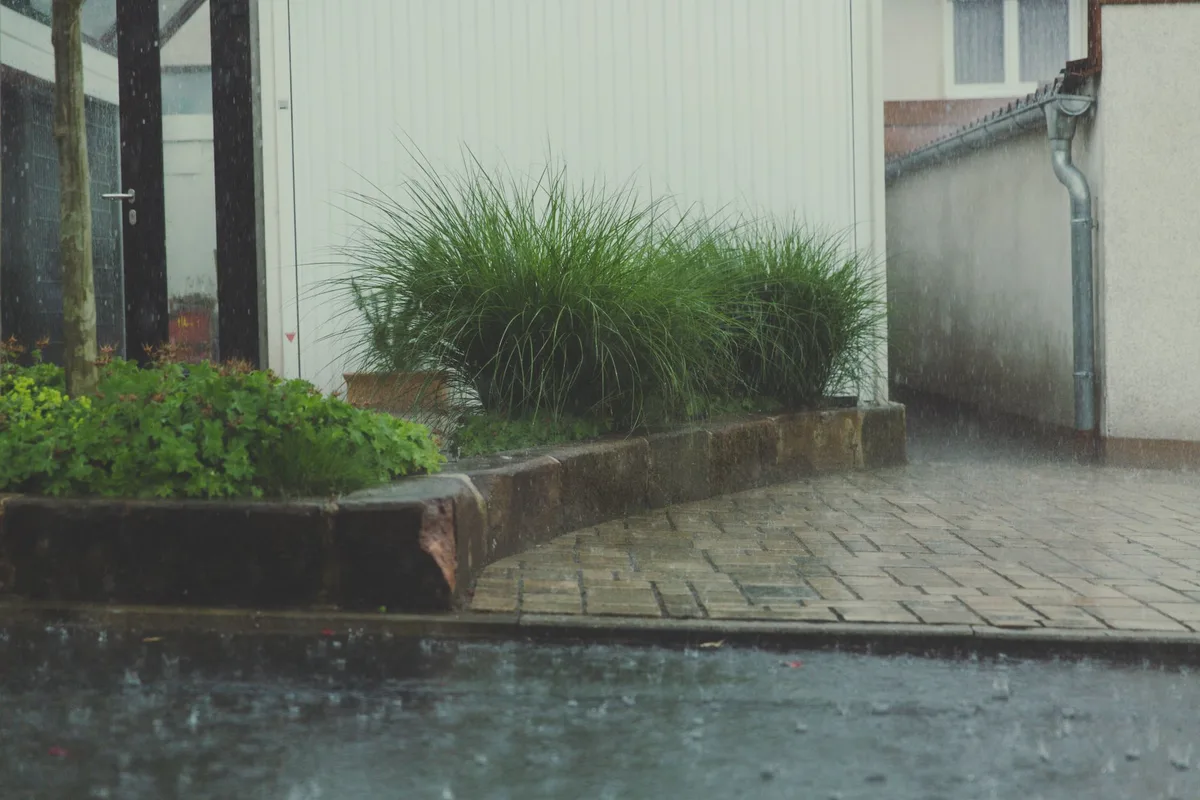
Grading means reshaping your yard so water flows away from the house and toward the street or a drainage swale. A professional grader will add or remove topsoil to create a slope of at least 1% (one inch of drop per eight feet of horizontal distance).
This works if your soil absorbs water at a decent rate and you just need to prevent pooling near the foundation. It doesn’t work in clay soil or flat yards where there’s nowhere for the water to go. Grading also washes out over time.
Heavy rain erodes the slope, and you’ll need to regrade every few years.
Cost runs $500 to $3,000 depending on how much dirt needs moving. It’s the cheapest permanent option, but it only solves surface flow. If you have subsurface water or a high water table, grading won’t touch it.
Downspout Extensions
These are rigid or flexible pipes that carry roof runoff 6 to 10 feet away from your foundation. They cost $10 to $50 per downspout and take 10 minutes to install.
Downspout extensions work if your only problem is water pouring off the roof and pooling next to the house. They don’t work if your yard already has poor drainage or if the extension just dumps water into another low spot. You’ll also run them over with the mower, they freeze solid in winter, and they look terrible.
Still, they’re the easiest first step. If extending your downspouts solves the problem, you saved yourself thousands of dollars. If it doesn’t, you’ve confirmed you need a real drainage system.
Rain Gardens
A rain garden is a shallow planted depression that collects runoff and lets it soak into the soil over 24 to 48 hours. You dig a bowl-shaped area in a low spot, fill it with a mix of sand, compost, and native soil, and plant water-tolerant species like flowering perennials or native grasses.
Rain gardens work in sandy or loamy soil where water infiltrates quickly. They don’t work in clay soil, and they don’t work if your water table is within two feet of the surface. The plants will drown, and the garden turns into a permanent swamp.
Cost ranges from $500 to $2,500 depending on size. The real limitation is space. A rain garden needs to be 20 to 30 percent of the drainage area it’s serving, so if you’re trying to handle a large roof or driveway, you’ll need a big garden that eats up usable yard.
Permeable Pavers
Permeable pavers are interlocking concrete or plastic grids that let water drain through the joints instead of running off. They’re used for driveways, patios, and walkways where you want a hard surface but don’t want to create runoff.
They work if you have decent soil underneath and you’re replacing an impermeable surface like asphalt or solid concrete. They don’t work if the base soil is already saturated. The water still has to go somewhere, and if the ground below can’t absorb it, the pavers just delay the problem.
Cost is $10 to $30 per square foot installed, which makes them expensive for large areas. They also settle unevenly over time, and the joints clog with dirt and organic matter, so you’ll need to pressure wash them every few years.
Dry Wells
A dry well is a buried pit filled with gravel that temporarily stores runoff and lets it percolate into the surrounding soil. You dig a hole 3 to 6 feet deep, line it with landscape fabric, fill it with clean stone, and pipe your downspouts or French drain into it.
Dry wells work in sandy or gravelly soil with good permeability and a low water table. They don’t work in clay or anywhere the water table is within four feet of the surface. If the soil can’t absorb the water, the dry well fills up and overflows, and you’re back where you started.
Cost is $1,000 to $3,000 per well, and you’ll often need more than one. The EPA recommends a percolation test before installing a dry well. Dig a test hole, fill it with water, and see how fast it drains.
If it takes more than 24 hours to empty, your soil won’t support a dry well.
Swales
A swale is a shallow, grass-lined ditch that channels water across your yard to a discharge point. It’s basically a shaped gutter that uses the natural slope of your lot.
Swales work if you have enough fall (at least 2% grade) and a clear path to the street or a storm drain. They don’t work in flat yards or where you’d have to cross driveways and walkways. They also erode over time, especially in areas with heavy rain, and you’ll need to resod them every few years.
Cost is minimal if you dig it yourself, or $500 to $1,500 if you hire a landscaper. Swales are best combined with other systems. Use a swale to move surface water and a French drain to handle subsurface flow.
French Drains: How They Work and What Makes Them Different
A French drain is a gravel-filled trench with a perforated pipe at the bottom. Water seeps through the gravel, enters the pipe through the perforations, and flows by gravity to a discharge point. It’s a passive system with no moving parts, and when installed correctly it lasts decades.
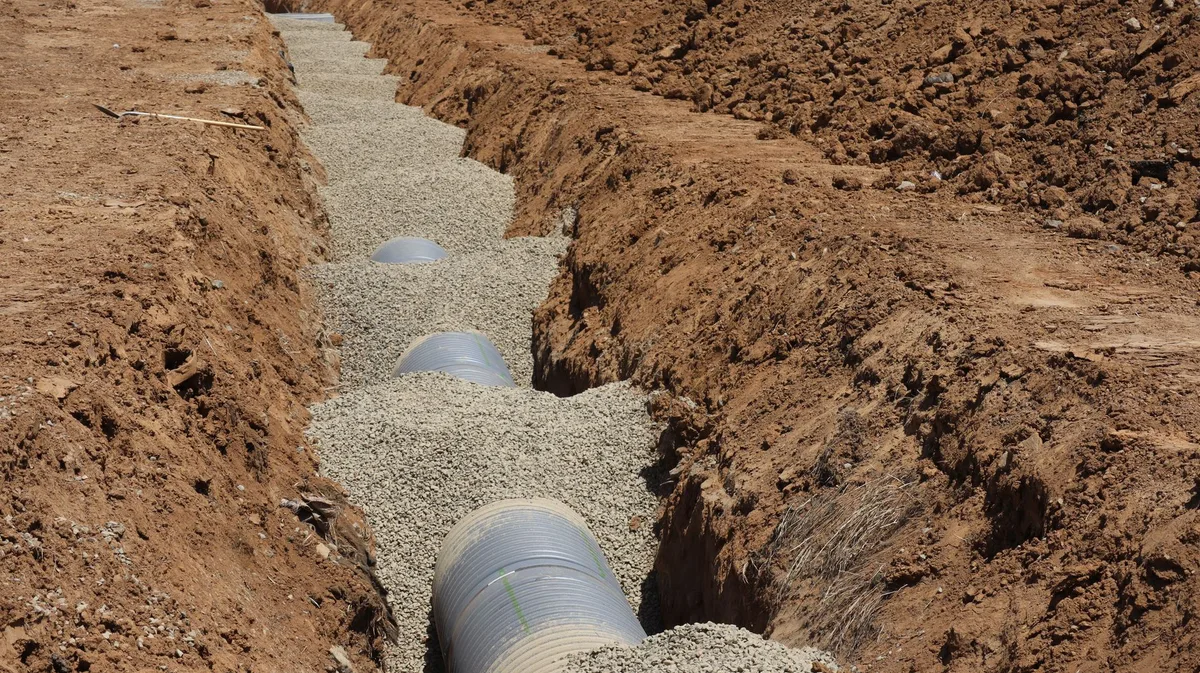
The trench is typically 12 to 18 inches wide and 18 to 24 inches deep. You line it with landscape fabric to keep silt from clogging the gravel, then add 2 to 3 inches of clean stone (usually #57 stone or pea gravel). The pipe sits on top of that base layer, then you cover it with more gravel up to within a few inches of grade.
The top layer is backfilled with soil and sod.
The pipe is usually 4-inch diameter perforated PVC or corrugated HDPE. PVC is more durable and doesn’t crush, but it’s also more expensive and harder to work with on curves. Corrugated pipe is cheaper and flexible, but tree roots can collapse it over time.
The key difference between a French drain and every other alternative is that it captures subsurface water. Rain gardens, grading, and swales only handle surface flow. If your soil is saturated below grade, those systems won’t see the water.
A French drain intercepts groundwater before it reaches your foundation or pools on the surface.
Slope is critical. You need at least 1% grade (one inch of drop per eight feet) for the water to flow. Most installers aim for 2% to ensure good velocity.
If the trench is too flat, water sits in the pipe and eventually silts up. If it’s too steep, you’ll erode the gravel and the pipe can shift.
Discharge is the other make-or-break detail. You can’t just dump the water at the end of your property line if that’s lower than your neighbor’s yard. Common discharge points include a storm sewer (if your municipality allows it), a dry well, a rain garden, or daylighting the pipe onto a slope or into the street.
You’ll often need a permit if you’re connecting to municipal infrastructure.
French drains handle the highest water volume of any residential system. A 4-inch pipe on a 2% slope can move roughly 50 gallons per minute, which is more than most downspouts produce even in a heavy storm. That’s why they’re the go-to solution for basements, foundation water, and chronic wet spots.
The downside is cost and labor. DIY installation runs $20 to $30 per linear foot for materials. Professional install is $50 to $150 per foot depending on depth, soil conditions, and whether you need to navigate utilities or landscaping.
A typical 50-foot run costs $1,000 to $7,500.
Maintenance is minimal if the system is built right. You should flush the pipe every few years by running a hose into the inlet or using a drain snake to clear silt. Tree roots are the main long-term problem.
If you install near large trees, roots will eventually find the pipe and clog it. Use solid pipe in those sections or plan to replace the line every 10 to 15 years.
Side-by-Side Comparison: Drainage Systems vs. Alternatives
Here’s how the main options stack up when you compare cost, longevity, water capacity, and the conditions where each one works.
| Solution | Cost (DIY / Pro) | Lifespan | Water Volume | Best Soil Type | Works in Flat Yards? |
|---|---|---|---|---|---|
| French Drain | $20–30 / $50–150 per ft | 20–40 years | High | Any | Yes (if discharge exists) |
| Surface Grading | $500–3,000 (pro only) | 5–10 years (erodes) | Low | Sandy, loamy | No |
| Downspout Extensions | $10–50 per downspout | 2–5 years | Low | Any | Yes (if slope exists) |
| Rain Garden | $500–2,500 | 10+ years | Medium | Sandy, loamy | No |
| Dry Well | $1,000–3,000 per well | 15–25 years | Medium | Sandy, gravelly | Yes (if soil percolates) |
| Swale | $500–1,500 (pro) | 5–10 years | Low | Any | No |
| Permeable Pavers | $10–30 per sq ft | 15–20 years | Low | Sandy, loamy | Yes (if base drains) |
French drains win on volume and longevity, but they’re the most expensive and invasive to install. If you’ve got clay soil, a high water table, or chronic basement seepage, nothing else will work long-term.
Surface grading is the cheapest professional option, but it only moves surface water and washes out over time. It’s best used in combination with a French drain or as a first step before you commit to underground work.
Downspout extensions are the easiest DIY fix. If your only problem is roof runoff pooling near the foundation, start here. If it doesn’t solve the issue, you’ve spent $50 and learned you need a real system.
Rain gardens look great and handle moderate runoff, but they fail in clay soil or anywhere the water table is high. They also need ongoing plant maintenance, which means you’re either into gardening or you’re going to let it turn into a weed patch.
Dry wells work in the right soil but fail spectacularly in clay. The EPA and most extension offices recommend a percolation test before you dig. If water doesn’t drain from a test hole within 24 hours, skip the dry well.
Swales and permeable pavers are niche solutions. Swales work on sloped lots where you need to channel surface water across the yard. Permeable pavers work for patios and driveways where you’re replacing a hard surface and have decent soil underneath.
The real answer for most yards is a combination. Grade the surface so water flows away from the house, extend downspouts to move roof runoff, and install a French drain along the foundation or in chronic wet spots. That layered approach handles both surface and subsurface water and gives you redundancy if one system fails.
Best Drainage Solution for Your Specific Situation
You Have Standing Water in a Flat Yard
Install a French drain with a discharge to a dry well or storm sewer. Flat yards don’t have natural slope to move surface water, so you need a subsurface system that creates its own gradient. Dig the trench on a 1 to 2% slope toward the discharge point, even if that means starting the trench deeper at the inlet end.
If your soil is clay, add a catch basin at the lowest point to collect surface water and pipe it into the French drain. The catch basin acts as a pre-filter and gives you access to flush the line later.
You’re Dealing with Clay Soil
Clay holds water and drains slowly, so surface solutions won’t work. A French drain is your only reliable option, but you’ll need to oversize the gravel envelope and use filter fabric to prevent the clay from clogging the pipe. Some installers wrap the pipe itself in fabric, then surround it with 6 to 8 inches of gravel on all sides.
You’ll also need to test your discharge point. If you’re running to a dry well, make sure the well is dug into a layer of sand or gravel below the clay. Otherwise the dry well fills up and backs water into the French drain.
Water Pools Near Your Foundation
Extend downspouts at least 6 feet away from the house, then regrade the soil so it slopes away at 1% minimum. If that doesn’t solve it, install a curtain drain 5 to 10 feet out from the foundation. A curtain drain is a shallow French drain that intercepts water before it reaches the house.
Never let water sit against the foundation. Hydrostatic pressure will crack the concrete, and you’ll end up with basement seepage or structural damage.
You Have a Sloped Yard with Runoff Problems
Use a swale or surface grading to redirect the flow. Dig a shallow channel along the contour of the slope and line it with sod or erosion-control fabric. The swale catches runoff and channels it toward the street or a storm drain.
If erosion is already bad, combine the swale with check dams (small rock barriers) every 10 to 15 feet to slow the water and let sediment settle.
You’re on a Tight Budget
Start with downspout extensions and basic grading. Buy corrugated extenders for $10 each and rake topsoil away from the foundation to create a 1% slope. If that doesn’t work, dig a shallow French drain yourself using 4-inch perforated pipe and bagged gravel from a home center.
DIY French drains run $20 to $30 per linear foot if you rent a trencher and do the labor yourself. It’s hard work, but it’s half the cost of hiring a contractor.
You Want a DIY Solution
French drains are the most DIY-friendly permanent system if you’re comfortable with a shovel or trencher. Call 811 to locate utilities, rent a walk-behind trencher for $75 to $100 per day, and buy perforated pipe, gravel, and landscape fabric. Dig the trench, lay the fabric, add 2 inches of gravel, place the pipe with holes facing down, cover with more gravel, wrap the fabric over the top, and backfill with soil.
Rain gardens are easier but only work in the right soil. Test drainage by digging a 12-inch hole, filling it with water, and timing how long it takes to drain. If it empties in under 24 hours, you’ve got soil that will support a rain garden.
Cost Breakdown: What You’ll Actually Pay
French drain installation by a contractor runs $50 to $150 per linear foot depending on depth, soil type, and access. A typical 50-foot run costs $2,500 to $7,500. Add another $500 to $1,500 if you need a catch basin or connection to a storm sewer.
DIY costs drop to $20 to $30 per foot for materials. You’ll spend $150 to $300 on pipe, gravel, and fabric for a 50-foot run, plus $75 to $100 per day to rent a trencher. Total DIY cost for most projects is $500 to $1,000.
Surface grading by a professional costs $500 to $3,000 depending on how much dirt needs moving. Grading is cheaper than French drains but only handles surface water. If you have subsurface flow, you’ll end up installing a French drain later anyway.
Rain gardens cost $500 to $2,500 depending on size and plant selection. Most of that is labor for digging and amending soil. If you’re planting native species yourself, you can cut costs in half.
Dry wells run $1,000 to $3,000 per well including excavation and backfill. You’ll often need more than one, and they only work in sandy or gravelly soil. A percolation test costs $100 to $200 and tells you whether your soil will support a dry well before you dig.
Downspout extensions are the cheapest option at $10 to $50 per downspout. They’re also the easiest to install and the first thing you should try before spending thousands on underground work.
Longevity and Maintenance: What Lasts and What Fails
French drains last 20 to 40 years if installed correctly. The main failure modes are silt clogging the pipe or tree roots growing into the perforations. Flush the system every 3 to 5 years by running a hose into the inlet or using a drain auger to clear blockages.
Surface grading lasts 5 to 10 years before erosion washes out the slope. You’ll need to regrade after heavy storms or add topsoil to low spots every few years. It’s low-cost maintenance, but it’s ongoing.
Rain gardens need plant maintenance. Mulch annually, weed regularly, and replace dead plants. The garden itself lasts indefinitely if the soil drains well, but neglected plantings turn into overgrown messes within a few seasons.
Dry wells last 15 to 25 years in the right soil. They fail when silt clogs the gravel or the surrounding soil becomes saturated. There’s no easy way to clean out a dry well once it’s buried, so proper installation with filter fabric and clean stone is critical.
Downspout extensions last 2 to 5 years. You’ll run them over with the mower, they’ll freeze and crack in winter, or a storm will wash them away. Budget to replace them every few years.
Common Mistakes That Make Drainage Problems Worse
Installing a French drain without proper slope is the most common error. If the trench is flat or slopes the wrong direction, water sits in the pipe and silts up within a year. Always check grade with a laser level or string line before you backfill.
Discharging onto a neighbor’s property is illegal in most places and will get you sued. Your drainage system has to discharge onto your own lot, into a municipal storm sewer (with a permit), or onto a public right-of-way like the street.
Skipping filter fabric lets soil migrate into the gravel and clog the pipe. Wrap the entire trench in landscape fabric, overlapping seams by at least 6 inches, before you add any gravel.
Using the wrong gravel size reduces flow. Pea gravel is too small and compacts over time. Use #57 stone or 3/4-inch clean stone with no fines.
Planting a rain garden in clay soil turns it into a permanent swamp. Test soil permeability before you dig. If water doesn’t drain from a test hole in 24 hours, a rain garden won’t work.
When You Need a Permit (And When You Don’t)
Most municipalities require a permit if you’re connecting to a storm sewer or altering site drainage in a way that affects neighboring properties. Call your local building department before you start digging.
You usually don’t need a permit for simple grading, downspout extensions, or a French drain that discharges entirely on your own lot. But rules vary by city, and some HOAs have their own restrictions.
Always call 811 before you dig. It’s free, it’s the law in most states, and it keeps you from hitting buried utilities. Gas, electric, water, and fiber lines are everywhere, and you’re liable for damage if you don’t locate them first.
Frequently Asked Questions
How deep should a French drain be?
A French drain should be 18 to 24 inches deep for most residential applications. Deeper trenches handle higher water tables and provide more capacity, but they cost more to dig and require more gravel.
Can I install a French drain myself?
Yes, if you’re comfortable with heavy digging and can rent a trencher. Call 811 to locate utilities, plan your slope and discharge point, and follow proper installation steps with filter fabric and clean gravel. Most DIY installs take one to three days.
Do rain gardens work in clay soil?
No. Rain gardens rely on water infiltrating into the soil within 24 to 48 hours. Clay drains too slowly and will leave your rain garden waterlogged.
Test your soil with a percolation test before planting.
How long do French drains last?
French drains last 20 to 40 years with proper installation and maintenance. Flush the system every few years to prevent silt buildup. Tree roots and improper slope are the main causes of early failure.
What’s the cheapest way to fix yard drainage?
Downspout extensions and basic surface grading are the cheapest starting points. Extend downspouts 6 to 10 feet from the foundation and regrade soil to slope away from the house. If that doesn’t work, a DIY French drain costs $500 to $1,000 for a typical yard.
Can You Combine Solutions? (And When You Should)
Yes, and you usually should. Most successful drainage systems layer multiple approaches. Grade the surface to move runoff away from the foundation, extend downspouts to prevent roof water from pooling, and install a French drain to handle subsurface flow.
A common setup is a curtain drain along the foundation with catch basins at low spots. The catch basins collect surface water and pipe it into the French drain, which handles both surface and subsurface flow. This gives you redundancy if one component fails.
Another effective combination is a swale for surface water paired with a dry well for discharge. The swale channels runoff across the yard, and the dry well stores it temporarily while it percolates into the soil. This works well on sloped lots with permeable soil.
Real Scenarios: What Worked and What Didn’t
A flat suburban lot with clay soil had standing water for three days after every rain. The homeowner tried regrading twice, but the water came back. A 60-foot French drain along the back fence, sloped at 2% and discharged to the street, eliminated the problem.
Cost was $4,200 installed.
Another property tried a rain garden in heavy clay without testing soil permeability. The garden flooded after the first storm and stayed waterlogged for two weeks. They abandoned it and installed a French drain instead.
The lesson is always test your soil before committing to a solution that depends on infiltration.
A third homeowner extended downspouts 10 feet from the house and added 2 inches of topsoil to create positive slope. That solved minor pooling near the foundation for under $200. Not every problem needs an expensive underground system.
How to Know If You Need Professional Help
Hire a contractor if you’re dealing with a high water table, basement flooding, or large-scale grading. These projects require proper slope calculation, discharge planning, and sometimes permits. A bad DIY install can make the problem worse and cost more to fix later.
You can DIY if the problem is localized, you have a clear discharge point, and you’re comfortable with a trencher or shovel. Simple French drains, downspout extensions, and surface grading are all reasonable DIY projects for someone with basic skills.
Get multiple quotes and ask for references. A good contractor will walk your property, test soil drainage, and explain exactly where the water is coming from and where it needs to go. Avoid anyone who quotes over the phone without visiting the site.
Final Recommendation: Which Solution to Choose
Start with the easiest fixes first. Extend downspouts, regrade soil near the foundation, and see if that solves the problem. If water still pools after heavy rain, you need a permanent subsurface system.
French drains are the most reliable long-term solution for chronic wet spots, clay soil, and foundation water. They cost more up front but last decades and handle high water volume. Alternatives like rain gardens and dry wells only work in specific soil conditions.
Combine surface and subsurface systems for the best results. Grade the yard, extend downspouts, and install a French drain along problem areas. That layered approach handles every type of water flow and gives you backup if one system fails.