When Should You Aphids in 2026 (Beginner-Friendly Guide)
You’ve spotted soft green bugs clustering on your rose stems or curling the new growth on your vegetable plants, and now you’re wondering when to spray aphids. Timing matters more than most people realize. Spray too early and you’ll waste effort, too late and the colony explodes into thousands, and during bloom you risk killing pollinators.
Aphids can double their population every seven to ten days in warm weather, which means a handful of insects on Monday can become a yield-damaging infestation by the weekend. Understanding the decision points, from pest pressure and beneficial insect presence to plant stage and weather windows, helps you treat effectively without overspraying or harming your garden’s natural allies.
Quick Answer
Spray aphids when you see early colonies forming, before populations explode. Treat immediately if you spot curled leaves, sticky honeydew, or more than five aphids per stem. Skip spraying if ladybugs or lacewings are present.
Avoid treatment during bloom to protect pollinators. Choose early morning or evening when temperatures stay below 85°F.
What “When Should You Spray Aphids” Really Means
The question isn’t just about calendar dates or set schedules. It’s about reading the situation in front of you. Aphid control hinges on infestation severity, the presence of natural predators, plant growth stage, and immediate weather conditions.
Most gardeners either wait too long or spray reflexively at the first sighting. Neither approach works well. Waiting allows aphids to reach damaging numbers and transmit viral diseases.
Spraying at every sighting kills beneficial insects that would have controlled the problem naturally.
Effective aphid management follows an integrated pest management approach. You scout regularly, assess threshold levels, and act when conditions favor treatment success. The goal isn’t zero aphids.
It’s keeping populations below the point where they cause measurable damage.
How Aphid Behavior Determines Treatment Timing
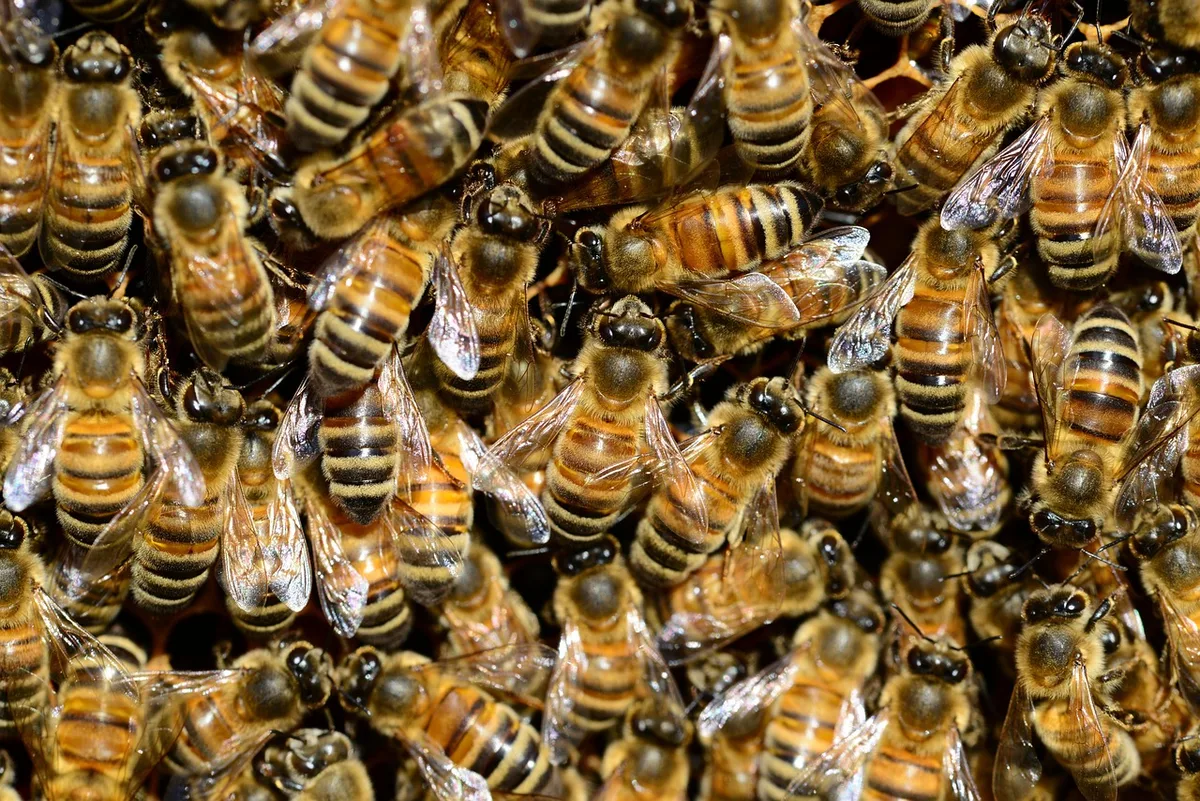
Aphids are soft-bodied, sap-sucking insects that reproduce through parthenogenesis. That means females give birth to live young without mating. One aphid becomes ten in a week, then a hundred, then a thousand.
Temperature drives reproduction speed. At 65°F, a generation takes about ten days. At 80°F, it drops to seven.
Cold weather slows them down, but spring and fall often bring rapid population surges as temperatures warm.
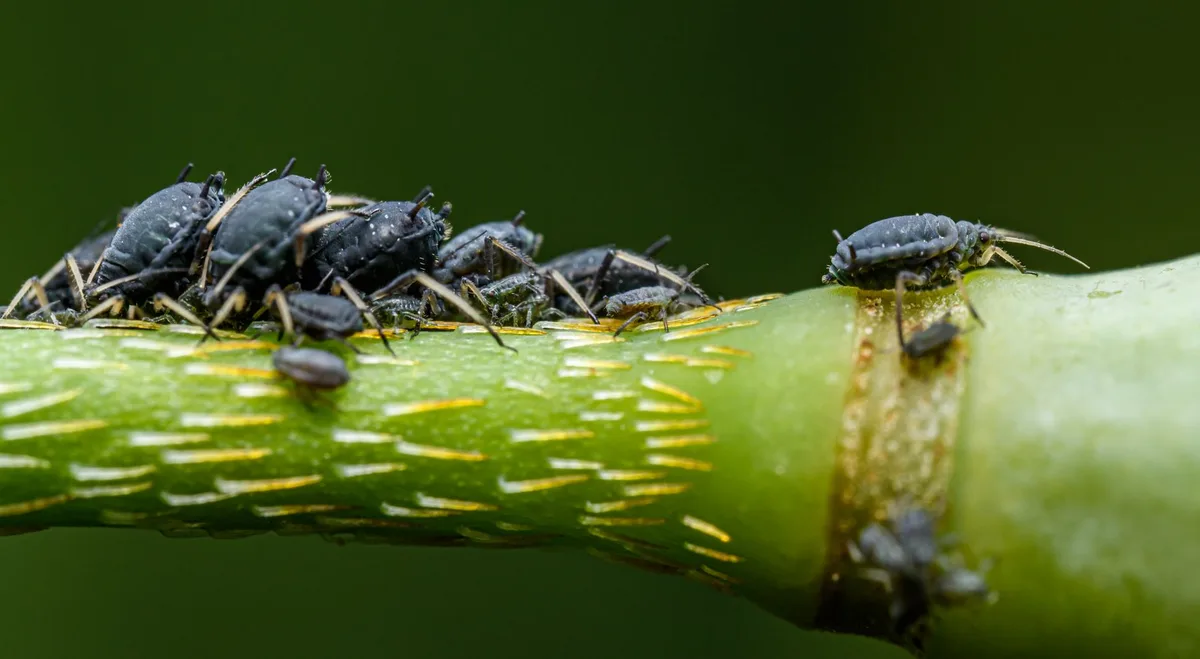
You’ll see two forms in your garden. Wingless aphids cluster on stems and leaf undersides. Winged aphids appear when colonies get crowded or stressed.
The winged forms migrate to new plants, spreading infestations across your garden in days.
Aphids secrete honeydew, a sticky, sugary waste product. Ants farm aphids for this honeydew and protect them from predators. Sooty mold grows on honeydew-coated leaves, blocking light and reducing photosynthesis.
Both are signs you’ve got an established colony that needs attention.
Early detection stops the exponential growth curve. Once you’re dealing with thousands of aphids covering every stem, even aggressive treatment struggles to knock them back. Catching them when you see ten or twenty bugs per plant makes control straightforward.
The Critical Window: Spotting Aphids Before They Explode
Scout your plants at least twice a week during the growing season. Check new growth first. Aphids prefer tender shoots, buds, and the undersides of young leaves.
Lift leaves and inspect stems closely.
Look for these early warning signs:
- Small clusters of green, black, yellow, or gray soft-bodied insects
- Curled or puckered new leaves
- Sticky residue on leaves or the ground below
- Ants marching up and down stems
- Distorted buds or stunted shoot tips
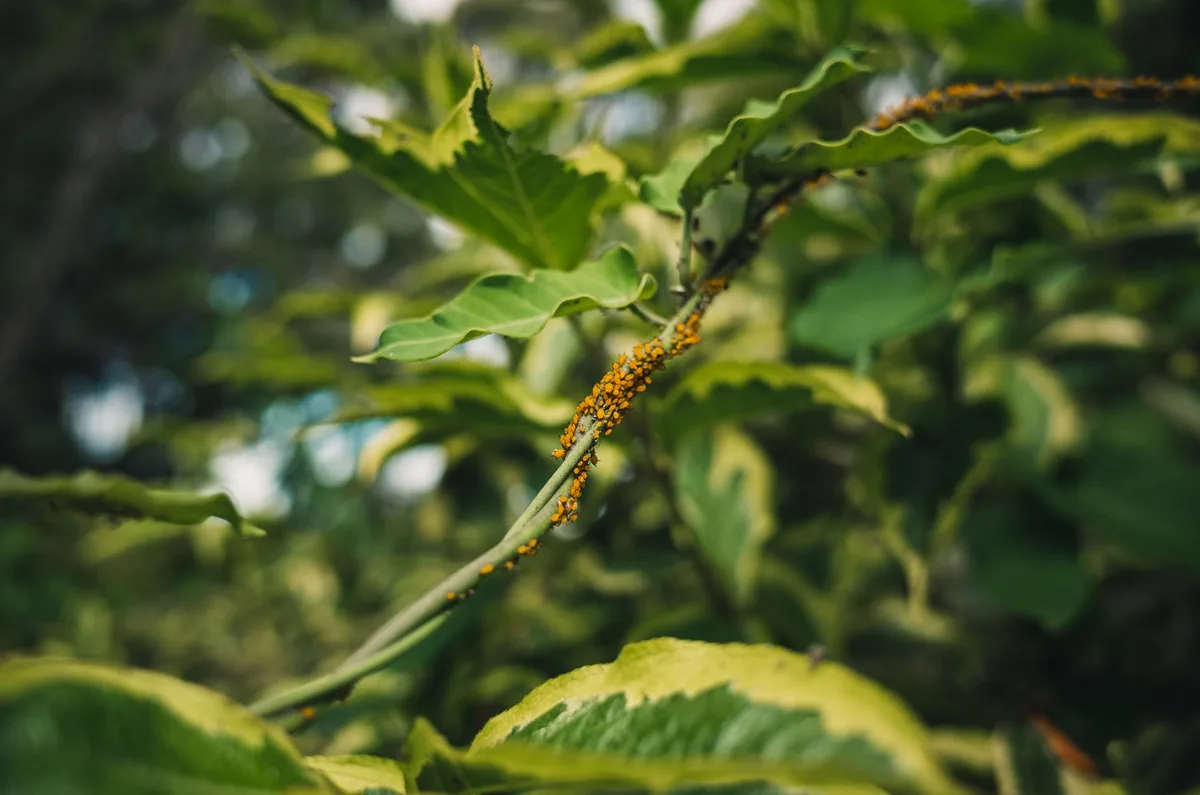
If you spot fewer than five aphids per stem and no visible damage, hold off on spraying. Monitor daily. If numbers climb or you see curling leaves within 48 hours, it’s time to act.
This is your critical window.
Plants under stress, whether from drought, poor soil, or nutrient imbalance, attract aphids. Healthy, vigorous plants often shrug off light infestations. Address watering and fertility issues alongside pest management for better long-term results.
Certain plants act as aphid magnets. Roses, milkweed, beans, brassicas, and fruit trees often see heavy early-season pressure. If you grow these, expect to scout more frequently and treat preemptively when conditions favor outbreaks.
Decision Point 1: Light Infestation vs. Established Colony
Your first decision hinges on population size and plant damage. Light infestations mean a few aphids per stem, no curling, no honeydew buildup. Established colonies cover stems densely, leaves curl tightly, and you see sooty mold or stunted growth.
Light Infestation (Early Stage)
You can often skip chemical treatment entirely. Blast aphids off with a strong stream of water from the hose. Most won’t climb back.
Repeat every other day for a week. This works well on sturdy plants like roses, shrubs, and mature vegetables.
Hand-crushing works on small plantings. Wear gloves and pinch infested shoot tips. Drop them in a bucket of soapy water.
It’s tedious but effective when you catch them early.
If populations persist after a week of water sprays, move to insecticidal soap or horticultural oil. These are low-toxicity contact sprays that smother aphids on contact. They leave no residue and won’t harm plants when used correctly.
Established Colony (Action Threshold Reached)
Once colonies cover multiple stems and you see visible damage, you’ve crossed the economic threshold. Waiting longer risks permanent stunting, fruit scarring, or viral disease transmission.
Spray immediately with insecticidal soap, neem oil, or a pyrethrin-based product. Coverage matters more than product choice. Aphids hide on leaf undersides and in curled foliage.
You need to drench the plant, top to bottom, until spray drips off.
Retreatment will be necessary. Eggs and nymphs tucked in tight spots survive the first application. Plan to spray again in five to seven days, then monitor for another week.
Three applications at weekly intervals usually break the cycle.
Decision Point 2: Are Beneficial Insects Present?
Before you spray anything, look for natural predators. Ladybugs, lacewing larvae, parasitic wasps, and hoverfly larvae all feed on aphids. A single ladybug can eat 50 aphids a day.
Lacewing larvae are even more voracious.
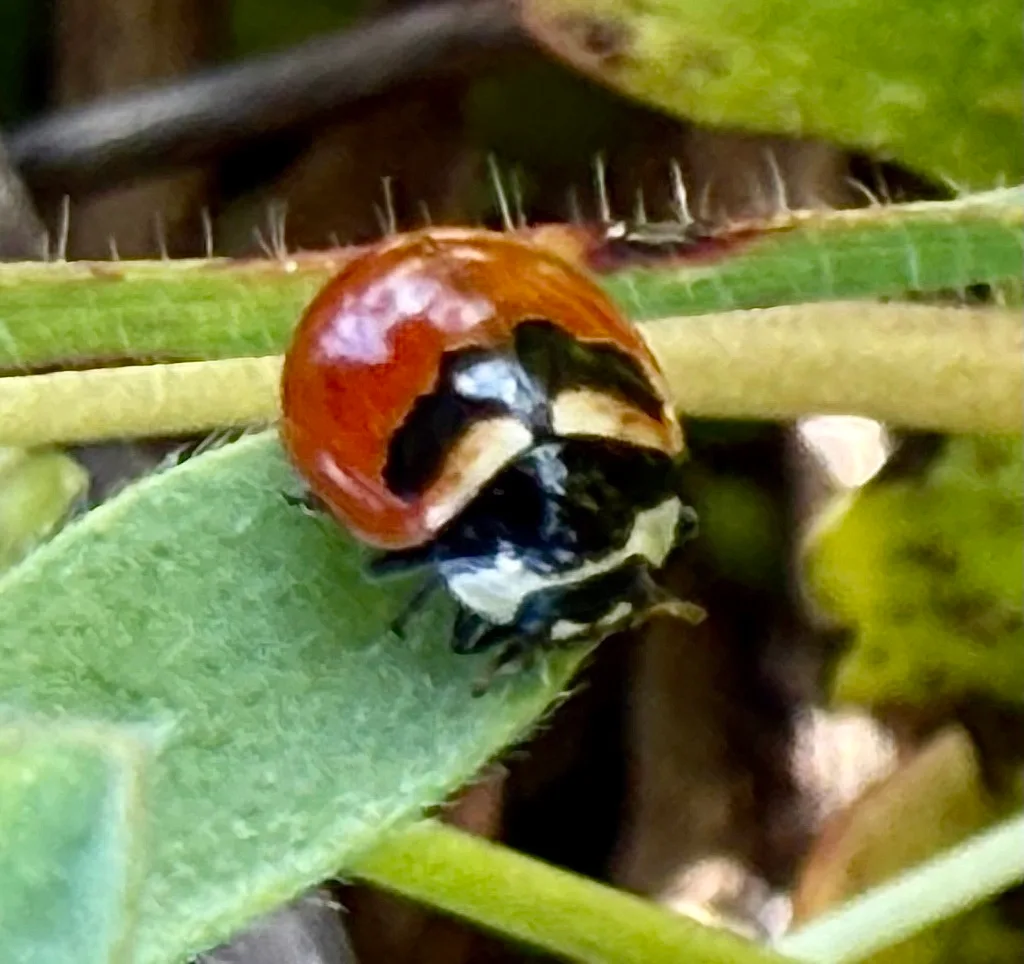
If you see ladybugs on infested plants, hold off on spraying. Even if aphid numbers look high, beneficial insects often collapse the population within a week. Spraying kills the helpers along with the pests, leaving you with no natural control when the next wave hatches.
Check for mummified aphids. These are tan or black, papery shells that look like inflated aphid corpses. They’re the work of parasitic wasps.
Each mummy will release a new wasp within days. If you see several mummies per cluster, the wasps are already doing your work.
When to Spray Despite Beneficial Insects
Sometimes you can’t wait for natural control. If aphids are transmitting viral diseases, causing severe stunting, or you’re protecting a high-value crop like fruit trees about to set, you may need to spray even with beneficials present.
Choose the least disruptive product. Insecticidal soap and horticultural oil have minimal impact on adult beneficial insects if you spray early morning before they’re active. Avoid pyrethrins and synthetic insecticides, which kill everything on contact.
Spot-treat the worst infestations rather than spraying the whole garden. This preserves refuge areas where ladybugs and lacewings can survive and recolonize treated plants once residues fade.
If you’re growing plants that attract hummingbirds or flowers for shade baskets, you’re likely already supporting a diverse insect community that includes aphid predators. Protect that balance whenever possible.
Decision Point 3: Plant Stage and Bloom Status
Never spray open flowers. Insecticidal soap, neem oil, and especially pyrethrins kill bees, butterflies, and other pollinators on contact. Even “organic” products are lethal to beneficial insects during bloom.
If aphids appear on roses, fruit trees, or flowering vegetables while buds are open, you have three options. Wait until petals drop and spray immediately after. Spot-treat only the foliage and stems below the flowers using a small spray bottle.
Or rely on water blasting and hand removal until bloom ends.
Fruit trees present a special case. Aphids on apple, pear, and stone fruit trees during bloom can cause fruit scarring and stunted growth later. Treat aggressively in the tight-cluster bud stage, before any petals show.
Once bloom starts, stop until petal fall. Resume treatment immediately after if colonies persist.
Vegetable crops like beans, squash, and peppers can tolerate aphids better once they’ve set fruit. Early-season infestations on transplants cause the most damage. If you’re growing fertilized pomegranate trees or other fruiting plants, focus your spray timing on pre-bloom and early vegetative growth.
New transplants and seedlings need immediate treatment. Young plants can’t tolerate the stress of heavy aphid feeding. Spray at the first sign of colonization, even if numbers seem low.
Use insecticidal soap rather than oils on tender seedlings to avoid phytotoxicity.
Decision Point 4: Weather Conditions and Spray Window
Temperature and humidity determine whether your spray works or burns your plants. Most insecticidal soaps and horticultural oils cause leaf damage when applied above 85°F. Neem oil has an even lower threshold, around 80°F.
Check the forecast before you spray. You need at least two hours without rain for contact sprays to dry and work. Four hours is better.
If rain washes the product off before it dries, you’ve accomplished nothing.
Wind matters more than most people think. Spray drift wastes product and can damage sensitive plants nearby. Wait for calm conditions, ideally below five miles per hour.
Early morning and evening usually offer the best windows.
Avoid spraying in full sun. Mid-day applications, even at safe temperatures, can cause water droplets to magnify sunlight and burn leaves. The oil or soap film can also trap heat against leaf surfaces.
Spray when plants are in shade or when the sun is low.
Humidity affects spray coverage and drying time. High humidity slows evaporation, giving products more contact time with aphids. That’s good.
But it also increases the risk of fungal issues on wet foliage. Balance is key.
If you’re dealing with an outdoor infestation and the weather won’t cooperate, consider bringing potted plants under cover temporarily. Spray them in a garage or shed where conditions are controlled. Return them outside once the product dries.
What to Spray: Matching Treatment to Timing and Severity
Product choice depends on infestation severity, plant type, and how fast you need results. Contact sprays work immediately but require thorough coverage. Systemics take days to work but last longer.
Insecticidal Soap and Horticultural Oil (Early to Moderate Infestations)
Insecticidal soap is potassium salts of fatty acids. It dissolves the waxy outer layer of soft-bodied insects, causing dehydration and death within hours. It works only on direct contact and leaves no residual protection.
Use soap for early infestations when you spot fewer than 20 aphids per stem. Spray every leaf surface, top and bottom, until runoff. Repeat in five to seven days to catch newly hatched nymphs.
Most situations resolve after two applications.
Horticultural oil smothers aphids by coating their breathing pores. It’s slightly more effective than soap on established colonies because the oil film persists longer. Use refined horticultural oil, not dormant oil, during the growing season.
Both products are OMRI-listed for organic production. They’re safe around kids and pets once dry. Neither harms mammals or birds.
Toxicity to beneficial insects exists only during application, not after the spray dries.
Neem Oil and Pyrethrin (Moderate to Heavy Pressure)
Neem oil contains azadirachtin, a compound that disrupts insect growth and feeding. It works as both a contact killer and a feeding deterrent. Aphids that survive the initial spray often stop reproducing and die within days.
Neem works best on moderate infestations where soap hasn’t provided adequate control. It’s slower-acting than soap but offers some residual protection for up to a week. Apply every seven days for three weeks to break the lifecycle completely.
Pyrethrin is a botanical insecticide derived from chrysanthemum flowers. It knocks aphids down fast, often within minutes. Use it for heavy infestations where immediate control is critical.
Toxicity to beneficial insects is high, so reserve pyrethrin for situations where other products have failed.
Pyrethrin breaks down in sunlight within hours. Apply late evening to maximize contact time before it degrades. It’s considered organic but isn’t selective.
Everything that gets sprayed dies.
When Systemics Make Sense (and When They Don’t)
Systemic insecticides like imidacloprid are absorbed by plant roots or foliage and circulate in the sap. Aphids feeding on treated plants ingest the chemical and die. Protection lasts weeks or months depending on the product and application method.
Systemics make sense for ornamental trees and shrubs where spray coverage is impractical. Apply as a soil drench in early spring before aphids appear. The product moves into new growth as the plant leafs out.
This prevents infestations rather than reacting to them.
Never use systemics on edible crops unless the label specifically lists your crop and provides a pre-harvest interval. Most systemic products are restricted from vegetable gardens entirely. Never apply systemics to any plant in bloom or about to bloom.
Residues persist in nectar and pollen, killing bees for weeks.
Resistance is a growing concern with systemic neonicotinoids. Overuse has led to aphid populations that no longer respond to these products. Rotate product classes and rely on contact sprays and biological control as your primary tools.
The Step-by-Step Treatment Decision Tree
Walk through these decision points in order every time you consider spraying.
Step 1: Count aphids. Fewer than five per stem? Monitor daily. More than five or visible damage?
Move to step 2.
Step 2: Check for beneficials. Do you see ladybugs, lacewings, or mummified aphids? Yes means wait 3 to 5 days and recheck. No means move to step 3.
Step 3: Check plant stage. Are flowers open? Yes means wait or spot-treat foliage only. No flowers or buds?
Move to step 4.
Step 4: Check weather. Temperature below 80°F, no rain for four hours, and calm wind? Yes means spray now. No means wait for a better window.
Step 5: Choose product. Light infestation gets insecticidal soap. Moderate gets neem oil. Heavy gets pyrethrin.
Ornamental trees and shrubs in early spring can use a systemic soil drench.
Step 6: Apply thoroughly. Drench every leaf surface, stem, and bud. Spray until runoff. Coverage matters more than product strength.
Step 7: Monitor and retreat. Check plants in two days. If you still see live aphids, retreat in five to seven days. Three applications at weekly intervals usually provide full control.
This framework works for roses, vegetables, fruit trees, ornamentals, and greenhouse plants. Adjust product choice and timing based on plant type, but the decision sequence stays the same.
Time of Day Matters: Morning vs. Evening Applications
Spray in early morning or late evening when temperatures are coolest. This reduces phytotoxicity risk and gives the product maximum contact time before it dries.
Morning applications work well for most situations. Dew has dried, beneficial insects aren’t yet active, and you have all day to observe results. If rain threatens later, morning gives you the best chance of a four-hour dry window.
Evening applications maximize contact time overnight. Aphids feed most actively at dawn and dusk. Spraying at sunset puts fresh product on leaves exactly when aphids are feeding.
The spray dries slowly in cooler night air, extending the kill window.
Avoid mid-day sprays even if temperatures stay safe. UV light degrades many active ingredients, including pyrethrins and neem oil. Products applied at noon lose potency within an hour.
The same application at 7 PM stays active until morning.
If you’re treating indoor plants or bedroom-friendly varieties, time of day matters less. Just ensure good ventilation and avoid spraying directly under grow lights, which can concentrate heat and cause leaf burn.
How Often to Retreat (and How to Know When to Stop)
Most contact sprays require two to three applications spaced five to seven days apart. Eggs and nymphs sheltered in curled leaves survive the first treatment. They hatch or emerge a few days later, requiring a follow-up spray.
Check plants 48 hours after the initial application. You should see dead aphids and reduced sticky residue. If live aphids still coat the stems, coverage was incomplete or the product failed.
Retreat immediately with better coverage or switch products.
Schedule the second spray five days after the first if temperatures are warm and aphids are reproducing quickly. Seven days works in cooler weather when generation time stretches to ten days. A third application is rarely needed if the first two were thorough.
Stop spraying once you see fewer than two or three aphids per stem and no new leaf curling. Some aphids will always be present. Your goal is suppression, not eradication.
Overspraying wastes money and kills beneficials that would prevent the next outbreak.
Timing Mistakes That Make Aphid Problems Worse
Spraying during bloom is the most common error. It kills pollinators and often violates pesticide label restrictions. Wait until petal fall even if aphids are abundant.
Applying products in high heat causes phytotoxicity. Leaves develop brown spots or margins within hours. This stresses the plant further and can outweigh any benefit from aphid control.
Always check temperature before you spray.
Using broad-spectrum insecticides when targeted products would work destroys beneficial insect populations. Pyrethrins and synthetic insecticides kill ladybugs, lacewings, and parasitic wasps. Once the spray wears off, aphids rebound faster because their predators are gone.
Waiting too long to treat is just as bad as spraying too early. Once colonies reach thousands of individuals, even aggressive treatment struggles to knock them back. Plants suffer permanent stunting and yield loss.
Scout regularly and act at the first sign of exponential growth.
Inadequate coverage wastes effort. Aphids on untreated leaf undersides survive and repopulate within days. Spray until every surface drips.
Use a pump sprayer or hose-end applicator that delivers consistent pressure and fine droplets.
Special Timing Scenarios: Roses, Vegetables, Fruit Trees, and Greenhouse Plants
Roses see aphid pressure in early spring as new growth flushes and again in fall. Treat pre-bloom if you spot colonies forming. Once buds show color, switch to water blasting or wait until after the first flush finishes blooming.
Vegetable gardens need early intervention. Aphids on bean seedlings, brassica transplants, and pepper starts cause the most damage in the first three weeks after planting. Treat immediately if you see curling on young plants.
Mature vegetables tolerate light infestations better.
Fruit trees benefit from tight-cluster sprays applied just before bloom. This is your best timing window for apples, pears, and stone fruits. Skip treatment during bloom entirely.
Resume immediately after petal fall if aphids persist on new shoots.
Greenhouse environments accelerate aphid reproduction. Warm, humid conditions can produce a new generation every five days. Monitor twice weekly and treat at lower thresholds than outdoor gardens.
Use biological controls like targeted insecticides for specific pests or introduce parasitic wasps as a preventive measure.
When to Skip Spraying and Use Alternatives Instead
Water blasting works for many situations. Direct a strong stream at infested stems every other day for a week. Most aphids won’t climb back, and the ones that do face slower population growth.
This method protects beneficial insects completely.
Companion planting with flowering varieties that attract lacewings and hoverflies provides season-long suppression. Alyssum, yarrow, and dill bring in natural predators before aphid populations spike.
Yellow sticky traps capture winged aphids as they migrate between plants. Place traps near susceptible crops in early spring. This won’t control an existing infestation but reduces the number of colonizers arriving from elsewhere.
Reflective mulches disorient aphids and reduce landing rates on young plants. Aluminum foil or reflective plastic sheeting under transplants cuts aphid colonization by 50 percent or more during the first month after planting.
Pruning out heavily infested shoots removes thousands of aphids instantly. Bag the cuttings and dispose of them. Don’t compost aphid-covered material unless your compost reaches sustained high temperatures.
Monitoring After Treatment: What to Look For and When to Act Again
Check plants two days post-spray. Dead aphids turn dark and shrivel. Live ones continue moving and feeding.
If most aphids are still active, your coverage was poor or the product didn’t work.
Look for new leaf curling within a week. This signals eggs hatching or nymphs maturing into reproductive adults. Retreat at the first sign of new damage.
Waiting another week lets the population rebuild.
Watch for mummified aphids appearing seven to ten days after treatment. This means parasitic wasps survived your spray and are now controlling the population. Hold off on further applications and let the wasps work.
Scout weekly even after successful treatment. Winged aphids migrate constantly during spring and fall. A clean plant on Monday can host a new colony by Friday.
Early detection prevents the next outbreak from reaching damaging levels.
Quick Decision Guide: Should You Spray Today?
Run through this checklist before you reach for any spray bottle.
Spray now if:
- You count more than five aphids per stem or see curled leaves
- No ladybugs or lacewings are present
- Plants are not in bloom
- Temperature is below 80°F and no rain for four hours
- You’ve waited three days and the population is still growing
Wait if:
- Beneficial insects are actively feeding on aphids
- Flowers are open
- Temperature is above 85°F or rain is forecast within two hours
- You see mummified aphids indicating parasitic wasp activity
- Population is stable or declining over three days
Skip spraying and use alternatives if:
- Fewer than three aphids per stem with no damage
- Plants are mature vegetables past early growth stage
- You can physically remove infested shoots
- Water blasting reduced numbers significantly in past two days
This decision guide works for as of 2026 integrated pest management approaches recommended by university extension services.